
Song Sparrow Identification Guide
A widespread, heavily streaked brown sparrow with a central breast spot, best known for its long, variable, buzz-and-trill song delivered from an exposed perch.
Read the full Song Sparrow encyclopedia entry →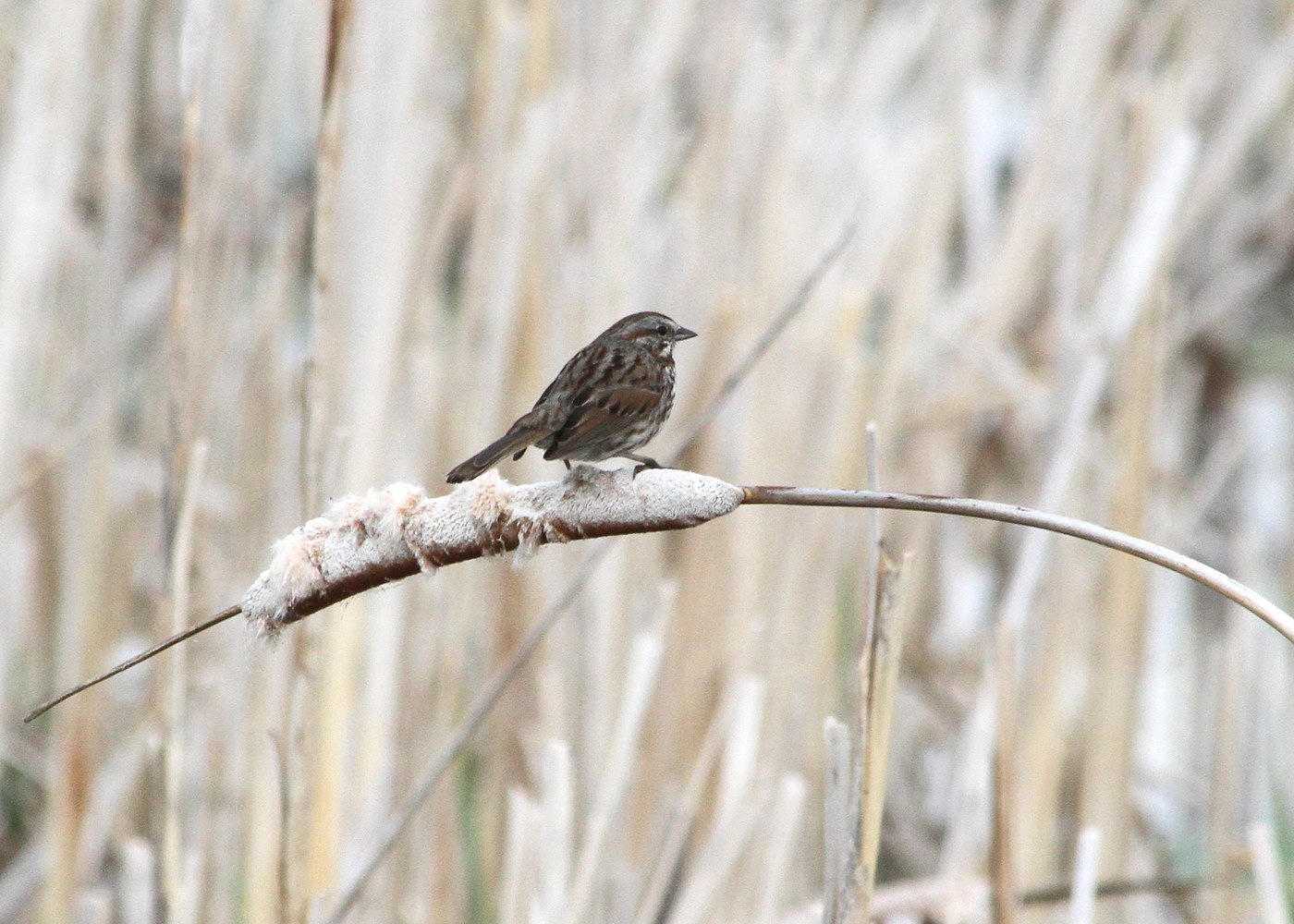
Key Field Marks
- Size & shape: Medium-sized sparrow, 4.7–6.7 inches, with a fairly long, rounded tail that it pumps up and down in flight.
- Plumage: Heavily streaked brown above and below on a whitish-to-gray background; the breast streaks typically converge into a bold central spot. Face shows a broad gray eyebrow, brown cheek patch, and a dark malar (mustache) stripe.
- Bill: Fairly short and conical, gray.
- Behavior: Skulks low in brush and thickets, dropping down when disturbed, but males sing conspicuously from an exposed perch such as a shrub top or wire. Pumps its tail noticeably in flight.
- Variation: One of the most geographically variable songbirds in North America, with dozens of subspecies differing in size and color from pale and sandy in the desert Southwest to dark and richly colored in the Pacific Northwest and Aleutians.
Separating It From Similar Species
- Savannah Sparrow: Shows yellow lores (in front of the eye), a shorter notched tail, and finer, crisper streaking without a strong central breast spot.
- Lincoln's Sparrow: Finer, crisper streaking on a buffy wash across the breast, a grayer face, and a shyer, more skulking habit.
- Fox Sparrow: Notably larger and bulkier with heavier, often rusty-red streaking and a larger bill.
- Overall: The combination of coarse breast streaking converging to a central spot, gray eyebrow, and habit of pumping the tail in flight is diagnostic for Song Sparrow across most of its range.
Where & When to See One
- Habitat: Extremely adaptable — brushy fields, hedgerows, wetland edges, gardens, suburban shrubbery, and streamside thickets across nearly all of North America.
- Range: Breeds across almost all of the continental US and Canada; many populations, especially in the north, are migratory, while southern and coastal birds are largely resident year-round.
- Season: Present year-round across most of its range; look and listen for singing males especially in spring.
Voice
- A distinctive song beginning with two or three clear, repeated introductory notes followed by a buzzy trill and then varied warbled phrases — often rendered as "Maids, maids, maids, put on your tea kettle-ettle-ettle." The call is a hard, flat "chimp" or "tschep."
Frequently asked questions
What is the easiest way to identify a Song Sparrow?
Look for heavy brown streaking on the breast that converges into a central dark spot, a gray eyebrow stripe, and listen for its song of clear opening notes followed by a buzzy trill.
Why do Song Sparrows look so different in different parts of the country?
The species includes dozens of regional subspecies that vary considerably in size and color, from pale desert birds to dark, heavily marked birds in the Pacific Northwest and Alaska, all sharing the same basic streaked pattern and song structure.
How do I separate Song Sparrow from Savannah Sparrow?
Savannah Sparrow shows yellow lores near the bill and a short notched tail without a bold central breast spot, while Song Sparrow has a plain gray eyebrow, a longer rounded tail it pumps in flight, and streaks that converge into a central spot.
Are Song Sparrows migratory?
It depends on the population — northern breeders migrate south for winter, while many southern, coastal, and western populations are year-round residents.