
Snowy Owl Identification Guide
A huge, round-headed white owl of the open Arctic tundra that irrupts south to fields, dunes, and airports in winter.
Read the full Snowy Owl encyclopedia entry →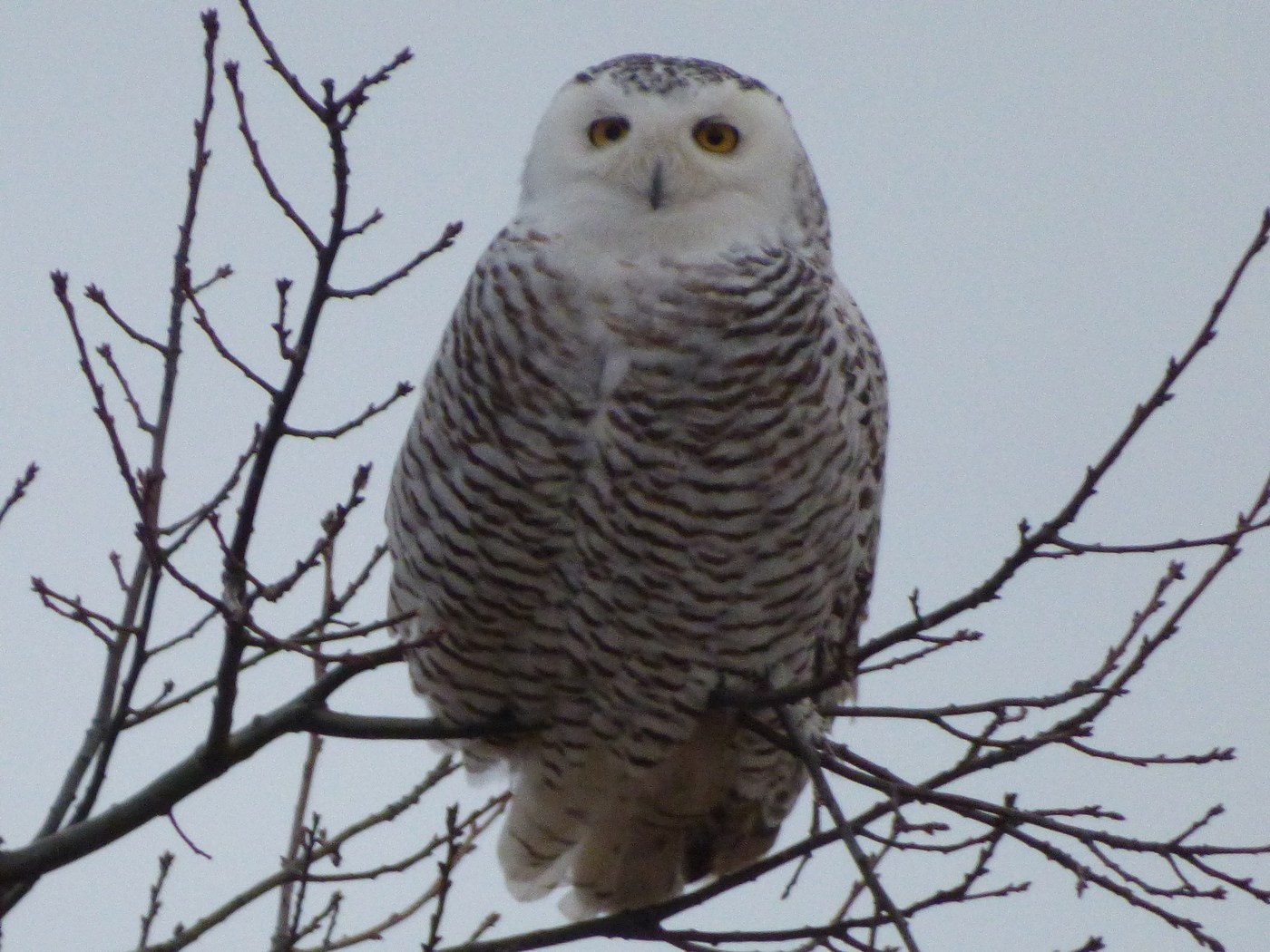
Key Field Marks
- Size & shape: One of the largest owls in North America — bulky, round-headed, no ear tufts, with a wingspan of roughly 50–57 inches.
- Plumage: Overall white. Adult males become nearly pure white with age; females and immatures show variable dark brown barring and spotting across the back, wings, and flanks.
- Eyes: Bright yellow, staring out from a mostly feathered face.
- Bill: Black, almost entirely hidden by facial feathering.
- Legs & feet: Densely feathered all the way to the talons, an adaptation to Arctic cold.
- Behavior: Unlike most owls, Snowy Owls are frequently active by day. They favor low, open perches — fence posts, dunes, hummocks, rooftops, and airport light poles — rather than trees.
Separating It From Similar Species
- Barn Owl: Much smaller and slimmer, buffy-orange above rather than white, dark eyes, and a heart-shaped face — no real overlap in bulk or color.
- Leucistic Great Horned Owl: Rare all-white variants retain obvious ear tufts and orange eyes, unlike the round, tuftless head and yellow eyes of a Snowy Owl.
- Sex/age within species: Heavily barred birds are almost always females or young birds; adult males are the whitest individuals, sometimes appearing essentially unmarked.
Where & When to See One
- Breeding range: Circumpolar Arctic tundra, nesting on the ground on slight rises with a clear view in all directions.
- Winter range: Highly irruptive — in some years large numbers push south into the northern and central United States and southern Canada, favoring open, treeless habitats that mimic tundra: farm fields, prairies, coastal dunes and beaches, marshes, and airports.
- Season: Best looked for from late November through March in the Lower 48; irruption intensity varies year to year, often tied to lemming cycle boom-and-bust years further north.
Voice
- Largely silent away from the breeding grounds. On the tundra, males give a deep, far-carrying booming hoot; both sexes can utter raspy barks, whistles, and bill-snaps when alarmed or defending territory.
Frequently asked questions
Are all-white Snowy Owls always male?
Not necessarily, but the whitest, least-marked individuals are almost always adult males. Adult females and immature birds of both sexes typically retain dark barring on the back, wings, and crown.
Why do Snowy Owls perch on the ground in winter?
They come from treeless Arctic tundra and instinctively favor open, elevated vantage points like dunes, fence posts, and hay bales rather than trees, which mirror their native habitat and give a clear sightline for hunting.
What causes Snowy Owl irruptions?
Irruptions are linked to lemming and vole population cycles on the breeding grounds. A boom year can produce many surviving young that then disperse widely south in search of food when rodent numbers crash.
Are Snowy Owls active during the day?
Yes. They are one of the more diurnal owl species, often hunting and perching in full daylight, especially in winter.