
Silvereye Identification Guide
A small, active olive-green Australasian bird instantly recognizable by the bold white ring around its eye, often seen foraging in flocks through gardens, orchards, and coastal scrub.
Read the full Silvereye encyclopedia entry →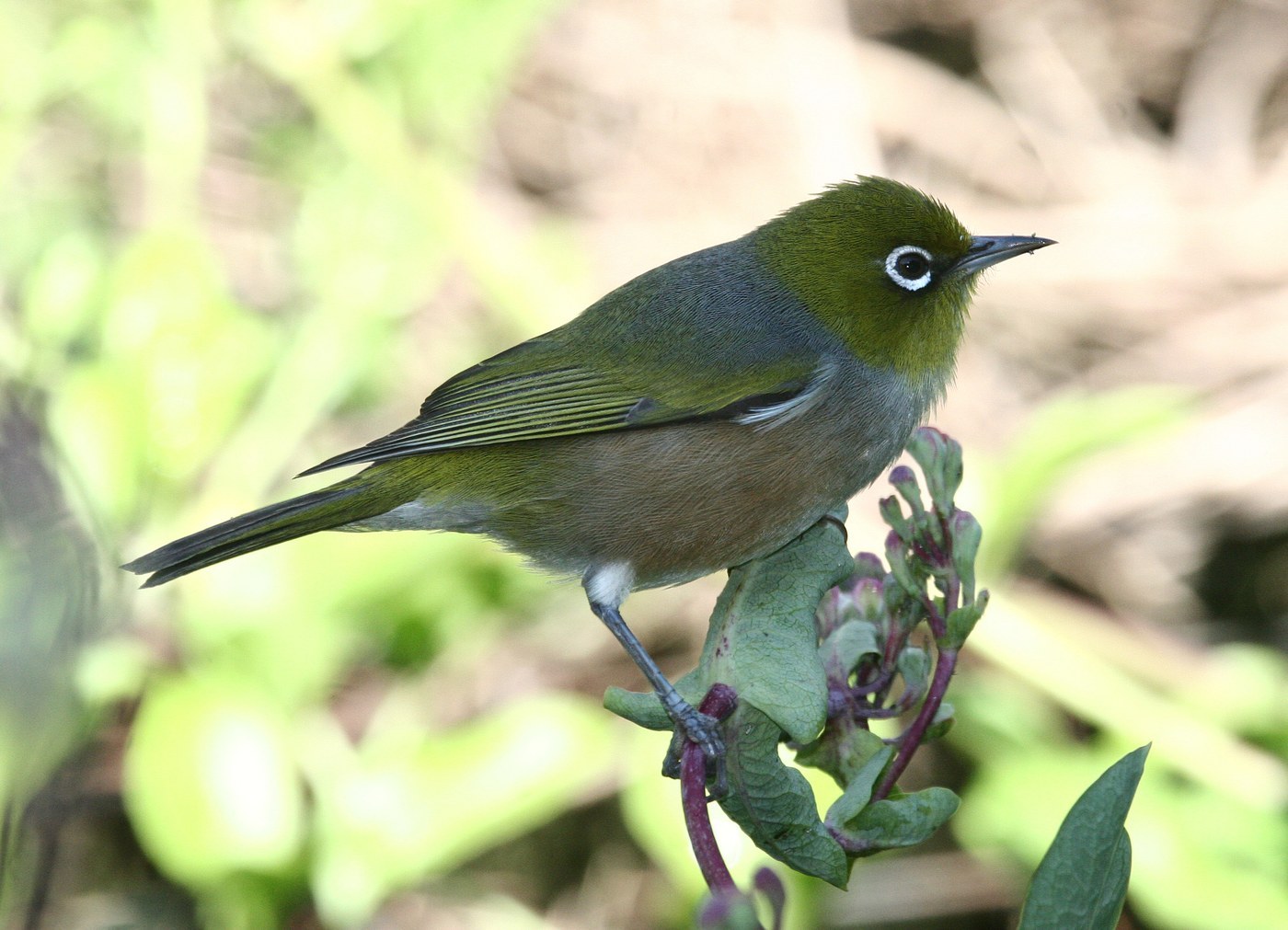
Overview
The Silvereye (Zosterops lateralis), also known as the Wax-eye, White-eye, or Tauhou (in New Zealand), is a small, highly adaptable songbird native to Australia, New Zealand, and various Pacific islands. It is a member of the white-eye family, named for the conspicuous ring of white feathers around the eye shared by most species in the group. Silvereyes are gregarious, often moving through gardens and woodland edges in small, twittering flocks, and are one of the most familiar backyard birds across much of their range.
Key Field Marks
- Size and shape: Very small, about 10-13 cm long, with a compact, rounded body, short neck, and a short, fine, slightly downcurved bill suited to both insects and fruit/nectar.
- Eye-ring: The defining feature — a bold, crisp white ring of tiny feathers encircling the eye, easily visible even at a distance and present on essentially all birds and races.
- Upperparts: Olive-green back, head, and wings, giving an overall bright, fresh green impression in good light.
- Underparts: Variable by subspecies and region, ranging from pale gray to buffy or cinnamon-washed flanks, with a whitish throat and center of the belly; some races (e.g., in Tasmania and parts of New Zealand) show richer buff or chestnut flanks.
- Bill and legs: Thin, sharply pointed, blackish bill; grayish legs.
- Behavior: Highly active and acrobatic, foraging in flocks through foliage for insects, nectar, and soft fruit; often hangs upside down or clings to twigs while feeding, and flocks keep up constant soft contact calls while moving through vegetation.
Separating It From Similar Species
- Other white-eyes (in areas of overlap): Where multiple Zosterops species occur together (e.g., parts of Australia and the Pacific), subtle differences in flank color, back tone, and bill size can help, but the white eye-ring itself is shared across the genus, so range and subtle plumage tone are the main separators rather than the eye-ring.
- Warblers and small honeyeaters: Lack the crisp, complete white eye-ring; any small olive-green bird showing a bold white spectacle-like ring is almost certainly a Silvereye (or a related white-eye) rather than a warbler or honeyeater.
- Female/immature finches: Some small greenish finches can superficially suggest a Silvereye at a glance, but none show the bold white eye-ring, and finches typically have a much stouter, conical seed-eating bill compared to the Silvereye's fine, slightly curved bill.
Habitat and Range
Extremely adaptable, found in gardens, orchards, parks, woodland edges, coastal scrub, forest, and shrubland across most of Australia, New Zealand, and numerous southwest Pacific islands. Some mainland Australian and Tasmanian populations are migratory, moving north in autumn and winter and returning south to breed in spring and summer, while other populations (including most in New Zealand, which was colonized naturally in the 19th century) are largely sedentary. It readily visits backyard fruit and nectar feeders.
Voice
A constant, soft, plaintive "psee" or "tsee-eee" contact call is given almost continuously by flock members as they move through vegetation, making flocks easy to locate by ear even before they are seen. The song is a pleasant, warbling, somewhat disjointed series of soft musical notes, often given from a perch, especially in the breeding season.
When to Look
Resident and visible year-round across most of its range; in areas with migratory populations, flock sizes and numbers often peak in autumn and winter as birds move to lower elevations or northward, while breeding pairs disperse and become less conspicuous in spring and summer.
Frequently asked questions
What is the easiest way to identify a Silvereye?
Look for a small olive-green bird with a bold, crisp white ring around the eye — this eye-ring is the single most distinctive and reliable field mark.
Where is the Silvereye found?
It is native to Australia, New Zealand, and several southwest Pacific islands, and is common in gardens, orchards, woodland edges, and coastal scrub.
Does the Silvereye migrate?
Some mainland Australian populations are migratory, shifting north in autumn and winter, while many other populations, including most in New Zealand, are largely sedentary.
What does a Silvereye eat?
A varied diet of insects, nectar, and soft fruit; it is a frequent visitor to garden fruit trees and nectar feeders.
Why is it called a Silvereye?
The name refers to the conspicuous ring of small white feathers that encircles each eye, a feature shared by other members of the white-eye family.