
Semipalmated Sandpiper Identification Guide
An abundant small 'peep' sandpiper of mudflats and shorelines, identified by its short straight bill, black legs, and plain gray-brown breeding plumage.
Read the full Semipalmated Sandpiper encyclopedia entry →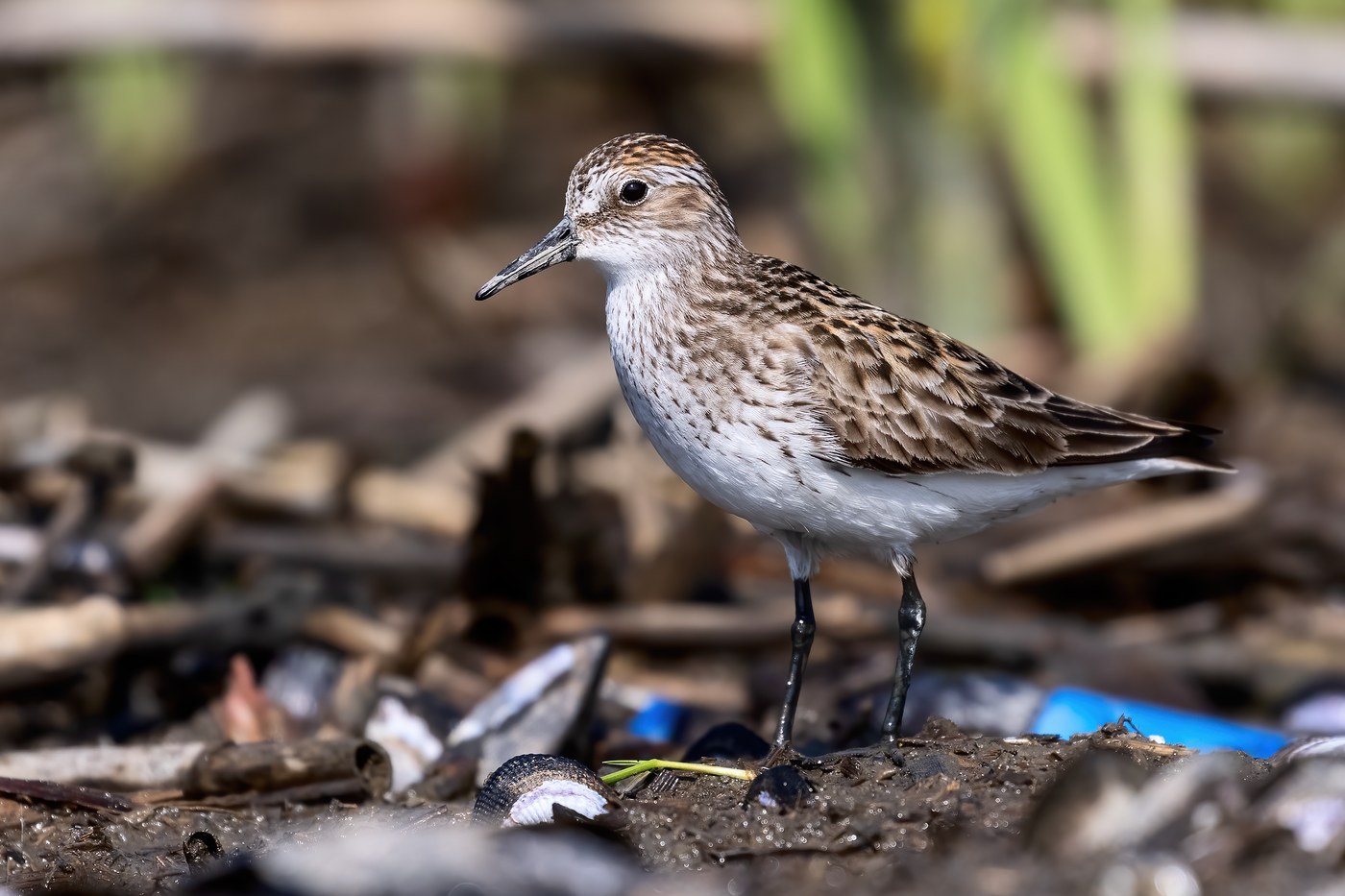
Key Field Marks
- Size & shape: A tiny shorebird ("peep"), about 13–15 cm, with a plump body, short neck, and short, straight, blunt-tipped bill.
- Plumage (breeding): Gray-brown to warm brown above with fine dark streaking, whitish underparts, and light streaking confined to the upper breast/sides.
- Plumage (nonbreeding): Plain gray-brown above and white below, with little contrast — among the plainest of the peeps.
- Bill: Short, straight, and blunt-tipped, thicker at the base than in Western Sandpiper — a key distinguishing feature.
- Legs: Black.
- Behavior: Forages by pecking rapidly at the mud surface (rather than the deep probing typical of dowitchers); highly gregarious, often in large, tight-packed flocks that wheel in unison.
Separating It From Similar Species
- Western Sandpiper: Bill is longer, finer, and distinctly drooped at the tip (versus short and straight in Semipalmated); breeding Western Sandpipers show rufous scapulars and chevron-marked flanks that Semipalmated lacks.
- Least Sandpiper: Smaller and browner overall with yellow-green legs (versus black) and a finer, slightly drooped bill; tends to favor muddier, vegetated edges over open flats.
- White-rumped Sandpiper: Larger, with wings that extend past the tail tip at rest, and a white rump band visible in flight (versus a dark-centered rump in Semipalmated).
- Baird's Sandpiper: Also has long wings extending past the tail, a buffy scaly-patterned back, and a more attenuated body shape.
Where & When to See It
- Habitat: Mudflats, beaches, and margins of lakes, ponds, and impoundments; breeds on wet Arctic and subarctic tundra.
- Range: Breeds across Arctic Canada and Alaska; one of the most numerous shorebirds in North America during migration, funneling through staging areas like the Bay of Fundy and Delaware Bay in enormous numbers; winters mainly in coastal South America and the Caribbean.
- Season: Spring migration peaks May–early June; fall migration is protracted, with adults moving July–August and juveniles following August–October.
Voice
- Flight call is a short, low, hoarse chrup or cherk, less high-pitched than the sharper, thinner call of Western Sandpiper.
Frequently asked questions
How do I separate Semipalmated Sandpiper from Western Sandpiper?
Focus on the bill: Semipalmated has a short, straight, blunt-tipped bill, while Western Sandpiper has a longer, finer bill that droops noticeably at the tip. Breeding Western Sandpipers also show rufous scapular feathers that Semipalmated lacks.
What leg color does the Semipalmated Sandpiper have?
Black legs, which helps separate it from the yellow-green legged Least Sandpiper.
Why is it called 'semipalmated'?
It has small webs of skin between the bases of its toes (partial, or 'semi,' palmation), a subtle feature best seen in close or in-hand views.
When and where can large flocks be seen?
Massive concentrations gather at major migration staging areas such as the Bay of Fundy and Delaware Bay, mainly in spring (May) and again in mid-to-late summer as adults move south.