
Semipalmated Plover Identification Guide
A small, common shorebird with a single dark breast band, stubby orange-and-black bill, and orange legs, often confused with the rarer Piping Plover.
Read the full Semipalmated Plover encyclopedia entry →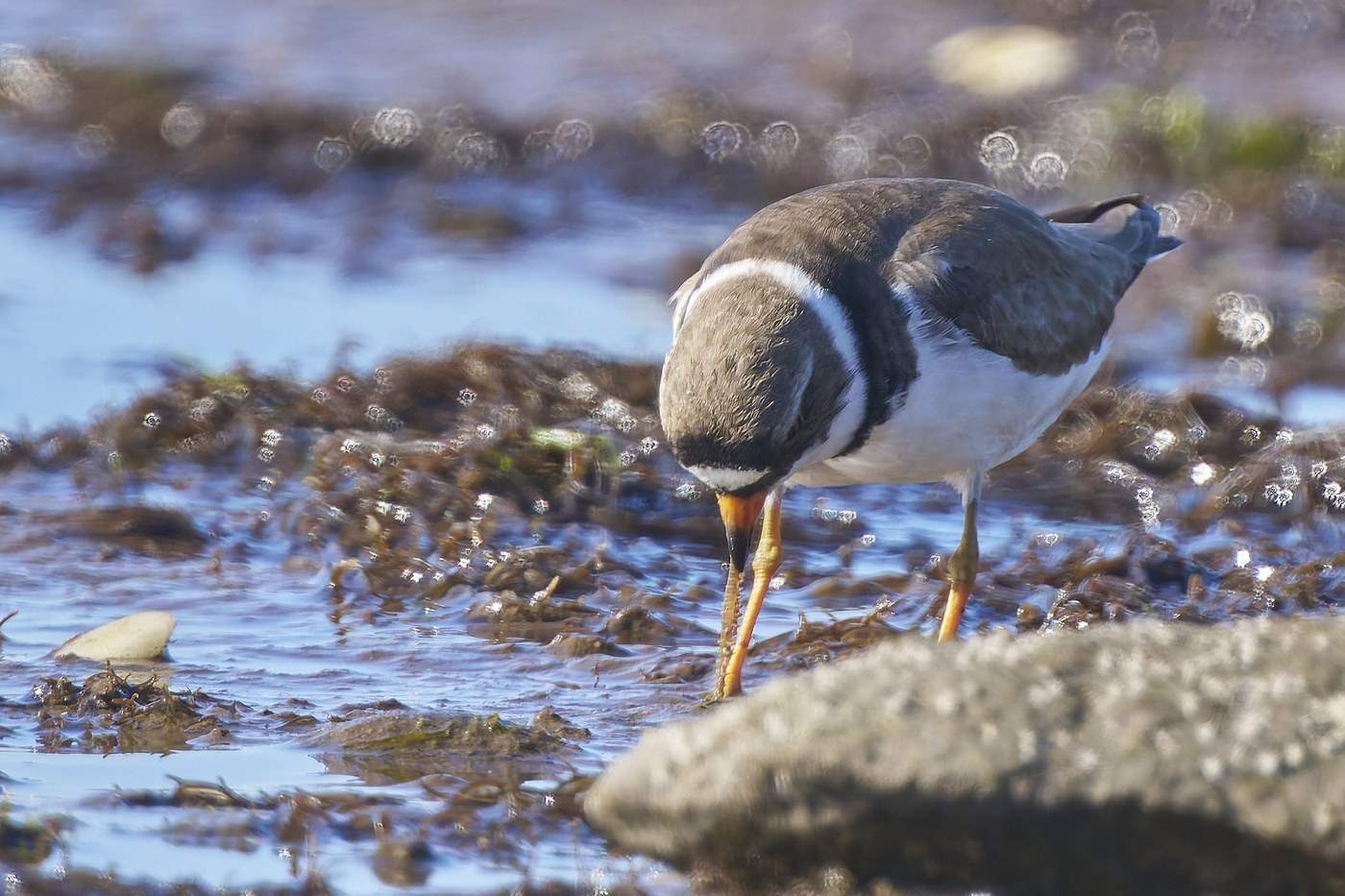
Key Field Marks
- Size & shape: A small, plump plover, about 17–19 cm, with a round head, short neck, and short bill typical of the genus Charadrius.
- Plumage: Brown (sandy-brown, not pale sandy) upperparts, white underparts, and a single complete dark brown breast band (black in breeding males). A white forehead patch is bordered above by a black bar connecting to the eye.
- Bill: Short and stubby, orange at the base with a sharply defined black tip.
- Legs: Bright orange to orange-yellow — a useful mark separating it from the darker-legged, paler Piping Plover.
- Behavior: Classic "run-stop-peck" foraging on open mudflats and beaches; often in loose flocks with other small shorebirds.
Separating It From Similar Species
- Piping Plover: Much paler, sandy-colored upperparts (matching dry sand) versus the darker brown back of Semipalmated Plover; breast band is often incomplete; a federally protected/rarer species found on dry sandy beaches rather than mudflats.
- Killdeer: Much larger with two breast bands, a longer tail, and a bright orange-red eye-ring; found on a wider range of open habitats including lawns and gravel lots.
- Wilson's Plover: Larger with a notably longer, thicker, all-black bill and pinkish (not orange) legs.
- Common Ringed Plover (Eurasian counterpart): Nearly identical but has more extensive webbing between the toes (visible only in hand) and a slightly different call; a review of range and voice separates the two in areas of overlap (e.g., northeastern North America in migration).
Where & When to See It
- Habitat: Mudflats, sandy beaches, tidal flats, and margins of lakes and rivers during migration and winter; nests on gravelly or sandy tundra and river bars in the Arctic and subarctic.
- Range: Breeds across the Arctic and subarctic of Canada and Alaska; migrates through nearly all of North America to winter along coasts from the southern U.S. through Central and South America.
- Season: Common migrant spring (April–May) and fall (July–October); present on wintering grounds October–March; breeds May–August in the far north.
Voice
- Call is a clear, rising, whistled chu-WEE or too-li, distinctly different from the flatter, more melancholy peep-lo whistle of Piping Plover.
Frequently asked questions
What is the main difference between Semipalmated Plover and Piping Plover?
Semipalmated Plover has darker brown upperparts and a complete breast band, while Piping Plover is much paler sandy-colored with a thinner, often broken breast band; leg color (bright orange vs. paler orange-yellow) and habitat (mudflats vs. dry sand) also help.
Where does the name 'semipalmated' come from?
It refers to the partial webbing between the bird's toes, a feature shared with the very similar Semipalmated Sandpiper, visible mainly in close or in-hand views.
What does a Semipalmated Plover's call sound like?
A clear, rising whistled note often rendered as chu-WEE, higher and more emphatic than the softer whistle of a Piping Plover.
When is the best time to see Semipalmated Plovers?
They are most easily found during spring and fall migration on mudflats and beaches across most of North America, from April to May and again July through October.