
Sedge Wren Identification Guide
A tiny, secretive North American wren of wet meadows and sedge marshes, identified by its buffy streaked crown, short cocked tail, and unstreaked buffy flanks.
Read the full Sedge Wren encyclopedia entry →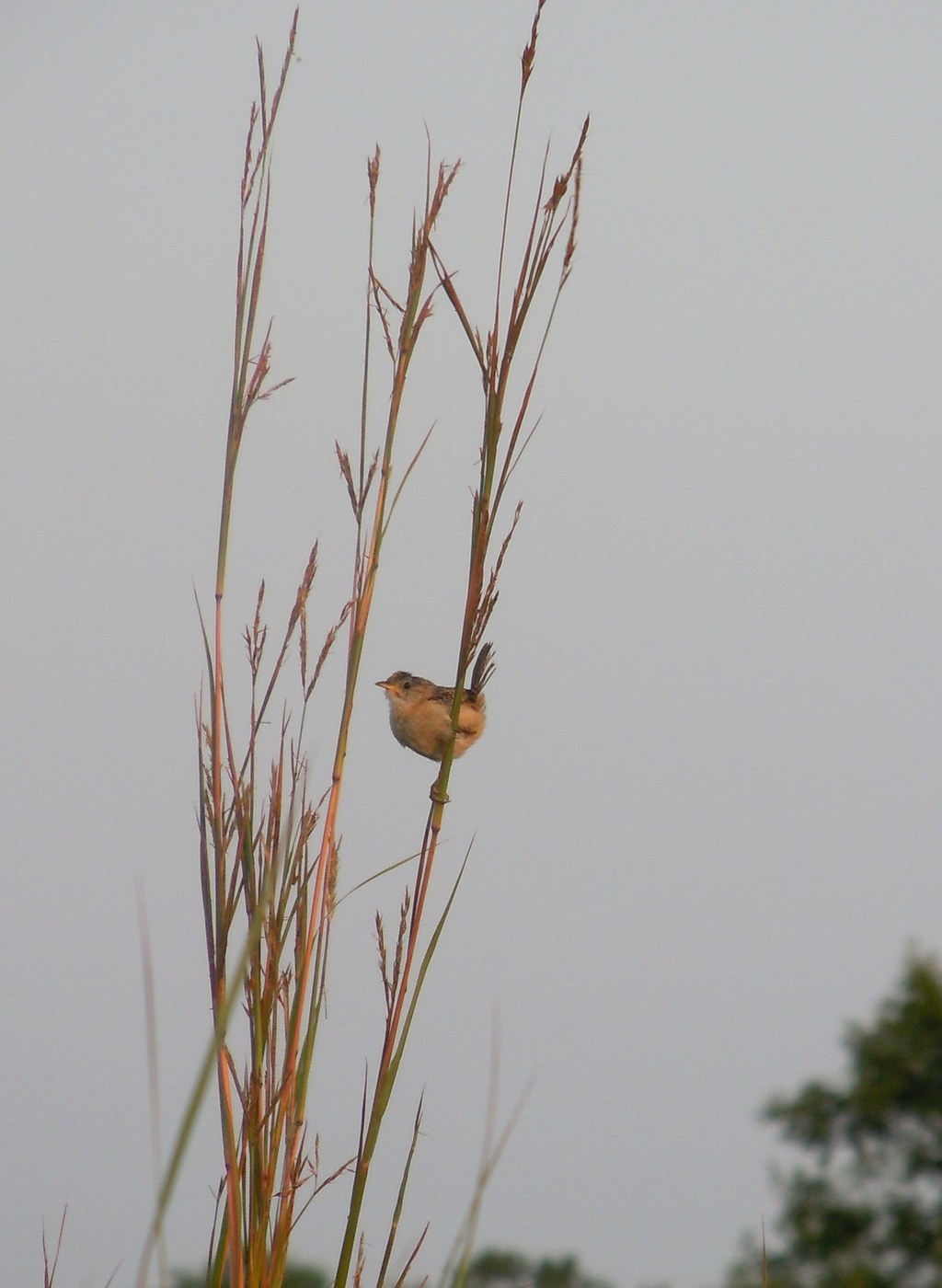
Key Field Marks
- Size & shape: One of the smallest North American wrens, about 10–11 cm, with a short, only weakly cocked tail and a relatively short, thin bill compared to the more common Marsh Wren.
- Plumage: Buffy-brown overall with fine white streaking on the crown (unlike the plain unstreaked crown of Marsh Wren) and bold black-and-white streaking on the back.
- Underparts: Warm buffy flanks and breast, whitish throat, generally unstreaked below.
- Bill: Notably shorter and less curved than Marsh Wren's longer, more decurved bill.
- Behavior: Extremely skulking and mouse-like, creeping low through dense sedge and grass; rarely perches in the open. Often detected by voice before being seen.
Separating It From Similar Species
- Marsh Wren: Larger, with a bold white eyebrow, a plain (unstreaked) crown, longer and more curved bill, and a habit of cocking its tail almost vertically over its back; inhabits cattail marshes with standing water rather than drier sedge meadows.
- House Wren: Lacks streaking on the crown and back, is grayer-brown overall, and favors brushy yards and woodland edge rather than wet meadows.
- Winter Wren / Pacific Wren: Much darker overall, heavily barred on the belly and flanks, very short tail held sharply cocked, and found in dense forest understory, not open sedge marsh.
Where & When to See It
- Habitat: Wet meadows, sedge marshes, and hayfields with dense grass/sedge cover and little or no standing water — drier and less reedy than typical Marsh Wren habitat.
- Range: Breeds locally across the northern-central U.S. and south-central Canada; a notably nomadic, irregular breeder that shifts locations year to year depending on habitat conditions. Winters along the Gulf Coast and southeastern U.S.
- Season: Breeding birds arrive late (often not until June) and may nest into late summer; migrants pass through spring and fall, with wintering birds present October–April in the south.
Voice
- Song is a dry, staccato chattering that starts with a few sharp chip notes and accelerates into a rapid stuttering trill, quite different from the loud, gurgling, reedy song of the Marsh Wren.
- Often sings at dawn, dusk, and even at night, and can be very difficult to see while singing from deep within grass cover.
Frequently asked questions
How do I tell Sedge Wren from Marsh Wren?
Sedge Wren has a streaked (not plain) crown, a shorter and straighter bill, and lacks the bold white eyebrow of Marsh Wren; it also favors drier sedge meadows rather than cattail marshes with standing water.
Why is the Sedge Wren so hard to see?
It is extremely skulking, creeping mouse-like through dense grass and sedge and rarely perching in the open, so it is most often detected by its dry, chattering song.
When does the Sedge Wren breed?
It is a notably late and irregular breeder, often not settling in to nest until June, and its breeding locations can shift unpredictably from year to year based on habitat conditions.
What habitat should I search for Sedge Wrens?
Search wet meadows, hayfields, and sedge marshes with dense grassy cover and little standing water, as opposed to the deeper cattail marshes favored by Marsh Wrens.