
Scott's Oriole Identification Guide
A striking desert oriole of the American Southwest, with males combining a solid black hood and back with brilliant lemon-yellow underparts.
Read the full Scott's Oriole encyclopedia entry →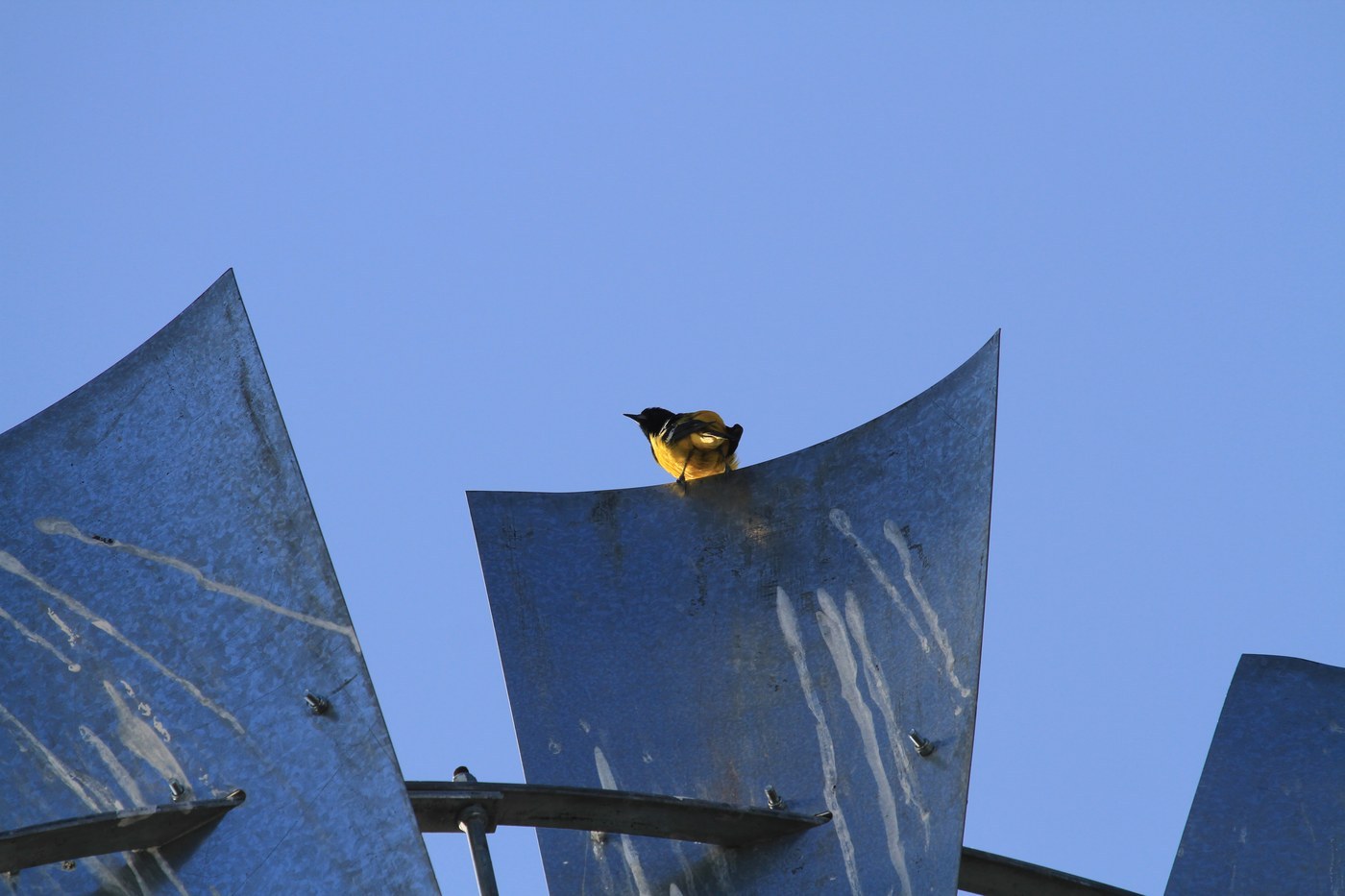
Key Field Marks
- Size & shape: A medium-sized oriole, about 19–24 cm, with a fairly long, straight, sharply pointed bill typical of the genus.
- Male plumage: Bright lemon-yellow underparts, rump, and shoulder patch contrasting with a solid black head, throat, upper breast, and back; black wings show a bold white wing bar; tail mostly black with yellow at the base of the outer feathers.
- Female / immature: Olive-yellow overall with dusky streaking on the back and two whitish wing bars — duller and less contrasting than the male, and can be confused with other female orioles.
- Bill & legs: Long, sharply pointed black bill; grey legs.
Separating It From Similar Species
- Bullock's Oriole male is orange (not lemon-yellow) with a black eyeline and crown rather than an entirely black head/back/throat.
- Hooded Oriole male is orange-yellow with only a black throat/face "bib," not the full black head and back seen on Scott's Oriole.
- The combination of a fully black hood-and-back with clean lemon-yellow (not orange) underparts is unique to Scott's Oriole among North American orioles.
Habitat, Range & Season
- Breeds in arid habitats of the southwestern United States and Mexico, strongly associated with yucca and agave-studded desert grassland, pinyon-juniper woodland, and desert scrub.
- Present on breeding grounds roughly March through September, wintering mainly in Mexico, though some remain in the milder parts of its US range.
Behavior
- Feeds on insects, nectar, and fruit; often seen probing yucca and agave blossoms.
- Builds a hanging basket nest, frequently woven into the fibrous leaves of a yucca plant.
- Males sing conspicuously from the tops of yuccas or junipers, often before dawn.
Voice
- Song is a rich, clear, whistled series of phrases, somewhat reminiscent of a Western Meadowlark but faster and more musical.
- Calls include a harsh chatter and sharp whistled notes.
Frequently asked questions
What distinguishes a male Scott's Oriole from a Bullock's Oriole?
Scott's Oriole has a solid black head, throat, and back paired with lemon-yellow underparts, whereas Bullock's Oriole is orange with only a black eyeline and crown, not a fully black hood.
What plant is most associated with Scott's Oriole?
Yucca plants are strongly associated with this species — it feeds on their nectar and insects and often builds its hanging nest woven into yucca leaves.
How do I identify a female Scott's Oriole?
Females are olive-yellow with dusky streaking on the back and two pale wing bars, lacking the male's solid black hood, so look for overall shape, bill structure, and habitat to confirm.
Where can I find Scott's Orioles?
They breed in arid, yucca-studded grasslands and desert scrub across the southwestern US (Arizona, New Mexico, Nevada, Texas, California) and into Mexico.