
Satin Bowerbird Identification Guide
An Australian rainforest bird best known for the male's glossy blue-black plumage, violet eyes, and elaborate stick bower decorated with blue objects.
Read the full Satin Bowerbird encyclopedia entry →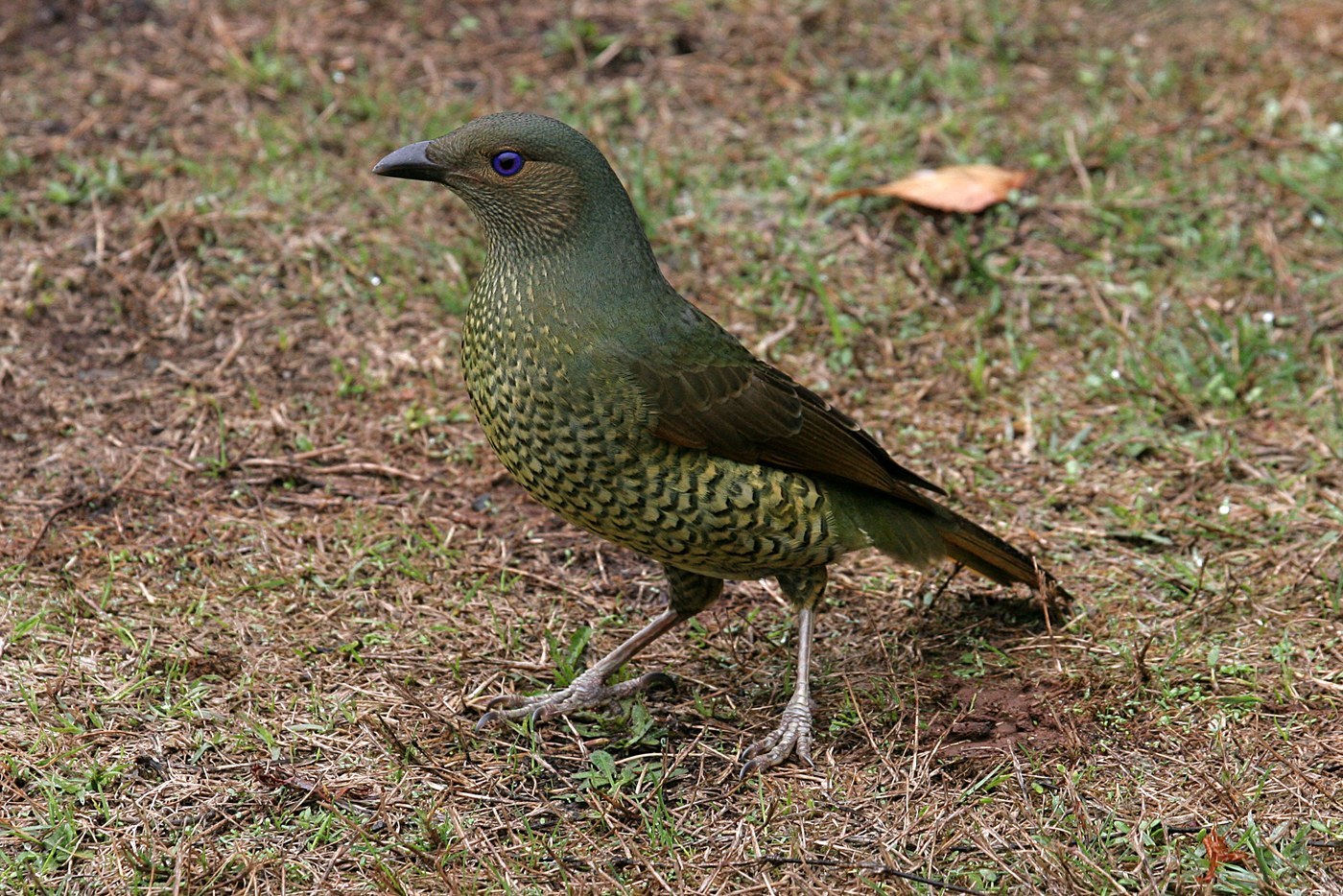
Key Field Marks
- Size & shape: A medium-large, stocky songbird with a fairly short, stout bill and a somewhat hunched posture; roughly the size of a small crow but with a shorter tail.
- Adult male plumage: Glossy, iridescent blue-black overall that can flash deep violet-blue in good light — one of the most striking plumages of any Australian bird.
- Eyes: Bright lilac-violet iris, contrasting strikingly with the dark plumage and visible at close range.
- Female/immature plumage: Very different — olive-green above, with scalloped pale underparts showing dark crescent barring, and a duller brownish eye; young males resemble females for several years before acquiring full adult blue-black plumage.
- Bill: Pale bill in females/immatures versus a darker, blackish bill in adult males.
- Behavior: Males build and maintain avenue-style bowers of twigs decorated almost exclusively with blue objects (feathers, flowers, berries, and increasingly blue plastic/human litter) to attract females; performs an energetic buzzing, hissing display dance at the bower.
Separating Satin Bowerbird from Similar Species
- Adult male vs. other blue-black birds: The combination of overall glossy blue-black body, violet eye, and stocky bowerbird shape separates it from superficially similar birds like currawongs (much larger, with white in wings/tail) or starlings (smaller, with speckling and different eye color).
- Female/immature vs. other green birds: The scalloped underparts (crescent-shaped dark barring on a pale background) combined with olive-green upperparts distinguish it from female or immature figbirds and orioles, which lack the same crescent barring pattern.
- Regent Bowerbird (range overlap in eastern Australia): Adult male Regent Bowerbird is black and brilliant golden-yellow, quite different from Satin's all blue-black; females of the two species are more similar but Regent females have a shorter tail and different barring pattern.
Where & When to See One
Satin Bowerbird is endemic to eastern Australia, found in wet eucalypt forest, rainforest, and adjacent woodland edges along the Great Dividing Range from far north Queensland to Victoria, with a disjunct population in the McPherson/Border Ranges area. It is resident year-round, though some altitudinal movement occurs, with birds moving to lower elevations or into gardens and orchards outside the breeding season. Bowers are maintained on the forest floor in a cleared patch and are most active with fresh decorations and courtship activity in spring.
Voice
A varied mix of harsh churring, rattling, and buzzing notes, plus excellent mimicry of other birds and even mechanical sounds; males vocalize actively while displaying at the bower.
Frequently asked questions
Why is the male Satin Bowerbird blue and the female green?
The species shows strong sexual dimorphism typical of many bowerbirds: males invest in flashy, glossy blue-black plumage for display and courtship, while females retain cryptic olive-green, scalloped plumage that helps camouflage them at the nest.
What is distinctive about the Satin Bowerbird's bower?
Males build an avenue-shaped structure of two parallel walls of sticks and decorate the surrounding display area almost exclusively with blue objects, from feathers and flowers to blue plastic litter, to attract females.
How can you tell a young male Satin Bowerbird from a female?
Young males look very similar to females, both being olive-green with scalloped underparts, and only gradually molt into the glossy blue-black adult male plumage over several years, so age and subtle bill/eye differences are needed to separate them.
Where in Australia is the Satin Bowerbird found?
It is endemic to eastern Australia, inhabiting wet forests and rainforest edges along the Great Dividing Range from north Queensland south to Victoria.
Does the Satin Bowerbird migrate?
It is largely sedentary, though birds may shift to lower elevations or visit gardens and orchards outside the breeding season in search of fruit.