
Saker Falcon Identification Guide
A large, pale, long-winged falcon of open steppe and semi-desert country, told from Peregrine by its broader wings, brownish upperparts, and heavier flapping flight.
Read the full Saker Falcon encyclopedia entry →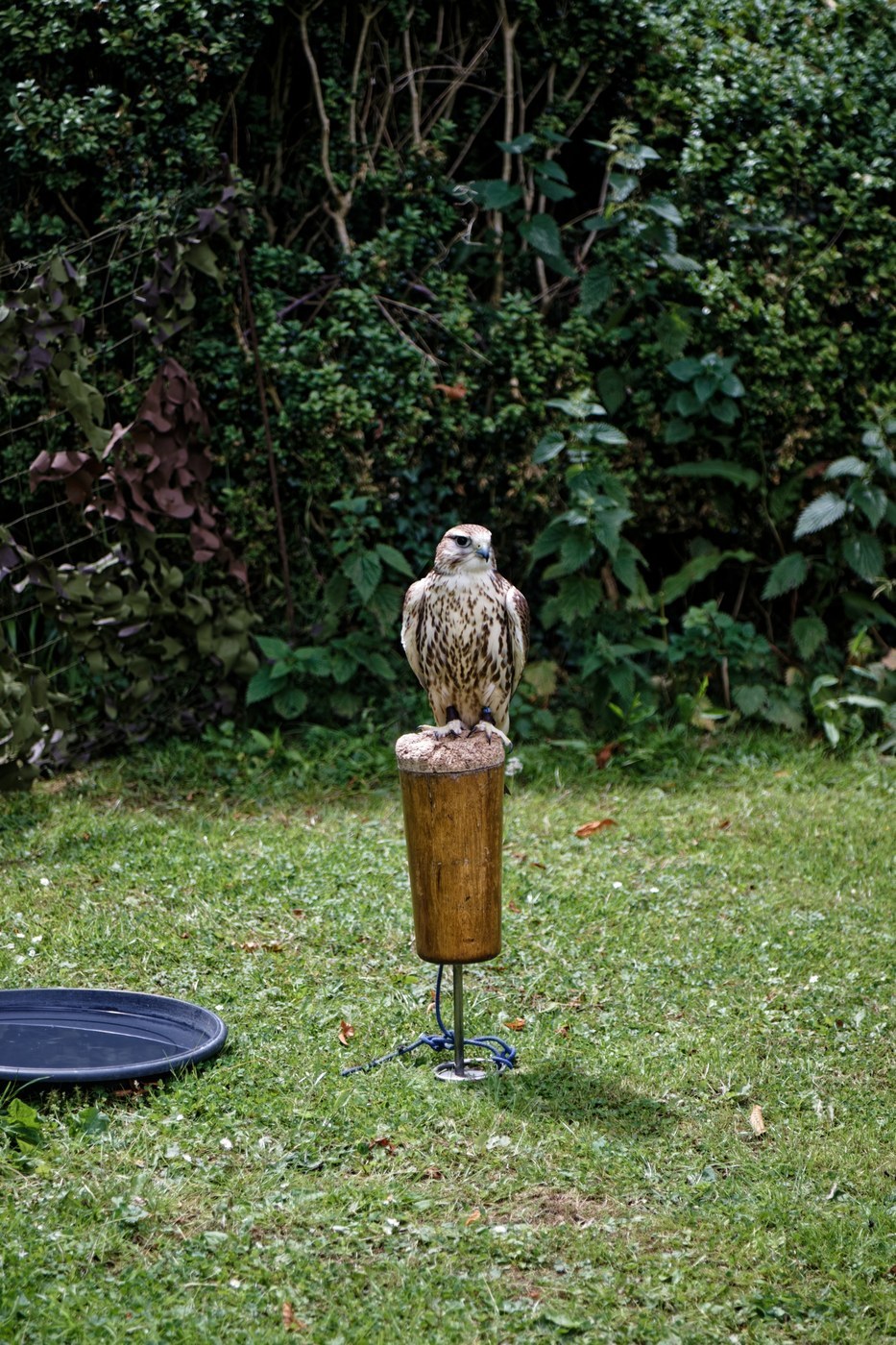
Key Field Marks
- Size & shape: A large falcon, noticeably bigger and bulkier than a Peregrine, with long, broad-based wings that taper less sharply and a longer tail. Wingspan can exceed 1.2 m (4 ft).
- Plumage: Upperparts are pale sandy-brown to grayish-brown (variable across its wide range), lacking the strong blue-gray tone of adult Peregrine. Underparts are pale and heavily streaked, not neatly barred.
- Head: Head pattern is much subtler than Peregrine's bold black "moustache" — Saker shows only a thin, indistinct malar stripe, and the crown is often paler, giving a less hooded look.
- Bill & legs: Bill is relatively small; legs and feet are pale yellow, similar in tone to other large falcons but often look less robust than a Gyrfalcon's.
- Flight: Wingbeats are stiffer and shallower than Peregrine's, with long glides on flat or slightly bowed wings. Often hunts low over open ground rather than stooping from height.
Separating Saker from Similar Species
- Peregrine Falcon: Smaller, more compact, with a strong blue-gray back, bold black helmet/moustache, and finely barred underparts (vs. streaked in Saker). Peregrine's flight is faster and more powerful with crisper wingbeats.
- Gyrfalcon: Larger and bulkier still, with a proportionally shorter tail relative to wing length and a heavier chest; Gyrfalcon's range barely overlaps Saker's (mostly Arctic vs. steppe).
- Lanner Falcon: Similar pale tones and weak facial pattern but Lanner is smaller, with a more rufous or chestnut crown/nape and narrower wings; ranges mostly separate (Lanner in Africa/southern Europe, Saker in central Asia).
- Juveniles: Young Sakers are heavily streaked below and can look quite dark; separate from juvenile Peregrine by the broader wings, paler head, and less contrasting moustache.
Where & When to See One
Saker Falcons breed across the steppes and semi-deserts of eastern Europe through Central Asia to Mongolia and northern China, nesting on cliffs, crags, or in old stick nests of other raptors on isolated trees or pylons. Most populations are migratory or partially migratory, wintering from the Middle East and northeast Africa across the Indian subcontinent. Look for them hunting over open grassland, steppe, and agricultural edges, often perched conspicuously on poles, haystacks, or low rises scanning for ground squirrels and other rodents.
Voice
Generally silent away from the nest. Near breeding cliffs gives a harsh, repeated kyak-kyak-kyak or grating chattering alarm call, deeper and coarser than a Peregrine's cry.
Frequently asked questions
How can I tell a Saker Falcon from a Peregrine Falcon?
Saker is larger and bulkier with broader wings, sandy-brown (not blue-gray) upperparts, streaked (not barred) underparts, and only a faint mustache mark compared to the Peregrine's bold black helmet.
What habitat does the Saker Falcon prefer?
Open steppe, semi-desert, and grassland with scattered cliffs, crags, or tall structures for nesting and perching; it avoids dense forest and typically hunts over flat, open terrain.
Does the Saker Falcon migrate?
Many populations are migratory, moving south in winter from Central Asian breeding grounds to the Middle East, northeast Africa, and the Indian subcontinent, while some southern populations are largely resident.
What does a Saker Falcon eat and how does that show in its behavior?
It preys mainly on ground squirrels and other small mammals, so it is often seen perched low or flying steadily just above open ground rather than stooping from great height like a Peregrine.
Is the Saker Falcon rare?
It is globally classified as Endangered due to habitat loss, electrocution on power lines, and illegal trapping for falconry, so sightings should be reported to local birding networks where possible.