
Sagebrush Sparrow Identification Guide
A pale gray, sagebrush-obligate sparrow of the interior western US, told by its bold white eyering, dark malar stripe, and mouse-like ground-running habits.
Read the full Sagebrush Sparrow encyclopedia entry →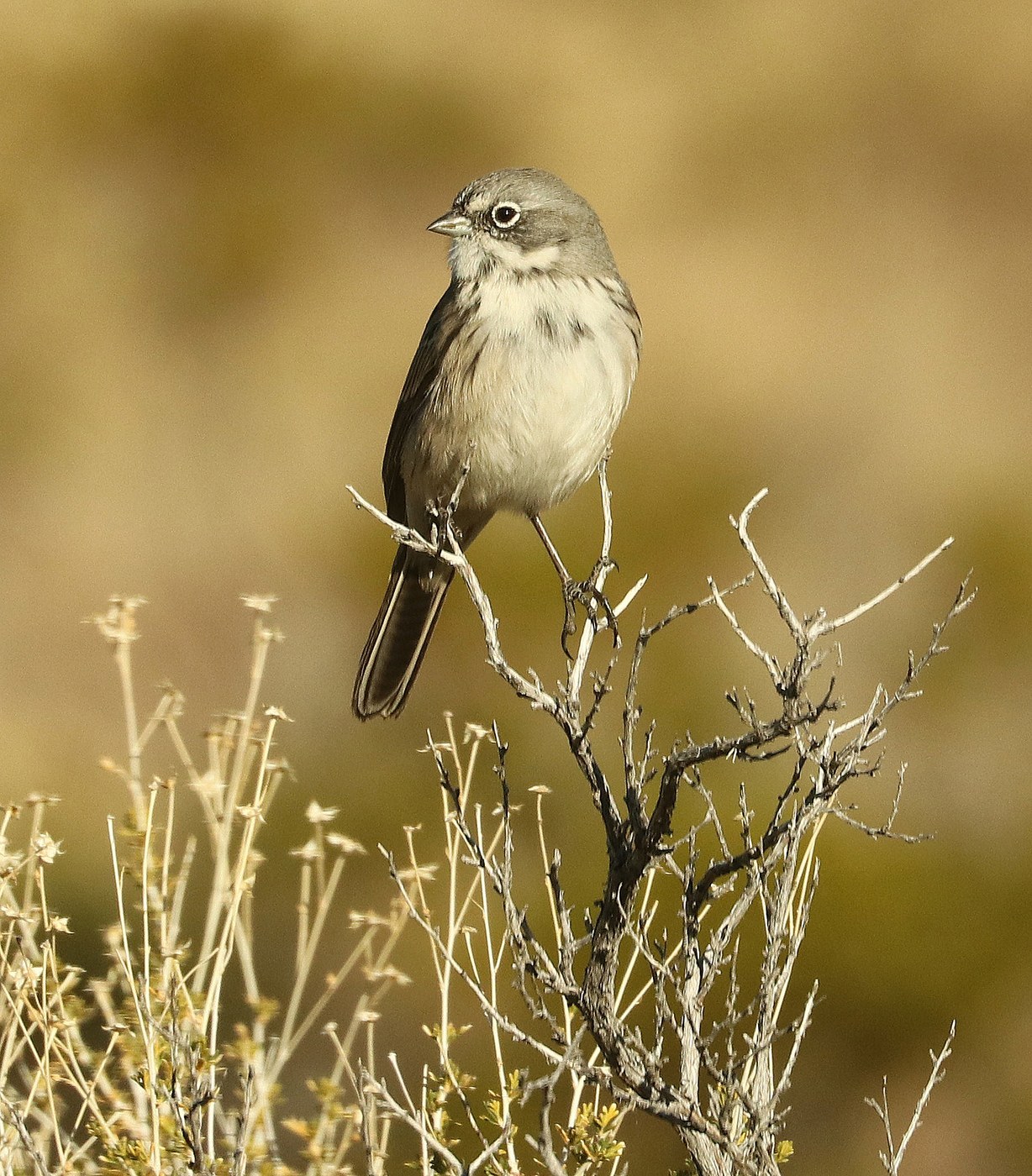
Key Field Marks
- Small, slender sparrow with a plain gray head, a bold white eyering, and a dark malar (whisker) stripe bordering a clean white throat.
- A single dark central breast spot is often visible against otherwise whitish underparts, with faint streaking along the flanks.
- Back is grayish-brown with light streaking; overall paler and grayer than many other sparrows found in the same habitat.
- Relatively long tail, frequently flicked or pumped, especially while running.
- Behavior is highly distinctive: often runs mouse-like along the ground between shrubs rather than flying, with the tail cocked or actively pumping as it moves.
Similar Species
- Bell's Sparrow (formerly considered the same species as Sagebrush Sparrow): darker and more solidly gray overall, with less contrasting flank streaking and a more coastal/southwestern California chaparral range; the two species can overlap during migration and require careful comparison of overall tone and streaking.
- Brewer's Sparrow: has a streaked crown and lacks the bold malar stripe and central breast spot, with an overall plainer, less contrastingly marked face.
- Black-throated Sparrow: shows a solid black throat patch and bold black-and-white face pattern, quite different from the pale throat and malar stripe of Sagebrush Sparrow.
Habitat & Range
- Breeds in sagebrush steppe and other arid shrubland of the interior Great Basin and surrounding regions of the western United States, generally favoring more continental, interior habitat than the coastal-leaning Bell's Sparrow.
- Winters in desert scrub across the southwestern United States and northern Mexico.
- A true sagebrush-obligate species over much of its breeding range, closely tied to healthy stands of big sagebrush.
Voice
- Song is a thin, tinkling series of variable buzzy and musical notes, delivered from a low perch atop a sagebrush shrub.
- Calls include a soft, high-pitched chip note.
Best Times & Approach Tips
- Spring and early summer, during the breeding season, offer the best chance to hear singing males perched on sagebrush and to observe the species' distinctive ground-running behavior.
- Watch quietly at the base of sagebrush shrubs — birds often stay low and run between cover rather than flushing, so patience pays off for good views.
Frequently asked questions
How is Sagebrush Sparrow different from Bell's Sparrow?
Sagebrush Sparrow is paler and grayer overall with more contrasting flank streaking and breeds in the interior Great Basin, while Bell's Sparrow is darker and more uniformly gray, favoring coastal and southwestern California chaparral habitats.
What behavior helps identify a Sagebrush Sparrow?
It frequently runs mouse-like along the ground between shrubs with its tail cocked or pumping, rather than flying, which is a strong behavioral clue in the field.
What is the key facial field mark?
A bold white eyering combined with a dark malar (whisker) stripe bordering a clean white throat, along with a single dark central breast spot.
Is Sagebrush Sparrow tied to a specific habitat?
Yes, it is largely a sagebrush-obligate species, breeding in sagebrush steppe and similar arid shrubland across the interior Great Basin and nearby regions.
How can I separate it from a Brewer's Sparrow?
Brewer's Sparrow has a streaked crown and a plainer face lacking the bold malar stripe and central breast spot found on Sagebrush Sparrow.