
Rusty Blackbird Identification Guide
A North American blackbird notable for its rust-fringed fall plumage, pale yellow eye, and dramatic long-term population decline.
Read the full Rusty Blackbird encyclopedia entry →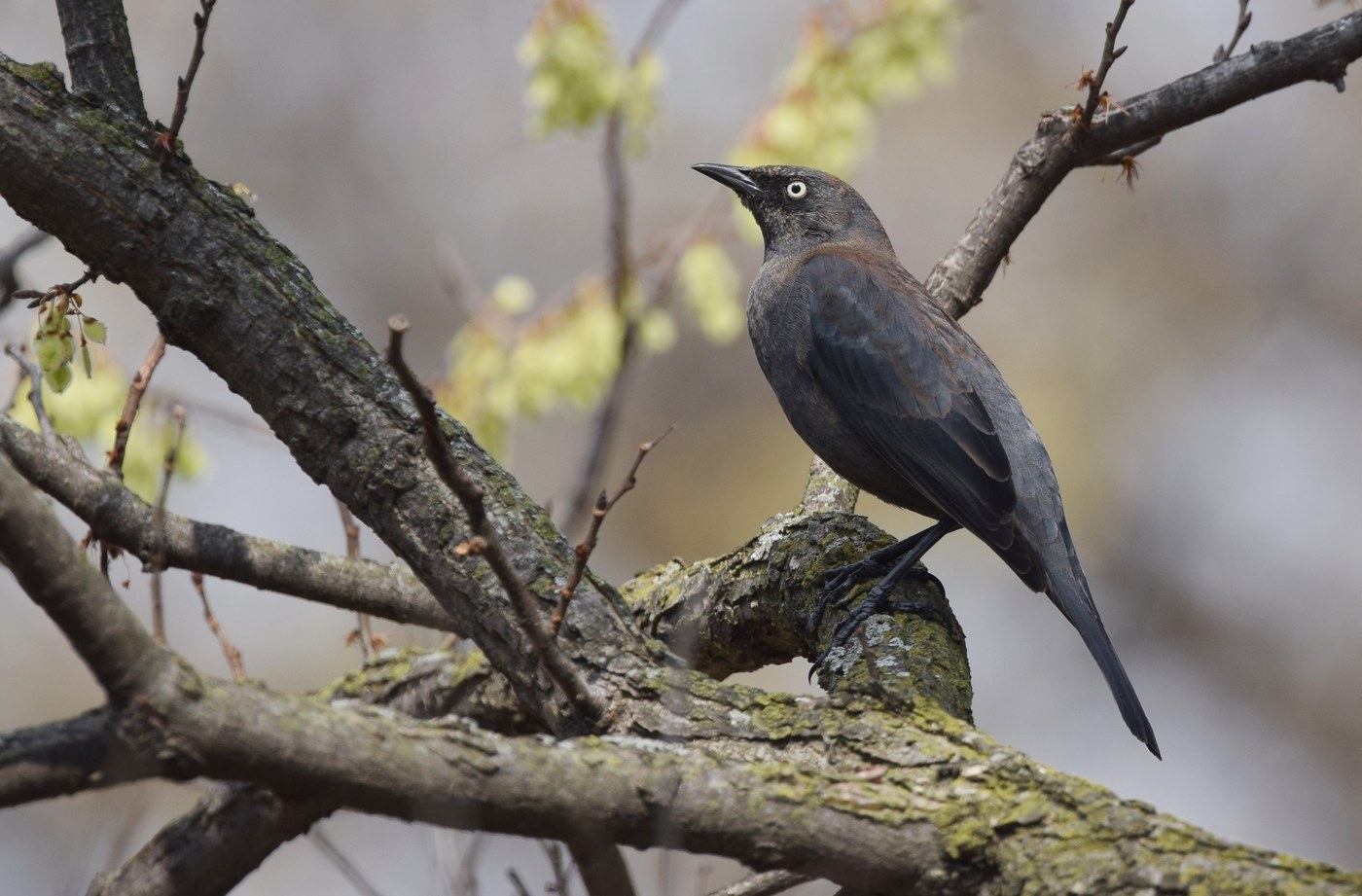
Key Field Marks
- Medium-sized blackbird with a slim, slightly pointed bill and a fairly short tail compared to grackles.
- Breeding male: glossy black overall with a pale yellow eye.
- Breeding female: dark slate-gray, also with a pale eye.
- Nonbreeding (fall/winter) birds of both sexes: show extensive rusty-orange feather fringing on the head, back, and breast, creating a scaly rust-and-black pattern that gives the species its name; this rusty edging wears off toward spring.
- Pale (straw to yellow) eye is present in all plumages and ages, a key distinction from several similar species.
Similar Species
- Brewer's Blackbird: breeding male is glossy black with a purplish-green sheen and a yellow eye but lacks strong rusty fringing in fall; female Brewer's has a dark eye and is more uniformly plain gray-brown, without the scaly rust pattern.
- Common Grackle: notably larger with a much longer, keel-shaped tail and a heavier bill; lacks the rusty-fringed fall plumage.
- European Starling (winter): shorter tail and shorter bill, with white-spangled (not rusty) fall plumage and a different overall shape.
Habitat & Range
- Breeds in wet boreal forest, bogs, and swampy woodland edges across Canada and Alaska.
- Winters primarily in wooded swamps, bottomland forest, and flooded woodlands of the southeastern and south-central United States, often in mixed flocks with other blackbirds.
- Migrates through much of the eastern and central US and Canada in spring and fall, favoring wet, wooded stopover sites.
Voice
- Song is a distinctive creaky, squeaky note often likened to a rusty hinge or gate, quite different from the more musical or harsh calls of other blackbirds.
- Calls include a sharp "chack" note given in flight and while foraging.
Conservation Note
- The Rusty Blackbird has suffered one of the steepest population declines of any North American landbird over the past several decades, making sightings, especially of concentrated flocks, of particular interest to birders and researchers.
Best Times & Approach Tips
- Fall migration (when the rusty fringing is freshest and most obvious) offers the best opportunity to learn the diagnostic plumage before it wears down over winter.
- Search flooded woodlands, swamp edges, and wet leaf litter where birds forage by flipping leaves for invertebrates.
Frequently asked questions
How can I tell a Rusty Blackbird from a Brewer's Blackbird in fall?
Fall Rusty Blackbirds show obvious rusty-orange fringes on the head, back, and breast that create a scaly pattern, while Brewer's Blackbirds remain comparatively plain and lack that rusty fringing.
Do Rusty Blackbirds have a pale eye year-round?
Yes, both sexes retain a pale yellow eye in breeding and nonbreeding plumage, which helps separate them from dark-eyed look-alikes like female Brewer's Blackbird.
Where do Rusty Blackbirds spend the winter?
Mainly in wooded swamps and flooded bottomland forest across the southeastern and south-central United States, often foraging in shallow water and wet leaf litter.
Why are Rusty Blackbirds considered a conservation concern?
The species has declined by an estimated 85–95% since the mid-20th century, one of the steepest declines of any North American landbird, likely linked to loss of boreal wetland habitat and other factors.
What does the Rusty Blackbird's song sound like?
A distinctive creaky, squeaking sound often compared to a rusty gate hinge, quite unlike the more liquid or harsh notes of other blackbird species.