
Rufous-tailed Hummingbird Identification Guide
One of the most common and widespread hummingbirds of Central America and northern South America, identified by its green body, red bill with a black tip, and namesake rufous-red tail.
Read the full Rufous-tailed Hummingbird encyclopedia entry →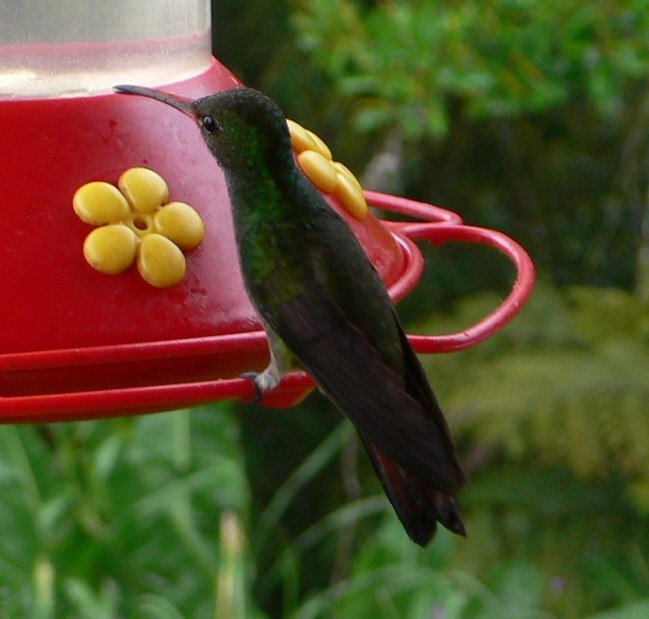
Key Field Marks
- Medium-sized hummingbird, similar in both sexes, with an overall metallic green body and a paler, grayish-white lower belly.
- Bill is fairly straight and mostly red or coral-pink with a contrasting black tip, a useful feature at rest or in flight.
- Tail is distinctly rufous to reddish-brown, standing out clearly against the green body, especially when fanned or in flight — the source of the species' name.
- Sexes look alike, unlike many hummingbirds, making plumage-based sex identification difficult in the field.
Separating It From Similar Species
- Buff-bellied Hummingbird, found mainly in southern Texas and eastern Mexico, is very similar but shows a buffier, warmer-toned belly rather than the grayer belly of Rufous-tailed Hummingbird, and the two have largely separate ranges with limited overlap.
- Chestnut-bellied Hummingbird has a darker, richer chestnut belly rather than the paler gray-white underparts of Rufous-tailed Hummingbird.
- The bicolored red-and-black bill together with the rufous tail is a reliable combination for separating this species from most other similarly sized green hummingbirds sharing its range.
Where and When to Look
- Widespread and common resident from Mexico through Central America and into northern South America (Colombia, Venezuela, Ecuador).
- Highly adaptable, found in forest edges, gardens, parks, plantations, and other human-altered and second-growth habitats, often more common in disturbed or open areas than in deep forest.
- Present year-round with no long-distance migration; easily found at flowering shrubs and hummingbird feeders throughout its range.
Voice and Behavior
- Vocalizations include scratchy, chattering calls and buzzy notes, frequently given while chasing other hummingbirds.
- Notably aggressive and territorial, often dominating feeders and flowering patches against other hummingbird species.
- Feeds on nectar from a wide variety of flowers as well as small insects caught in flight or gleaned from foliage.
Frequently asked questions
How do you identify a Rufous-tailed Hummingbird?
Look for a green-bodied hummingbird with a pale grayish belly, a mostly red bill with a black tip, and a distinctly rufous-red tail.
Do male and female Rufous-tailed Hummingbirds look different?
No, unlike many hummingbird species, males and females look very similar, both showing the green body and rufous tail.
Where is the Rufous-tailed Hummingbird commonly found?
It is common and widespread from Mexico through Central America into northern South America, especially in gardens, edges, and other open or semi-open habitats.
How is it different from the Buff-bellied Hummingbird?
Buff-bellied Hummingbird shows a warmer, buffier belly and occurs mainly in southern Texas and eastern Mexico, whereas Rufous-tailed Hummingbird has a grayer belly and a range farther south.