
Ruffed Grouse Identification Guide
A chicken-sized woodland grouse of North American forests, recognized by its mottled brown-and-gray plumage, fan-shaped banded tail, and the male's rapid, accelerating wing-drumming display.
Read the full Ruffed Grouse encyclopedia entry →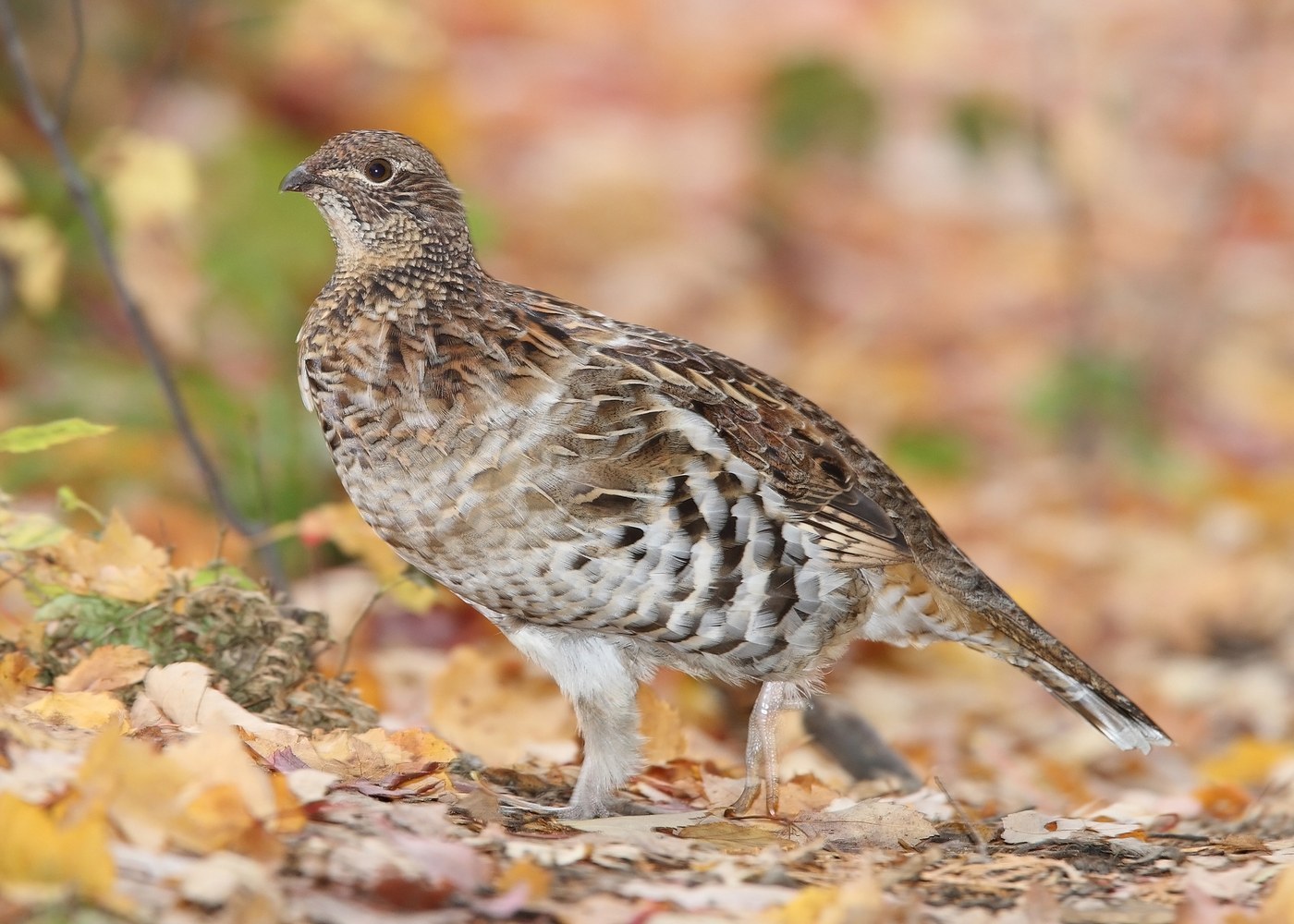
Key Field Marks
- Plump, chicken-like forest bird about the size of a small chicken, with a short crest and a squarish, fan-shaped tail.
- Plumage is intricately mottled brown, gray, and black, occurring in both a gray-phase and a redder rufous-phase depending on region and individual.
- Tail shows fine barring and a broad, dark subterminal band near the tip, visible when fanned during display.
- Both sexes have a ruff of dark, glossy feathers on the sides of the neck that the male erects prominently during display; the ruff is more subtle in females.
Separating It From Similar Species
- Spruce Grouse, found in more northern coniferous forest, shows a blacker breast in males with a bright red eyecomb, and a shorter, more rounded tail with a rufous tip rather than the Ruffed Grouse's broad dark band.
- Dusky and Sooty Grouse (western mountain forests) are larger and darker overall, lacking the intricately mottled, cryptic pattern of Ruffed Grouse, and have different display behaviors (inflated neck sacs rather than drumming).
- Ruffed Grouse's explosive, thunderous flush from the forest floor is a helpful behavioral clue distinguishing it from quieter-flushing grouse species.
Where and When to Look
- Found in deciduous and mixed forests across much of Canada and the northern and Appalachian United States, with a strong association with young aspen stands and dense shrubby understory.
- Present year-round; does not migrate, though birds may shift locally with food availability, particularly aspen buds in winter.
- Best located by listening for the male's drumming display, most frequent in spring but also heard in fall, especially around dawn and dusk from a favored log or stump.
Voice and Behavior
- Rather than a loud call, the male's primary signal is "drumming": rapid, muffled wingbeats against the air that start slow and accelerate into a whirring roll, audible from a considerable distance and often felt as much as heard.
- Explodes into flight with a loud whir of wings when flushed at close range, a startling and diagnostic behavior.
- Forages on the ground and in trees for buds, catkins, fruit, and insects; roosts on the ground or buried in snow in winter for insulation.
Frequently asked questions
What is Ruffed Grouse drumming and why does it matter for identification?
Drumming is the accelerating, muffled thumping sound made by a male rapidly beating his wings against the air while standing on a log; it is a diagnostic, far-carrying signal used to locate the species, especially in spring.
How can you tell Ruffed Grouse from Spruce Grouse?
Ruffed Grouse has a broad dark band near the tip of its fanned tail and lacks a red eyecomb, while male Spruce Grouse has a black breast, a shorter rufous-tipped tail, and a bright red comb over the eye.
Does Ruffed Grouse plumage color vary?
Yes, individuals occur in a grayer color morph and a more rufous/red color morph, independent of sex, with morph frequency varying regionally.
What habitat should I search for Ruffed Grouse?
Look in deciduous and mixed forests with dense shrubby understory, especially young aspen stands, across its range in Canada and the northern and Appalachian United States.