
Ruff Identification Guide
A medium to large, pot-bellied sandpiper with a small head and short bill; breeding males grow ornate, colorful neck ruffs for spectacular lek displays, while females and nonbreeding birds show a plain scaly-backed look.
Read the full Ruff encyclopedia entry →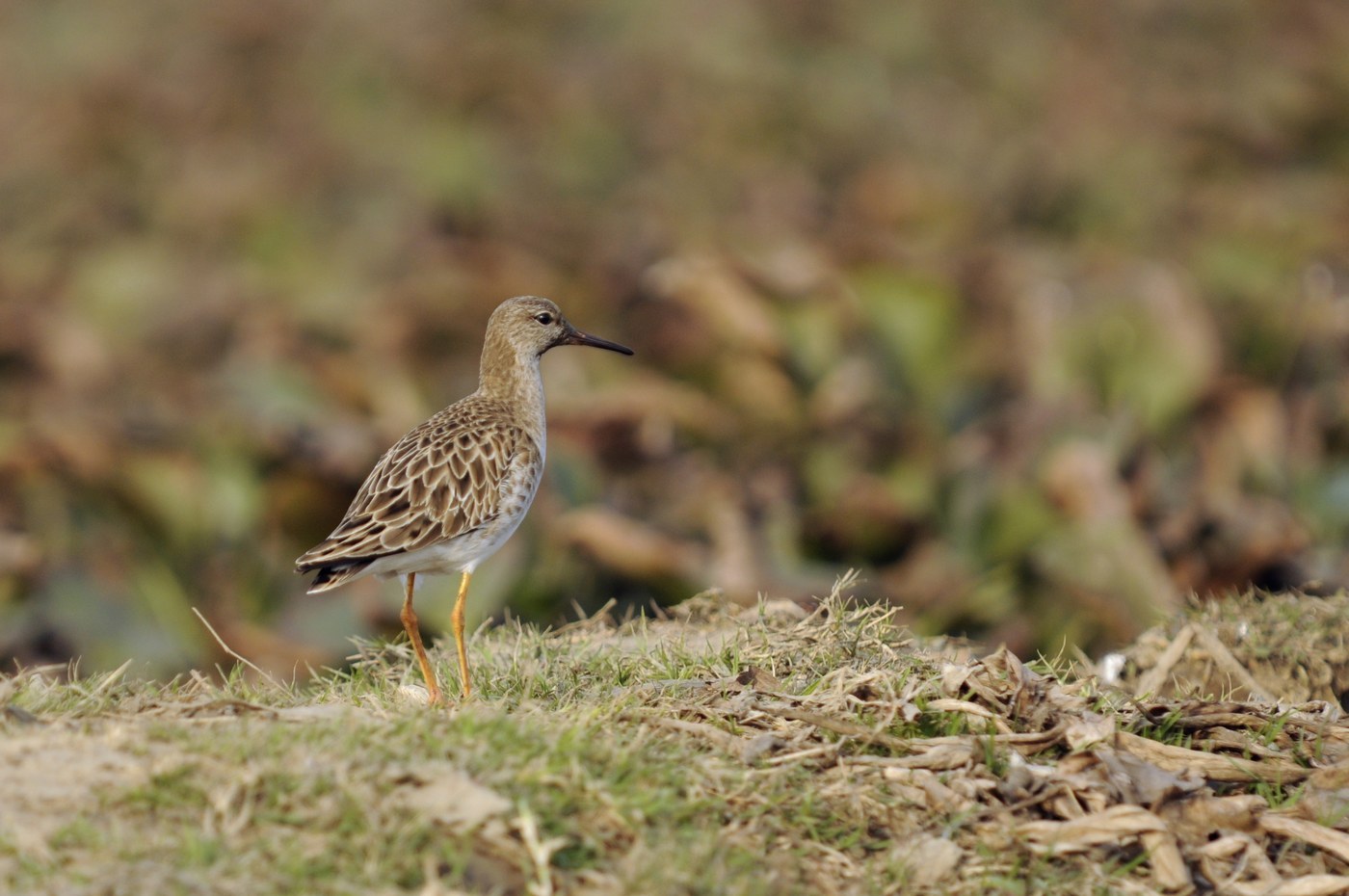
Key Field Marks
- Distinctive shape: small head on a longish neck, a plump, potbellied body, and a short, slightly downcurved bill that looks a bit too small for the body.
- Marked sexual size difference: males ("Ruffs") are noticeably larger than females ("Reeves").
- Breeding male: grows elaborate, highly variable ear tufts and a wide neck ruff that can be black, white, chestnut, barred, or a mix, used in competitive lek displays; no two males look exactly alike.
- Nonbreeding and juvenile birds: plain grayish-brown to buffy above with pale scaly feather fringes, plain whitish underparts, and dull orange to greenish legs.
Separating It From Similar Species
- Female and nonbreeding Ruff can suggest a yellowlegs species, but the Ruff's shorter bill, smaller head, potbellied shape, and scaly-fringed back feathers set it apart.
- Breeding males are unmistakable due to their bizarre and highly variable ruffs and tufts, unlike any other shorebird.
- Told from Pectoral Sandpiper and other Calidris sandpipers by its larger size, longer neck, and distinctive body shape.
Where and When to Look
- Breeds across the wet grasslands, bogs, and tundra edges of northern Eurasia, from Scandinavia east through Siberia.
- Winters mainly in sub-Saharan Africa, South Asia, and parts of western Europe, using flooded fields, marshes, and mudflats.
- A rare but regular visitor elsewhere, including as a scarce migrant in North America, typically found among mixed shorebird flocks in flooded fields or shallow wetlands.
- Breeding males display at communal leks in spring; look for nonbreeding-plumaged birds during migration periods well outside the breeding range.
Voice and Behavior
- Generally silent away from the breeding grounds; on the lek, males perform elaborate posturing, wing-quivering, and mock fighting rather than loud vocalizing.
- Feeds by probing and picking in shallow water and mud, often wading belly-deep.
- Highly social outside the breeding season, frequently associating with other shorebirds in mixed flocks.
Frequently asked questions
Why do male Ruffs look so different from each other?
Breeding male Ruffs develop individually variable neck ruffs and head tufts in different colors and patterns, which they use to compete for mates at communal lek displays; no two males are identical.
How do you identify a female Ruff (Reeve)?
Look for a plain, scaly-backed shorebird with a small head, potbellied shape, short slightly downcurved bill, and dull leg color, distinctly smaller than the male.
Where can you see Ruffs outside the breeding season?
They winter mainly in Africa, South Asia, and parts of western Europe on flooded fields and wetlands, and turn up rarely elsewhere, including as scarce migrants in North America.
Do Ruffs have a distinctive call?
They are mostly silent outside the breeding grounds, relying on visual displays rather than vocalizations during their lek courtship.