
Ruddy Turnstone Identification Guide
A stocky, orange-legged shorebird with a wedge-shaped bill and a bold black-and-white harlequin face pattern, often seen flipping stones and seaweed on rocky shores and beaches.
Read the full Ruddy Turnstone encyclopedia entry →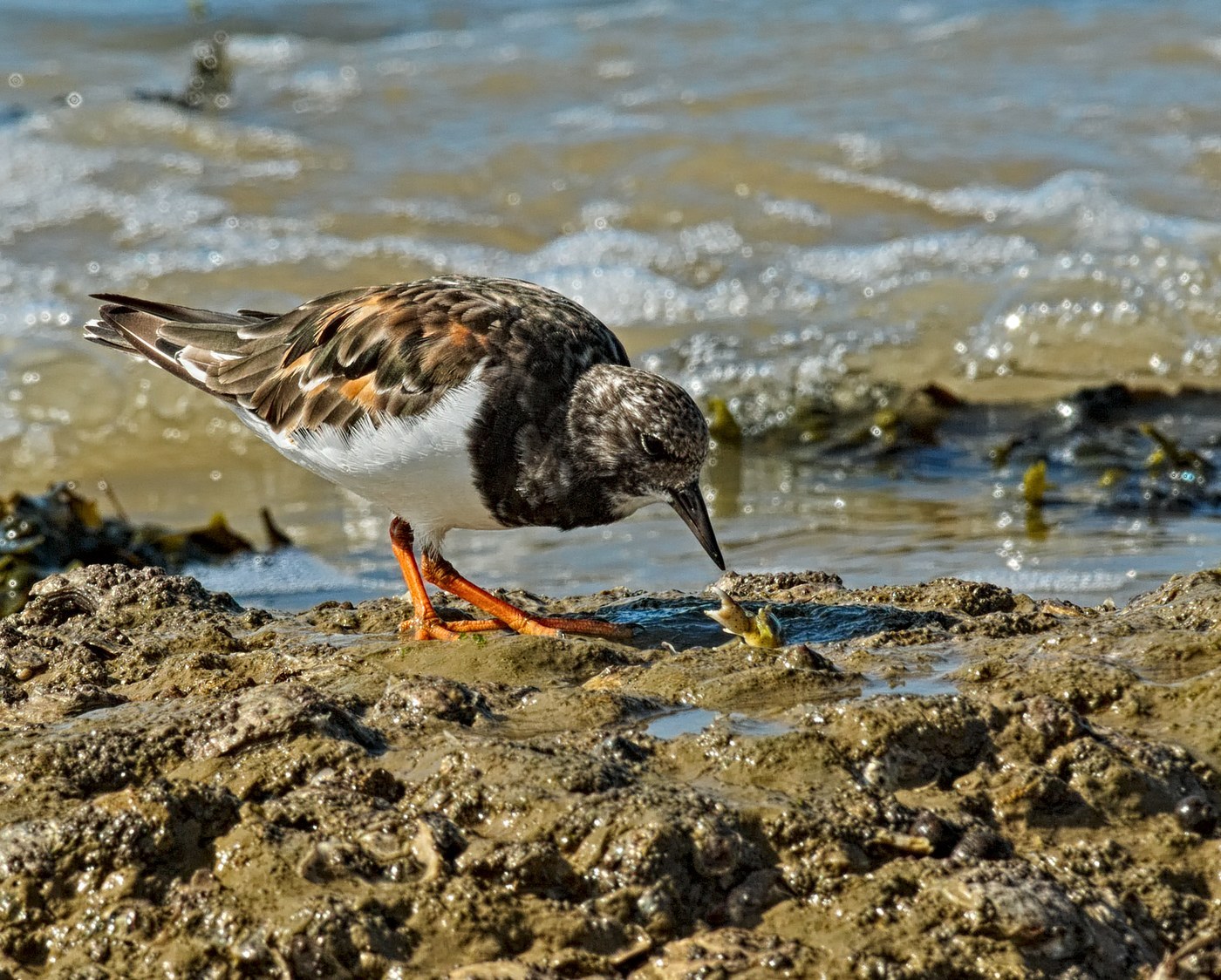
Key Field Marks
- Chunky, short-legged shorebird with a stout, slightly upturned, wedge-shaped bill suited for prying and flipping objects.
- Breeding adult: striking black-and-white harlequin pattern on the face and breast, rufous-chestnut mottled back and wings, and bright orange legs.
- Nonbreeding and juvenile birds are duller brown above and lack the rich rufous tones, but retain a mottled dark breast pattern and the diagnostic orange legs.
- In flight, shows a bold black-and-white pattern on the back, wings, and tail that flashes distinctly.
Separating It From Similar Species
- Black Turnstone, found mainly on the Pacific coast, is overall blackish with white underparts and lacks any rufous coloring; it also has darker legs rather than bright orange.
- No other common shorebird combines the stocky shape, short orange legs, and stout upturned bill of the Ruddy Turnstone, making it fairly distinctive once the shape and leg color are noted.
- Dunlin and other small sandpipers lack the turnstone's bold breast pattern and stouter, upturned bill.
Where and When to Look
- Breeds on High Arctic tundra across northern North America, Greenland, and Eurasia.
- During migration and winter, found along rocky shorelines, jetties, breakwaters, sandy and gravel beaches, and mudflats on nearly every continent's coastline.
- A true long-distance migrant; look for wintering birds on temperate and tropical coastlines from fall through spring, with breeding-plumaged birds passing through in spring migration.
Voice and Behavior
- Gives a distinctive staccato, rattling call, often rendered as a rapid "kek-kek-kek" or chattering trill, frequently in flight or when flushed.
- True to its name, forages by using its bill to flip over stones, shells, and clumps of seaweed to expose hidden invertebrates.
- Often forages in small, active flocks, sometimes mixed with other shorebirds, moving quickly along the tideline.
Frequently asked questions
Why is it called a Ruddy Turnstone?
The name comes from its rufous ("ruddy") breeding plumage and its habit of flipping over stones and debris to find food underneath.
How do you tell a Ruddy Turnstone from a Black Turnstone?
Ruddy Turnstone shows rufous tones in its back and wings (especially in breeding plumage) and bright orange legs, while Black Turnstone is overall blackish with darker legs and no rufous coloring.
What habitat is best for finding Ruddy Turnstones?
Rocky shorelines, jetties, and sandy or gravel beaches during migration and winter; they breed on Arctic tundra.
What does a Ruddy Turnstone sound like?
It gives a fast, rattling, staccato call often described as a chattering "kek-kek-kek," especially when flushed or in flight.