
Royal Spoonbill Identification Guide
An elegant all-white wading bird of Australasia with a black spatulate bill and, in breeding plumage, ornamental drooping head plumes and a yellow eye patch.
Read the full Royal Spoonbill encyclopedia entry →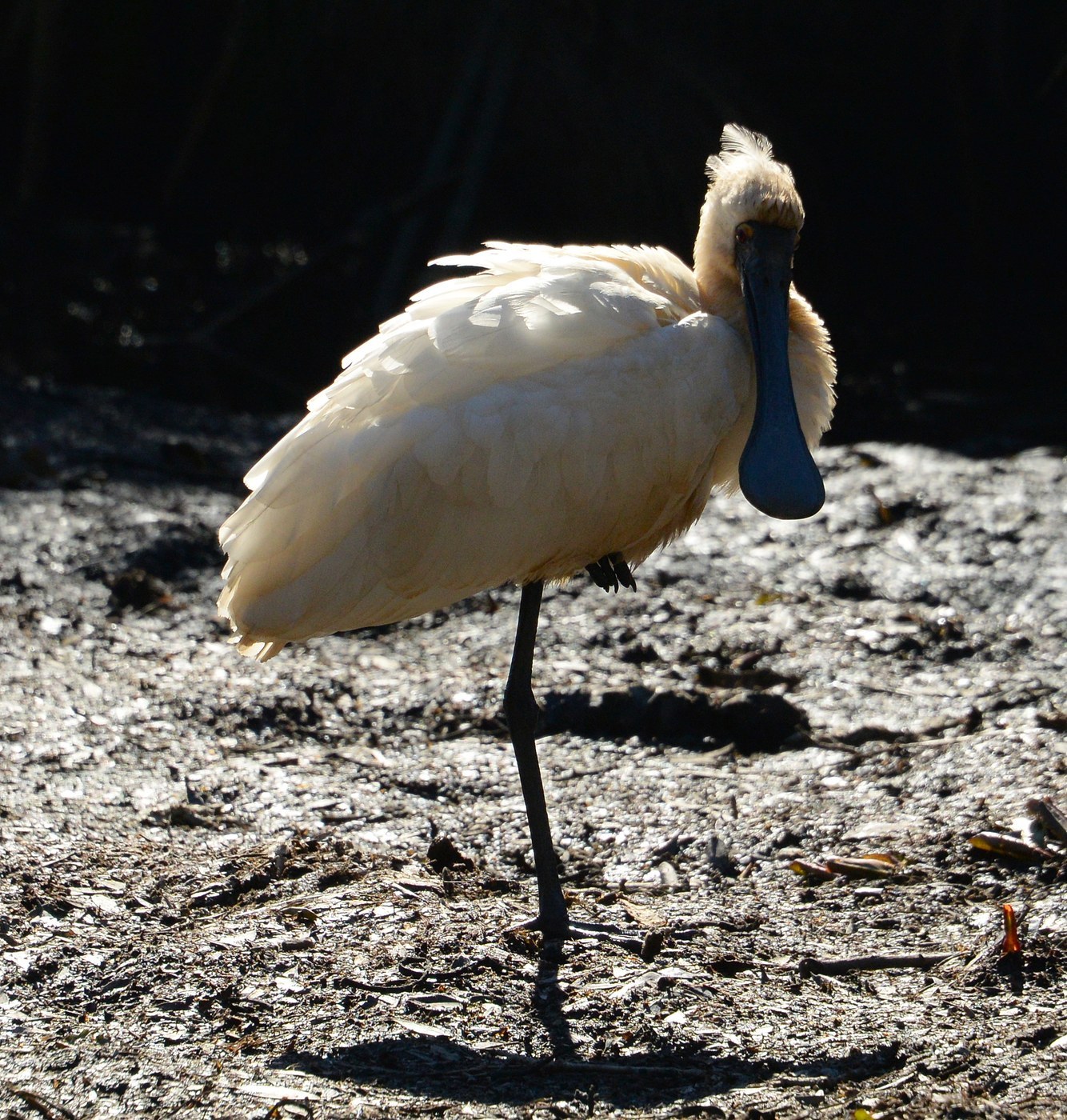
Key Field Marks
- Size & shape: A large white wading bird, 76–86 cm, with long black legs, a long neck, and the flattened, spoon-shaped bill characteristic of all spoonbills.
- Plumage: Entirely white body plumage year-round.
- Bare parts: Black bill and black legs; a small patch of yellow bare skin above the eye (lores) is visible at close range.
- Breeding adult: Develops a shaggy nuchal crest of long white plumes trailing from the back of the head, along with yellowish tips on some ornamental feathers — a striking addition absent in non-breeding birds.
Separating It From Similar Species
- Yellow-billed Spoonbill (shared range in Australia): Has a yellow, not black, bill, and a different, more extensive area of bare yellow-grey facial skin; the two species can occur together, so bill color is the quickest separator.
- White egrets and herons (e.g., Great Egret, Little Egret): All lack the flattened spatulate bill entirely — any wading bird with a spoon-shaped bill tip in the Australasian region should be one of the two spoonbill species, not an egret.
- Overall: The combination of all-white plumage with a black spatulate bill is essentially diagnostic for Royal Spoonbill within its range.
Where and When to Find One
- Range: Australia, New Zealand (where it is known by the Māori name kōtuku ngutupapa), New Guinea, and parts of Indonesia.
- Habitat: Shallow wetlands, estuaries, tidal mudflats, and freshwater or brackish lagoons.
- Season: Largely resident with some local and seasonal dispersal; breeding colonies are often shared with herons, egrets, and cormorants.
Voice
- Generally quiet; occasional low grunts, hisses, and bill-clattering are given at breeding colonies, but the species is rarely vocal away from the nest.
Behavior
- Feeds by wading through shallow water while sweeping its partly opened bill from side to side, detecting small fish, crustaceans, and aquatic invertebrates by touch rather than sight.
Frequently asked questions
How do you tell a Royal Spoonbill from a Yellow-billed Spoonbill?
Bill color is the clearest mark: Royal Spoonbill has an all-black bill, while Yellow-billed Spoonbill has a yellow bill and more extensive bare yellow-grey facial skin.
What does a breeding Royal Spoonbill look like?
Breeding adults grow long, shaggy white plumes trailing from the back of the head and show yellow tips on some ornamental feathers, in addition to the yellow patch above the eye present year-round.
Where can you see a Royal Spoonbill?
In shallow wetlands, estuaries, and mudflats across Australia, New Zealand, New Guinea, and parts of Indonesia.
How does a Royal Spoonbill feed?
It wades through shallow water sweeping its flattened bill side to side, snapping it shut on small aquatic prey detected by touch.