
Rose-coloured Starling Identification Guide
Also called the Rosy Starling, this bubblegum-pink and glossy-black Eurasian starling is an unmistakable, nomadic breeder that shows up as a scarce vagrant far outside its normal range.
Read the full Rose-coloured Starling encyclopedia entry →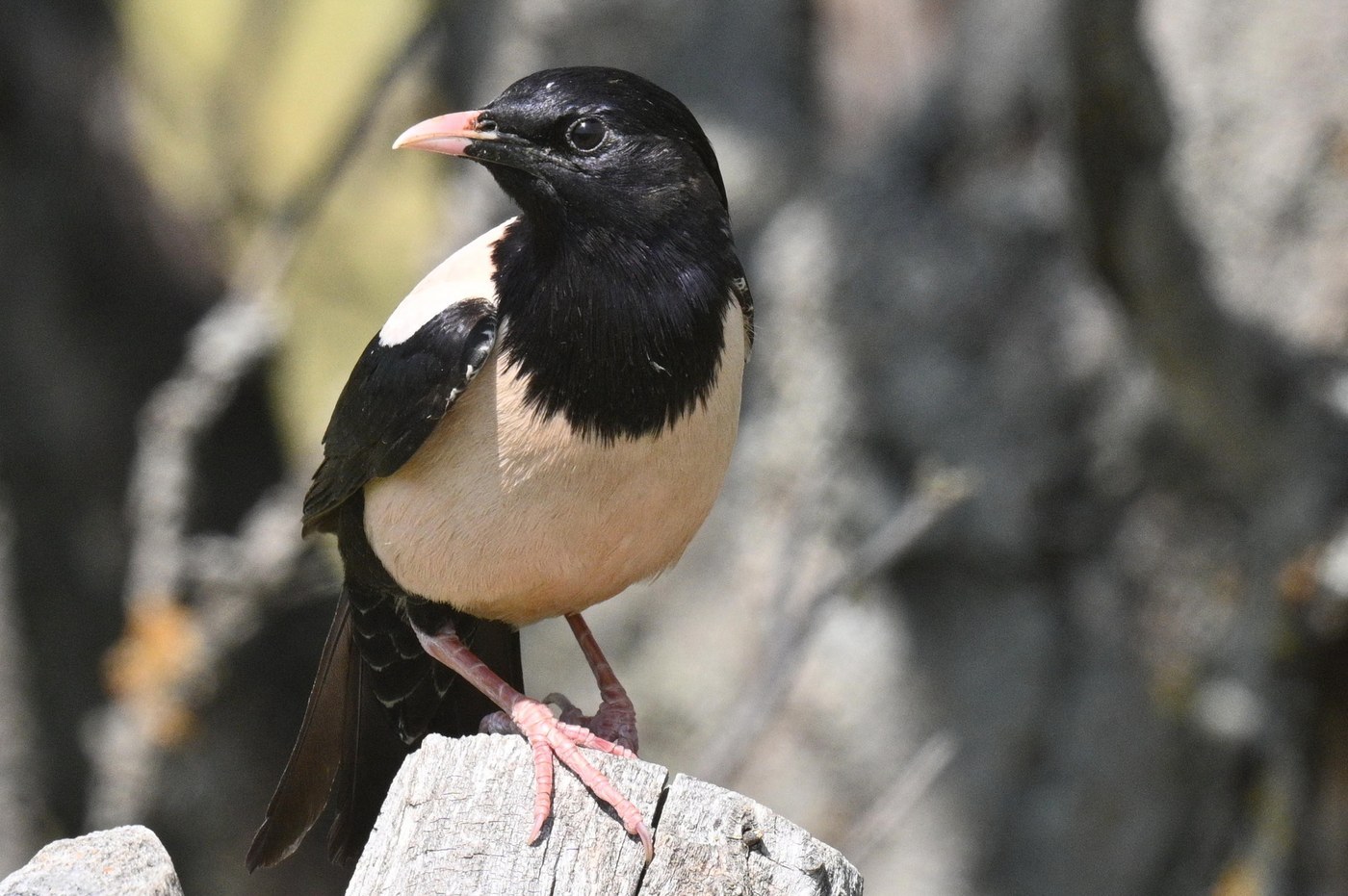
Key Field Marks
- Size & shape: A typical starling silhouette — plump body, short tail, pointed wings — about 21 cm long, slightly bulkier than a Common Starling.
- Breeding adult: Strikingly two-toned: glossy black head, throat, wings, and tail contrasting with a rich bubblegum-pink body and back; a shaggy, drooping crest on the rear crown; bright pink-yellow bill.
- Non-breeding adult: Similar pattern but duller and with pale bill fringes; black areas show less gloss.
- Juvenile: Plain sandy or pale grey-brown overall (no pink or black yet), with a paler, more uniformly colored bill than juvenile Common Starling and a slightly stockier bill shape.
Separating It From Similar Species
- Adults are unmistakable — no other starling shows the pink-and-glossy-black combination.
- Juveniles vs. juvenile Common Starling: juvenile Rose-coloured Starling is noticeably paler and sandier, with a pale, often pinkish-based bill, whereas juvenile Common Starling is darker grey-brown with a dark bill; Rose-coloured also shows a slightly shorter, stubbier bill and often associates with mixed starling flocks where its paler tone stands out.
Where and When to Find One
- Range: Breeds in loose, irruptive colonies from southeastern Europe across the steppes of Central Asia, tracking outbreaks of grasshoppers and locusts — colonies can appear suddenly in a region for one season and be absent the next.
- Winter range: The Indian subcontinent, where large flocks gather in agricultural and open country.
- Vagrancy: A rare but regular vagrant well outside its core range, including Western Europe and, exceptionally, North America; look for single birds mixed into flocks of Common/European Starlings, especially in late spring and summer.
- Habitat: Open steppe, grassland, farmland, and semi-arid country with cliffs or rocky outcrops for nesting.
Voice
- Calls are harsh and chattering, similar in structure to Common Starling vocalizations but with distinct, more throaty and grating notes; flocks are noisy and constantly chattering, particularly around locust swarms and feeding areas.
Frequently asked questions
Is the Rose-coloured Starling the same as the Rosy Starling?
Yes, Rose-coloured Starling and Rosy Starling are two common names for the same species, Pastor roseus.
How do I identify a juvenile Rose-coloured Starling among Common Starlings?
Look for a paler, sandier, more uniform brown bird with a pale pinkish-based bill, distinctly lighter than the darker, dark-billed juvenile Common Starlings it may be flocking with.
Why do Rose-coloured Starlings sometimes appear far from their normal range?
They are nomadic, irruptive breeders that follow locust and grasshopper outbreaks across the steppes, and post-breeding dispersal or overshooting migration occasionally carries individuals well beyond their usual range as vagrants.
What habitat should I search for Rose-coloured Starlings?
Open steppe, grassland, and farmland, especially areas experiencing insect outbreaks; vagrants are most often found in mixed flocks of Common Starlings in open agricultural country.