
Rock Pipit Identification Guide
A dark, sturdy pipit of rocky sea coasts, distinguished from its inland relatives by smoky-gray tones, dark legs, and dull-edged outer tail feathers.
Read the full Rock Pipit encyclopedia entry →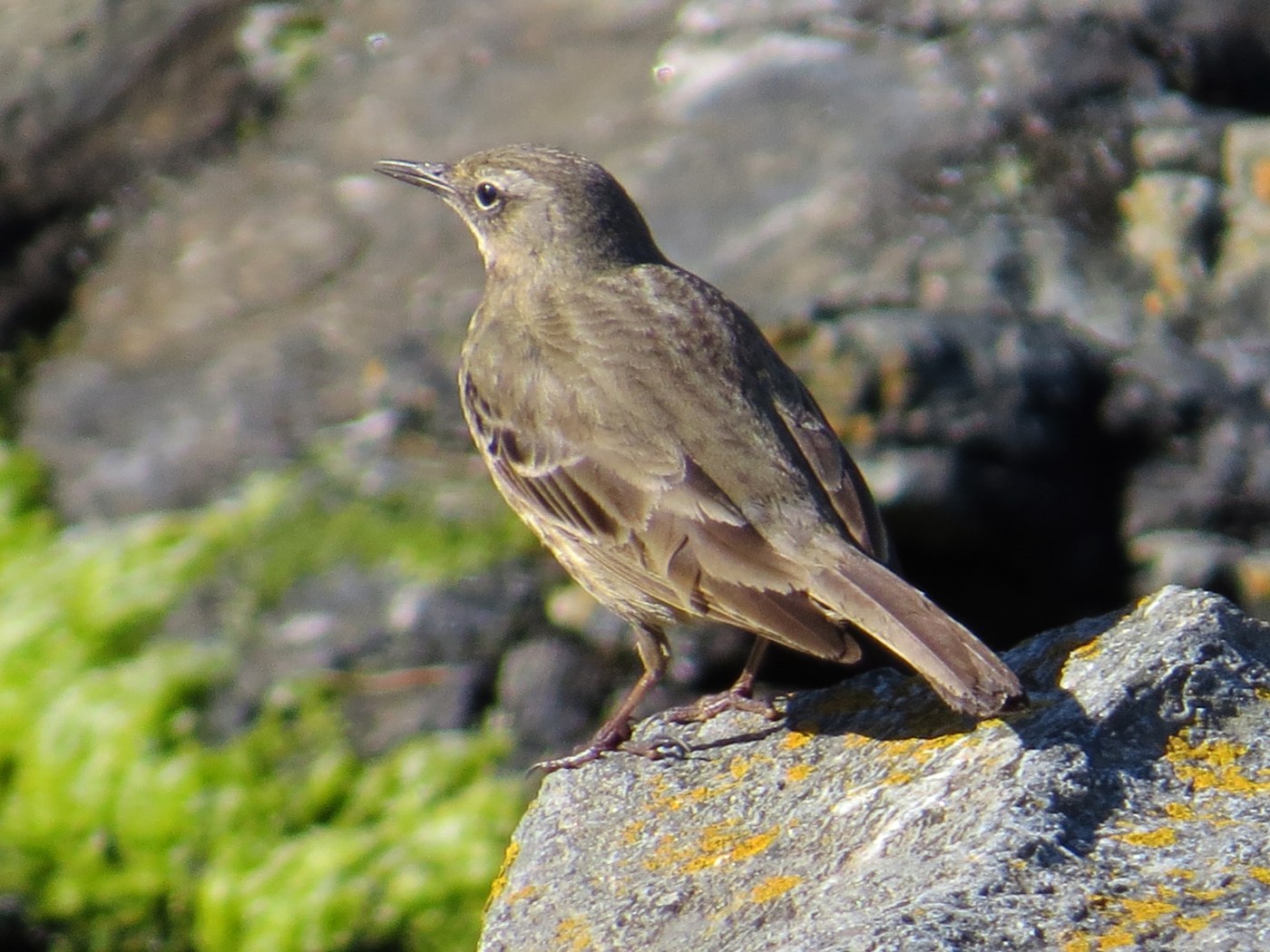
Key Field Marks
- Size & shape: About 16.5–17.5 cm, a fairly large, bulky pipit with a stout bill and a heavier build than Meadow Pipit.
- Plumage: Dark olive-brown upperparts with blurry, indistinct streaking; underparts are smoky gray-buff with diffuse, somewhat blurred streaking on the breast, lacking the crisp, contrasty streaks of some other pipits.
- Legs: Blackish — a useful distinction from the pale pinkish legs of Meadow Pipit and the pinkish-brown legs of Water Pipit.
- Tail: Outer tail feathers are dull grayish-white rather than the bright white shown by Meadow Pipit, giving a less contrasty look in flight.
- Behavior: Almost never found away from the immediate coastline; forages methodically along the tideline, rocks, and seaweed-covered shore, bobbing its tail, and flies low over rocks when flushed, giving its call.
Separating It From Similar Species
- Meadow Pipit: Paler and more delicately streaked, with pink legs and bright white (not dull grayish) outer tail feathers; found in grassland and moorland rather than exclusively on rocky shores.
- Water Pipit: Present mainly in winter around fresh water and estuary margins rather than open rocky coast; shows a clearer, cleaner grayish appearance with a whiter supercilium and, in breeding plumage seen on its mountain breeding grounds, an unstreaked pinkish breast — very different from Rock Pipit's consistently smoky, streaked look.
- Note on taxonomy: Rock Pipit and Water Pipit were once treated as one species and remain closely related; range and habitat (rocky coast vs. mountains/fresh water) are the most reliable separators where ranges might overlap in winter.
Habitat, Range & Season
Rock Pipits are year-round residents of rocky and stony coastlines, sea walls, and offshore islands around the British Isles, and the coasts of northwestern France, Scandinavia, and the North Sea, rarely straying far from saltwater. Some northern populations move short distances south along the coast in winter, but the species is essentially sedentary and coast-bound throughout the year, almost never found inland.
Voice
The call is a thin, explosive "seep" or "fist," similar to but harsher than Meadow Pipit's call. The song is a repetitive, accelerating series of "peet" notes ending in a shivering trill, delivered in a fluttering song-flight that ends with the bird parachuting down to a rock.
Frequently asked questions
What is the best way to separate Rock Pipit from Meadow Pipit?
Rock Pipit has dark (blackish) legs and dull grayish-white outer tail feathers, while Meadow Pipit has pink legs and bright white outer tail feathers; Rock Pipit is also darker and bulkier overall.
Will I find a Rock Pipit away from the coast?
Essentially never — it is one of the most strictly coastal songbirds in its range, sticking to rocky shorelines, sea walls, and offshore islands year-round.
How is Rock Pipit different from Water Pipit?
The two are closely related, but Rock Pipit stays on rocky coasts year-round with a consistently dark, smoky, streaked look, while Water Pipit favors fresh water and estuaries (mainly in winter) and shows a cleaner gray-and-white appearance.
What does a Rock Pipit eat and how does it forage?
It forages on foot along the tideline, rocks, and seaweed for small invertebrates, walking and bobbing its tail rather than hopping.