
Rock Pigeon Identification Guide
The familiar city pigeon — a highly variable, plump gray or piebald bird descended from wild cliff-nesting Rock Doves and now found in nearly every urban area worldwide.
Read the full Rock Pigeon encyclopedia entry →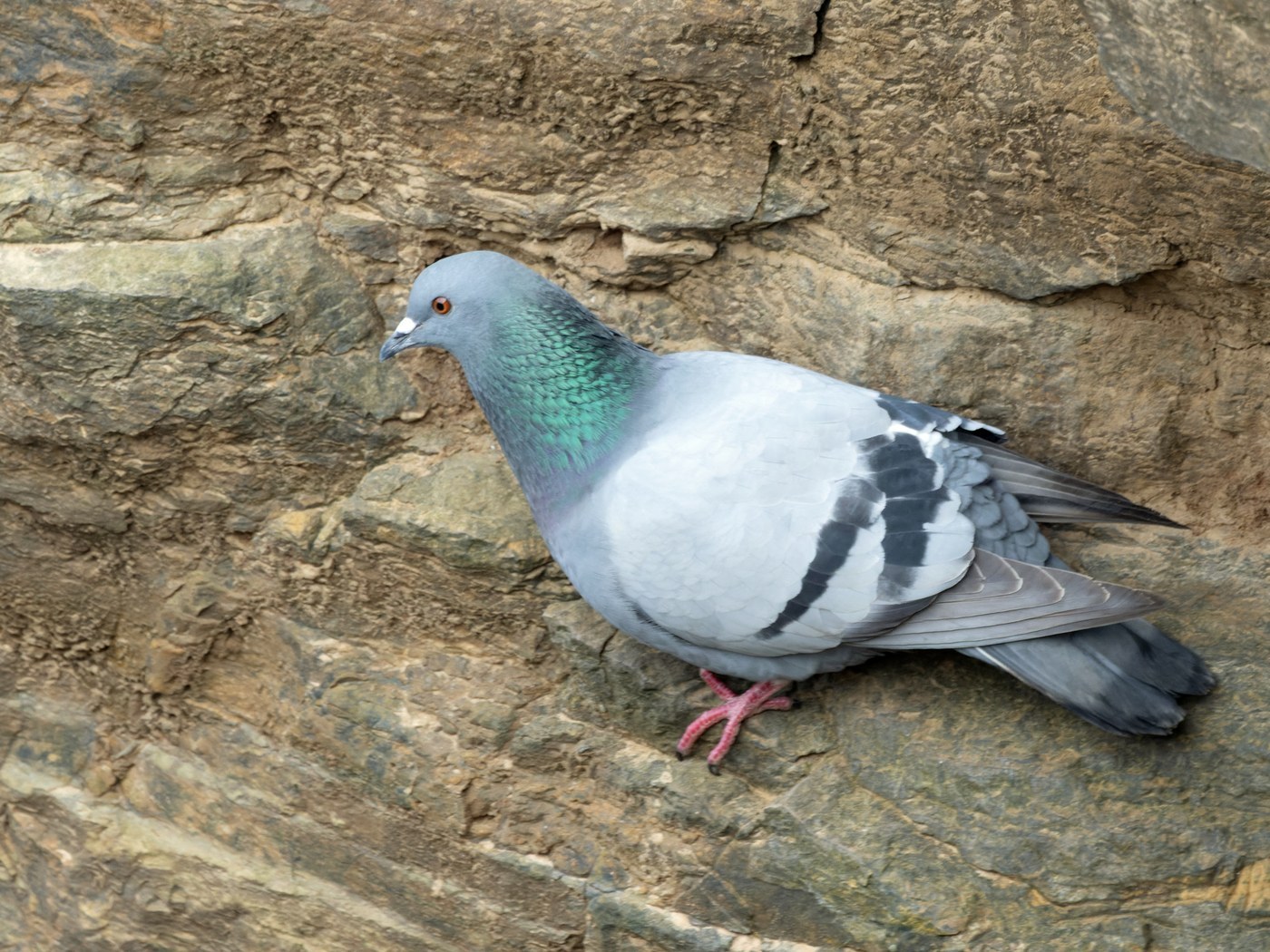
Key Field Marks
- Size & shape: A stocky, medium-sized pigeon about 30–35 cm long with a small, rounded head, short neck, and broad, pointed wings.
- Plumage: Extremely variable due to centuries of domestication and interbreeding. The "wild-type" pattern is blue-gray with two black wingbars, a pale back, a white rump, and an iridescent green-purple neck sheen, but city flocks commonly include all-black, all-white, brown, red, pied, and heavily checkered or blotched individuals — often several color forms within a single flock.
- Bare parts: Dark eyes with a pale, fleshy cere at the base of the bill; legs reddish-pink.
- Behavior: Highly social and tame around people, walking with a characteristic head-bobbing gait, feeding on the ground in flocks, and nesting on building ledges, bridges, and other structures that mimic the cliff ledges used by its wild ancestor.
Separating It From Similar Species
- Eurasian Collared-Dove: Slimmer and paler sandy-buff with a thin black half-collar on the nape and a long, white-cornered tail — quite different from a pigeon's bulkier build and short, banded tail.
- Mourning Dove: Slender, grayish-brown with a pointed tail and black wing spots, much daintier than the boxy Rock Pigeon.
- Band-tailed Pigeon (western North America): Larger, plain gray with a pale crescent on the nape and a broad pale gray tail band, lacking the wingbars and rump pattern of typical Rock Pigeons, and generally found in wooded/forested settings rather than city centers.
Habitat, Range & Season
Rock Pigeons are now found essentially worldwide in cities, towns, farmland, and near any human settlement offering ledges for nesting and reliable food, having been introduced from their native Eurasian and North African range through centuries of domestication and subsequent feral establishment. They are non-migratory and present year-round wherever established, from city plazas and rail yards to agricultural buildings and highway overpasses.
Voice
A soft, throaty, repeated cooing, "coo-roo-c'coo," heard constantly around nesting and roosting sites; also a wing-clapping sound produced during display flights.
Frequently asked questions
Why do city pigeons look so different from each other?
All Rock Pigeons descend from domesticated stock that has been selectively bred and has interbred freely, producing a wide range of colors and patterns — checkered, pied, red, white, and black — within the same flock.
What does the original wild-type Rock Pigeon look like?
Blue-gray with two black wingbars, a pale gray back, a white rump, and an iridescent green-purple sheen on the neck — this pattern is still the most common single type seen in city flocks.
How do I tell a Rock Pigeon from a Mourning Dove?
Rock Pigeons are noticeably stockier with a shorter, banded (not pointed) tail, while Mourning Doves are slimmer with a long, pointed tail and black spots on the wings.
Where do Rock Pigeons nest in cities?
On building ledges, window sills, bridges, and similar structures, which mimic the rock ledges and cave crevices used by their wild cliff-dwelling ancestors.