
Rock Bunting Identification Guide
A boldly head-striped bunting of dry, rocky hillsides, with a gray face crossed by black lines and a warm chestnut body.
Read the full Rock Bunting encyclopedia entry →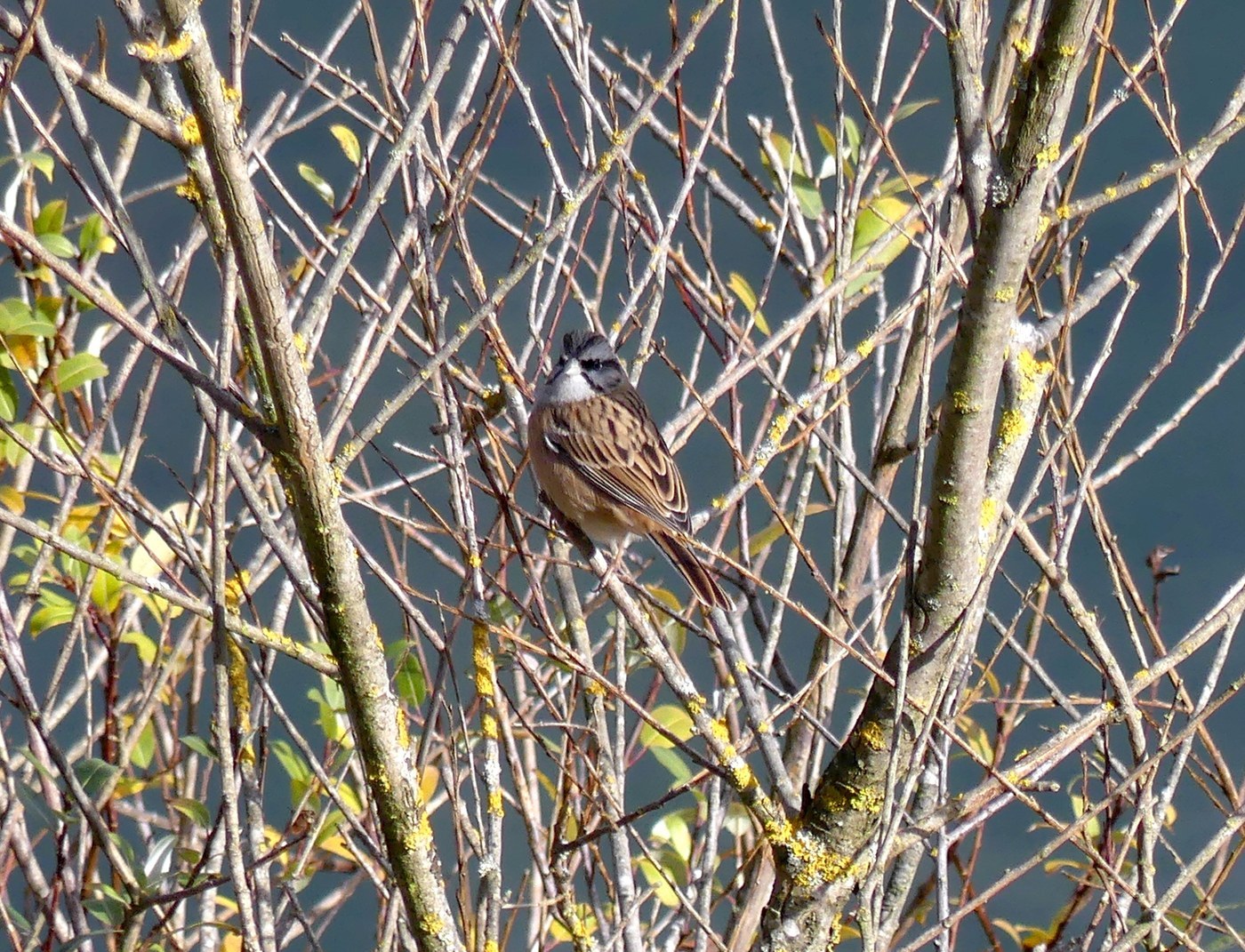
Key Field Marks
- Size & shape: A medium-sized bunting, about 15–16.5 cm, with the typical short, conical bunting bill and longish, white-edged tail.
- Head pattern: Blue-gray face and crown marked with bold black stripes — a black stripe through the eye, a black moustachial stripe, and black lateral crown stripes — giving a distinctly striped, "helmeted" appearance.
- Body: Warm chestnut-orange back, rump, and flanks contrast with the gray head and grayish breast; underparts show a soft rufous wash overall.
- Behavior: Often perches in the open on rocks, low bushes, or vineyard posts; forages on the ground on bare, stony substrate, moving in short hops.
Separating It From Similar Species
- Cirl Bunting: Male Cirl Bunting has a black throat and bright yellow face and underparts, quite different from the gray-and-chestnut Rock Bunting; females can be more similar but Rock Bunting shows a cleaner, more contrasty head-stripe pattern and warmer flanks.
- Yellowhammer: Much yellower overall, especially on the head and underparts, lacking Rock Bunting's gray face and bold black head stripes.
- Ortolan Bunting: Shows a yellowish throat and pale eye-ring rather than Rock Bunting's plain gray throat and striped head.
Habitat, Range & Season
Rock Bunting favors dry, open, rocky or stony terrain with scattered scrub — sun-baked hillsides, terraced vineyards, quarries, and mountain slopes — across southern Europe, North Africa, and eastward through the mountains of Central Asia to the Himalayas and China. Many populations are resident or make only short altitudinal movements, descending to lower elevations in winter rather than undertaking long migrations.
Voice
The song is a simple, thin, jangling series of notes, somewhat reminiscent of a Yellowhammer's song but shorter, less musical, and lacking the drawn-out final note. The call is a sharp, thin "zit" or "tsip," often given as birds flush from the ground.
Frequently asked questions
What is the most distinctive feature of the Rock Bunting?
Its bold, black-and-gray striped head pattern combined with a warm chestnut body — no other common European bunting shows quite this combination.
What habitat should I search for Rock Bunting?
Dry, rocky, sun-exposed slopes with sparse scrub, terraced vineyards, or stony hillsides, typically in hilly or mountainous terrain.
How does it differ from a Cirl Bunting?
Male Cirl Buntings have a black throat and yellow face and underparts, while Rock Buntings have a gray face with black stripes and chestnut, not yellow, body tones.
Is the Rock Bunting migratory?
Most populations are resident or make only short seasonal movements to lower elevations in winter rather than long-distance migration.