
Ringneck Dove Identification Guide
A pale, buff-colored domesticated dove with a narrow black half-collar, most often encountered as an escaped or released aviary bird.
Read the full Ringneck Dove encyclopedia entry →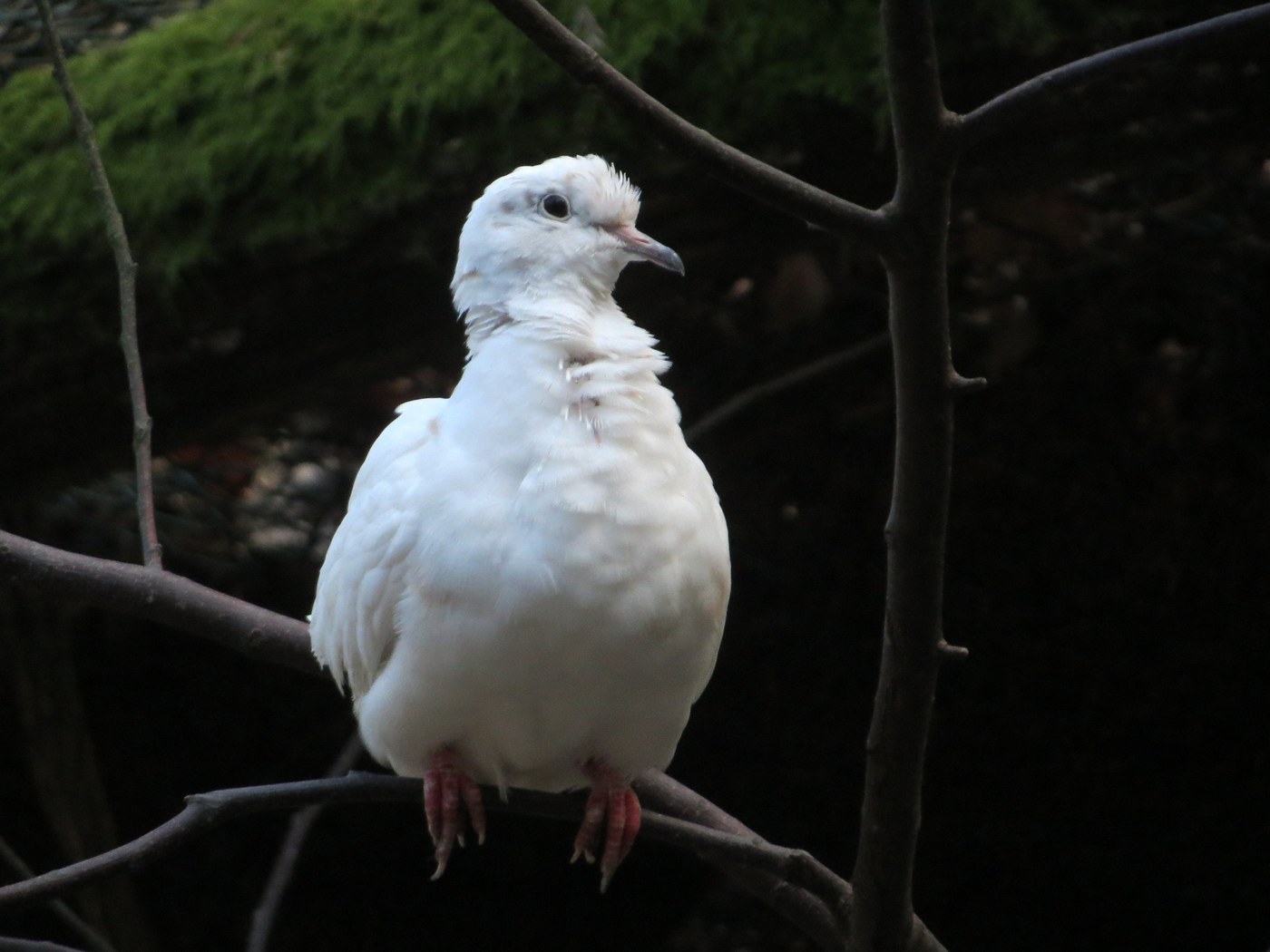
Key Field Marks
- Size & shape: A small, slender dove about 28–30 cm long with a small head, long tail, and gentle, rounded silhouette typical of Streptopelia doves.
- Plumage: Overall pale fawn to buff or cream, often with a slightly darker wash across the back and wings; some captive-bred color forms are white, pied, or apricot. A narrow black half-collar edged in white crosses the back of the neck.
- Bare parts: Pale, often pinkish, eyes and a dark, thin bill; legs are pinkish-red.
- Behavior: Notably tame and approachable compared to wild doves, reflecting its long history as a cage and aviary bird. Feeds on the ground and perches readily on wires, fences, and buildings near human habitation.
Separating It From Similar Species
- Eurasian Collared-Dove: Larger, grayer overall (lacking the warm buff tone), with a proportionately longer tail showing a broad white terminal band from below, and a wild, well-established population across much of North America and Eurasia. Ringneck Dove is smaller, paler buff, and almost always found near towns as an escapee rather than in large self-sustaining wild flocks.
- Mourning Dove: Slimmer, grayer-brown, with a pointed (not squared) tail and black spots on the wing coverts — a genuinely wild native species, unlike the domestic Ringneck Dove.
Habitat, Range & Season
The Ringneck Dove (also called the Barbary Dove) is a domesticated form derived from the wild African Collared-Dove and has no natural wild range of its own. It is kept worldwide as an aviary and pet bird, and escapees or deliberate releases turn up locally around towns, gardens, and parks year-round; small feral populations persist in a few warm-climate areas such as parts of Florida and coastal California. It does not undertake migration.
Voice
A soft, rhythmic cooing, typically rendered as "coo-COO-cook," repeated steadily — softer and less far-carrying than the calls of wild collared-doves.
Frequently asked questions
Is the Ringneck Dove a wild bird?
No — it is a domesticated form bred from the African Collared-Dove, and birds seen outdoors are almost always escapees or deliberate releases rather than a self-sustaining wild population.
How is it different from a Eurasian Collared-Dove?
Ringneck Dove is smaller and warmer buff-colored, while Eurasian Collared-Dove is larger, grayer, and forms genuinely wild, well-established populations.
Why does it seem so tame?
Generations of captive breeding as a pet and aviary bird have made it far less wary of people than truly wild dove species.
Where might I encounter one outdoors?
Around towns, gardens, and parks, usually as an isolated escapee; small feral colonies exist in a few mild-climate areas.