
Rifleman Identification Guide
New Zealand's smallest bird, a tiny, almost tailless green-and-yellow forest bird that creeps up tree trunks nuthatch-style and gives calls at the very edge of human hearing.
Read the full Rifleman encyclopedia entry →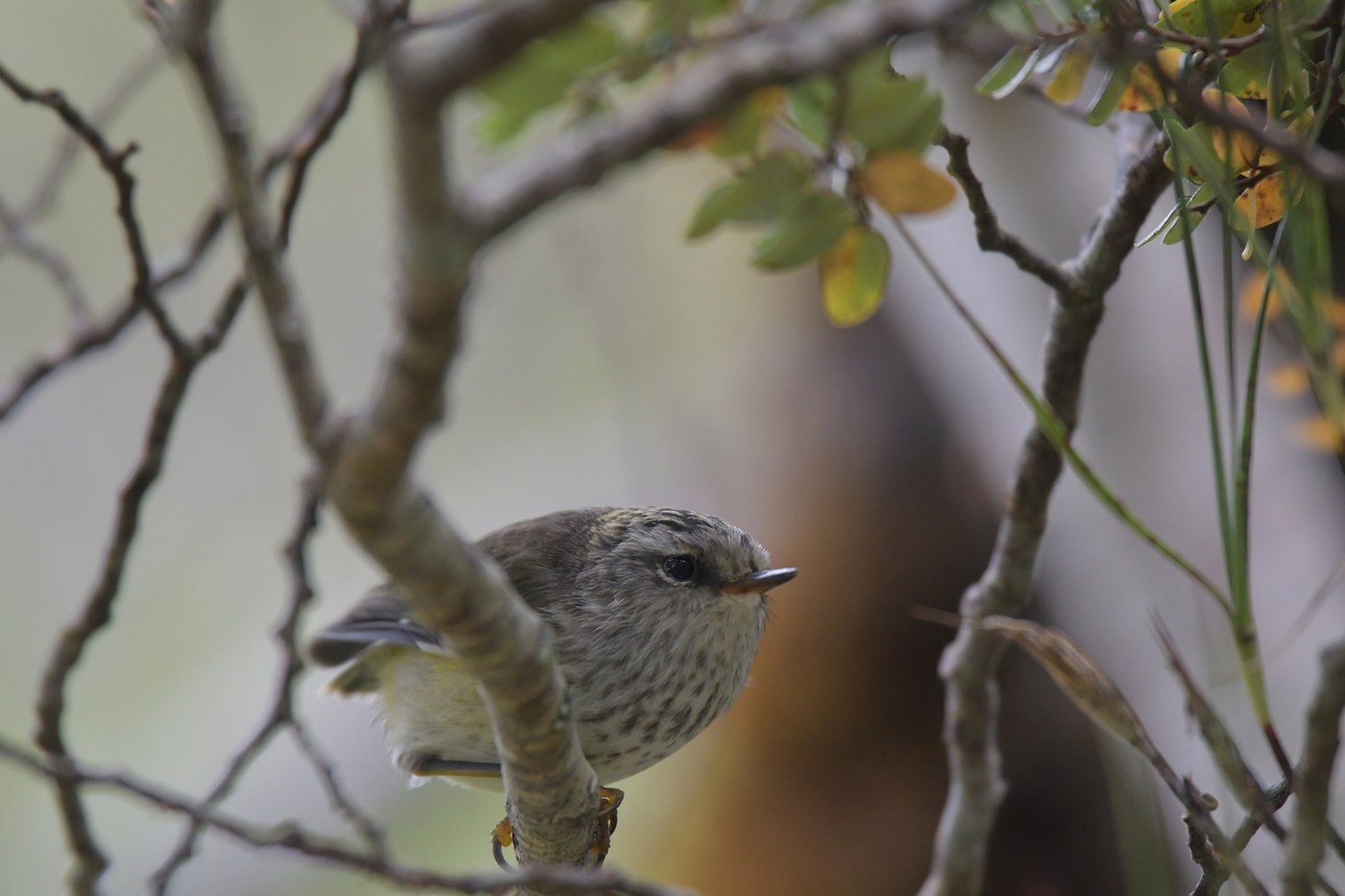
Key Field Marks
- Tiny bird, only about 8 cm long, the smallest bird native to New Zealand
- Male: bright green upperparts, pale yellowish underparts, and a very short tail that is often barely visible and typically held cocked up
- Female: browner and more streaked on the upperparts than the male, with duller underparts
- Fine, slightly upturned bill suited to probing bark crevices for invertebrates
- Compact, rounded body shape with an almost tailless appearance, unlike most other small forest birds
Separating Rifleman from Similar Species
- Grey Warbler (Gerygone): has a proportionally longer tail, different foraging style (gleans from foliage rather than creeping up trunks), and lacks the Rifleman's stubby, near-tailless silhouette.
- The Rifleman's combination of extremely small size, nearly absent tail, and trunk-creeping behavior is essentially unique among New Zealand's native forest birds, making confusion with other species unlikely once these features are noted.
- As part of the ancient New Zealand wren family (Acanthisittidae), it is not closely related to true wrens elsewhere in the world despite superficial similarities in size.
Habitat, Range & Season
- Found in native forest throughout New Zealand, including beech and podocarp forest, from lowland areas up into subalpine forest margins
- Resident year-round, not migratory, and generally stays within a home range in forested habitat
Behavior Notes
- Forages by creeping methodically up tree trunks and along branches, probing bark crevices for small invertebrates — a nuthatch-like technique unusual among small songbirds
- Weak flier, typically making short, whirring flights between trees rather than sustained flight
- Often found in pairs or small family groups working through the forest together
Voice
- Calls are extremely high-pitched, thin "zipt zipt" notes, among the highest-frequency vocalizations of any New Zealand bird, and can be difficult or impossible for some listeners to hear
- Because of the high pitch, the Rifleman is sometimes detected visually before it is heard
Similar-Species Checklist
- Confirm tiny size and nearly tailless silhouette
- Watch for trunk-creeping foraging behavior distinct from foliage-gleaning species like Grey Warbler
- Listen carefully for very high-pitched calls, which may be inaudible to some observers
Frequently asked questions
Is the Rifleman really New Zealand's smallest bird?
Yes, at about 8 cm long, the Rifleman is the smallest bird native to New Zealand.
How do I recognize a Rifleman in the field?
Look for a tiny, almost tailless green-and-yellow bird creeping up tree trunks and branches like a nuthatch, rather than flitting through foliage.
What is the difference between male and female Riflemen?
Males are bright green above with yellowish underparts, while females are browner and more streaked above and duller below.
Why is it hard to hear a Rifleman's call?
Its calls are extremely high-pitched thin notes, near or beyond the upper range of human hearing for some listeners.
Where do Riflemen live?
They live in native forest throughout New Zealand, from lowland beech and podocarp forest up to subalpine forest margins, and do not migrate.