Resplendent Quetzal Identification Guide
An iconic Central American cloud-forest bird famous for the breeding male's iridescent emerald plumage, crimson belly, and dramatically long tail streamers.
Read the full Resplendent Quetzal encyclopedia entry →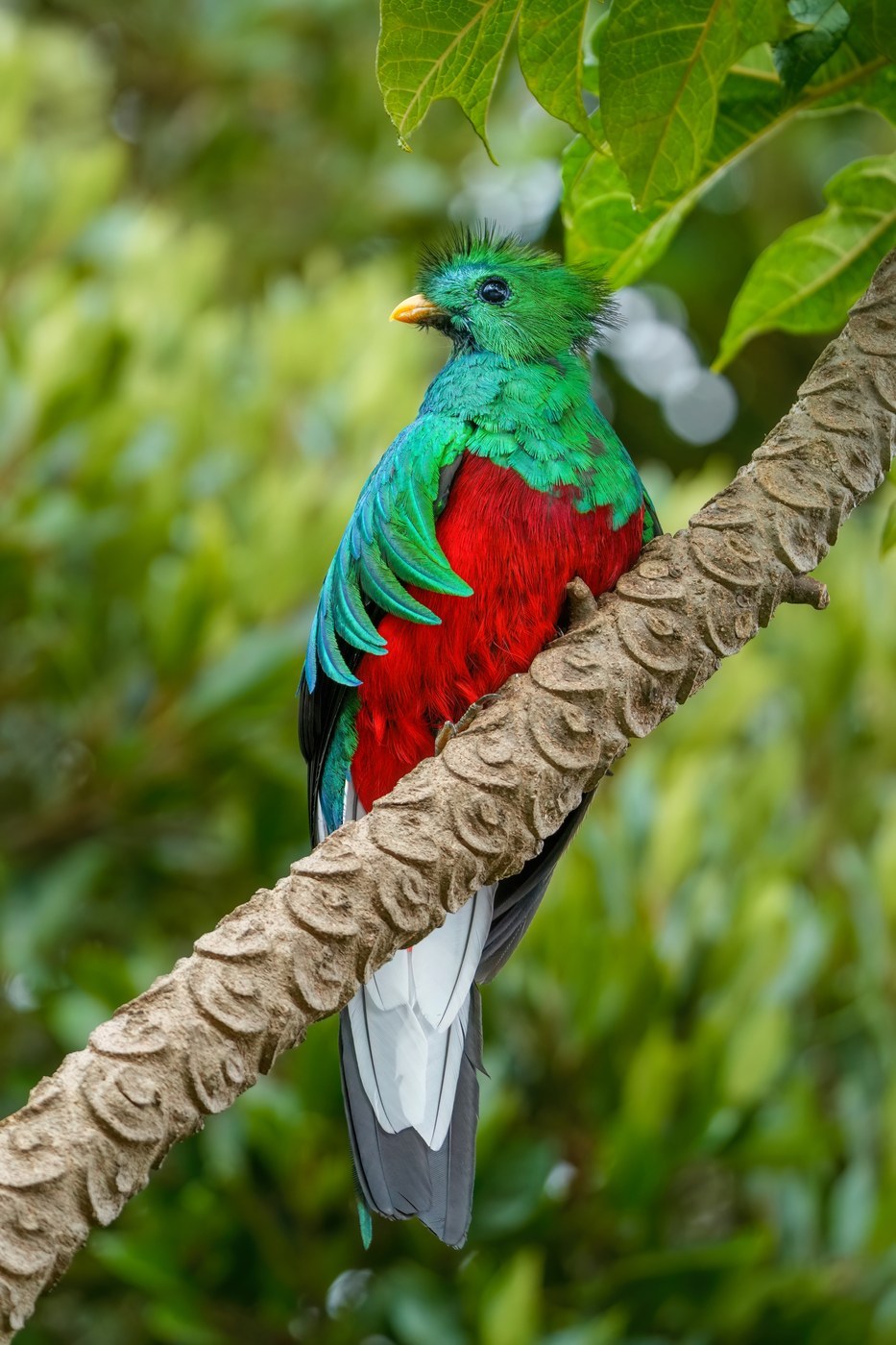
Key Field Marks
- Medium-sized trogon relative, body around 36-40 cm, but the male's tail streamers can add another 60+ cm during the breeding season
- Breeding male: shimmering iridescent emerald-green head, back, and chest; bold crimson-red lower breast and belly; a bushy, forward-curling green crest; short, stout yellow bill; extremely long, wispy upper tail covert streamers trailing well beyond the actual tail
- Female: much duller gray-green head and breast, red confined mostly to the lower belly, gray bill (rather than yellow), and no elongated tail streamers
- Both sexes show a fairly short, squared true tail beneath the male's ornamental covert plumes
Separating Resplendent Quetzal from Similar Species
- No other bird in its cloud-forest range combines the male's iridescent green body, red belly, and extravagant tail streamers — the breeding male is unmistakable.
- Females and non-streamered males can be told from other trogons by overall size, the distinctive bushy crest, and yellow (male) or gray (female) bill shape, along with cloud-forest habitat.
- Other quetzal species (such as Golden-headed or Crested Quetzal) occur in South America, well outside the Resplendent Quetzal's Mexico-to-Panama range, so geography alone usually prevents confusion.
Habitat, Range & Season
- Found in humid montane cloud forest, typically between roughly 1,200 and 3,000 meters elevation, from southern Mexico through Central America to western Panama
- Strongly tied to forests with wild avocado (Lauraceae) trees, whose fruit forms a major part of the diet
- Some populations make seasonal elevational movements, shifting to lower or different forest patches outside the breeding season as fruit availability changes
Behavior Notes
- Nests in tree cavities, often old woodpecker holes; the male's long tail streamers must curl out of the entrance while he incubates
- Feeds by plucking whole fruits in flight from a perch, as well as taking insects, small lizards, and other small prey
- Generally quiet and easily overlooked despite bright plumage, often sitting motionless in the canopy
Voice
- Calls include a soft, low "kyow" or "keeow" and various low whistled notes
- Best located by careful listening in cloud forest canopy combined with watching fruiting avocado trees
Similar-Species Checklist
- Confirm iridescent green body plus red belly and long tail streamers for adult breeding males
- For females, note the duller gray-green head/breast and gray bill
- Check elevation and habitat — cloud forest with wild avocado trees is key
Frequently asked questions
How do I identify a male Resplendent Quetzal?
Look for iridescent emerald-green plumage on the head and back, a crimson-red belly, a bushy forward-curling crest, a yellow bill, and extremely long trailing tail streamers during the breeding season.
What does a female Resplendent Quetzal look like?
Females are much duller, with gray-green head and breast, red limited to the lower belly, a gray bill, and no long tail streamers.
Where can I see a Resplendent Quetzal?
They live in humid montane cloud forest from southern Mexico through Central America to western Panama, generally between about 1,200 and 3,000 meters elevation.
What do Resplendent Quetzals eat?
Mainly fruit from wild avocado trees (Lauraceae), supplemented with insects, small lizards, and other small prey.
When do male Resplendent Quetzals have their long tail streamers?
The elongated tail covert streamers are grown for the breeding season and are shed or reduced outside of it, so males look less spectacular for part of the year.
Resplendent Quetzal identified by the community
Recent Resplendent Quetzal sightings identified with Bird Identifier.