
Reed Bunting Identification Guide
A small streaky bunting of wetlands whose breeding male shows a striking black head and white collar, while females and winter birds require a closer look at head-stripe pattern.
Read the full Reed Bunting encyclopedia entry →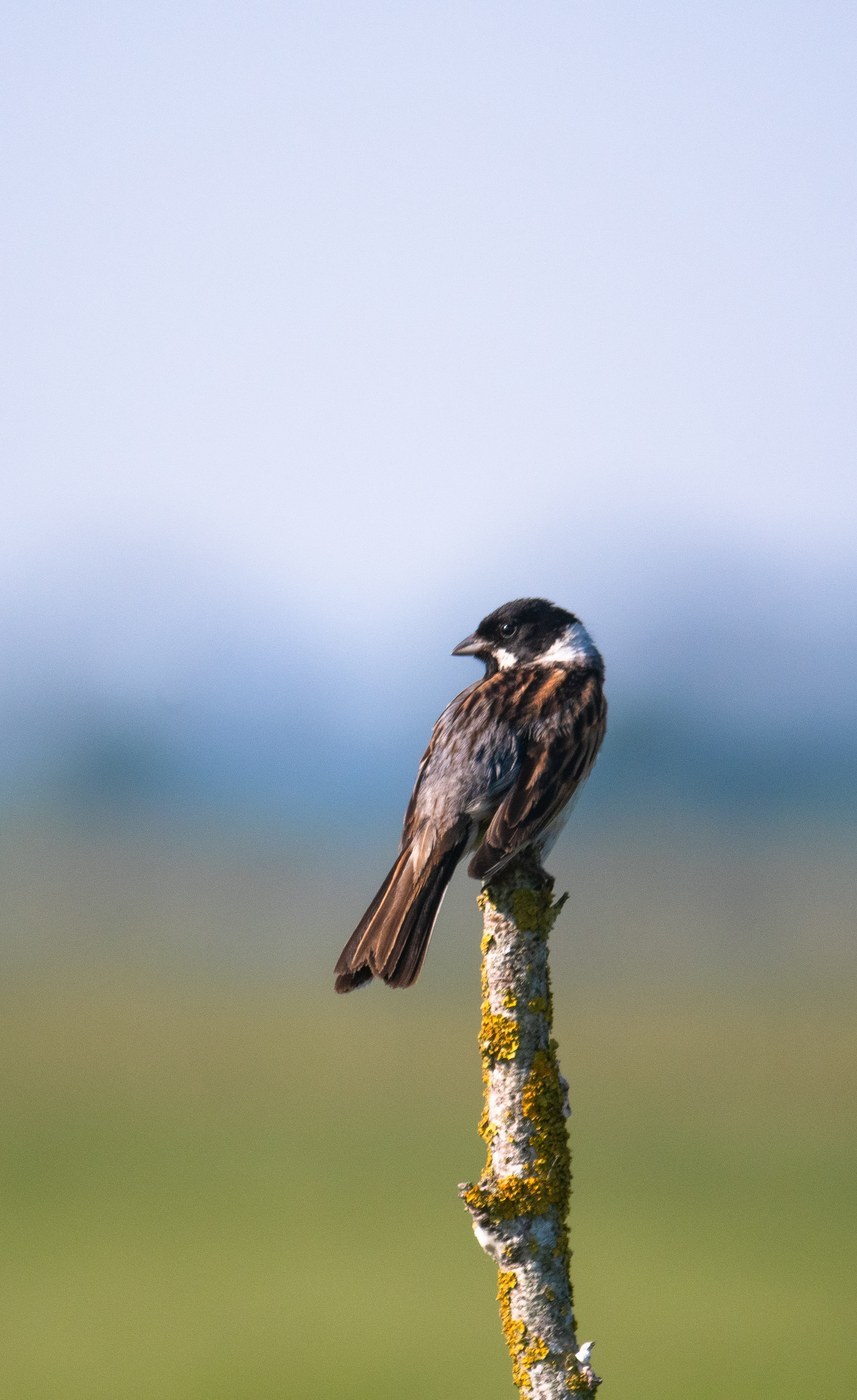
Key Field Marks
- Small bunting, sparrow-sized, with a streaky brown back and white outer tail feathers flashed in flight
- Breeding male: solid black head and throat, bold white submoustachial stripe running down to a white collar, streaked chestnut-brown back, grayish rump
- Female and non-breeding male: streaked brown crown with a pale buffy supercilium, dark malar (moustache) stripe, and streaky underparts; lacks the male's solid black hood
- Longish, slightly notched tail, often flicked and partly fanned to show white edges
- Fairly heavy, conical bunting bill
Separating Reed Bunting from Similar Species
- Sedge Warbler: much smaller and slimmer with a thin, pointed warbler bill rather than a stout seed-eating bill, and a different, more strongly patterned crown stripe.
- Corn Bunting: notably larger, bulkier, plain-faced without the strong head stripes, and lacks white in the tail.
- Yellowhammer: shows yellow tones on the head and underparts that Reed Bunting lacks, and has chestnut (not white) rump and different tail pattern.
- Female/winter Reed Buntings are best confirmed by the combination of pale supercilium, dark malar stripe, streaky crown, and white outer tail feathers flashing in flight.
Habitat, Range & Season
- Breeds in reedbeds, marshes, wet ditches, and vegetation around ponds and rivers across most of Europe and temperate Asia
- Increasingly found away from wetlands outside the breeding season, using farmland stubble fields, hedgerows, and weedy field margins
- Largely resident in milder parts of its range, with more northern and eastern populations migrating south and west in winter
Behavior Notes
- Often perches conspicuously on top of a reed stem or bush to sing or watch for danger
- Frequently flicks its tail, showing the white outer feathers, a useful confirming mark at a distance
- Gregarious in winter, joining mixed finch and bunting flocks feeding on weed seeds and spilled grain
Voice
- Song is a simple, repetitive, unmusical series: "tweek, tweek, tweek, tissick," delivered from an exposed perch
- Call is a thin, descending "tseeu" or a sharp "tsick," often given in flight
Similar-Species Checklist
- Confirm the black hood and white collar for a breeding male
- For females/winter birds, check supercilium, malar stripe, and white outer tail feathers
- Note habitat — reedbeds and wet margins in the breeding season, farmland in winter
Frequently asked questions
How do I identify a female Reed Bunting?
Look for a streaked brown crown, pale buffy eyebrow stripe, a dark moustache (malar) stripe, streaky underparts, and white outer tail feathers flashed in flight.
What does a male Reed Bunting look like in breeding plumage?
A striking black head and throat with a bold white submoustachial stripe and collar, streaked chestnut back, and white outer tail feathers.
Where do Reed Buntings live?
They breed in reedbeds and wet marshy vegetation, but often move onto farmland, hedgerows, and stubble fields in winter.
How can I tell a Reed Bunting from a Sedge Warbler?
Reed Bunting has a stout, conical seed-eating bill and a heavier build, while Sedge Warbler has a thin, pointed insect-eating bill and a slimmer body.
Do Reed Buntings migrate?
Southern and western populations are largely resident, but birds from northern and eastern parts of the range migrate south and west for winter.