Red-winged Blackbird Identification Guide
One of North America's most abundant marsh birds, with glossy black males flashing red-and-yellow shoulder patches and heavily streaked, sparrow-like females.
Read the full Red-winged Blackbird encyclopedia entry →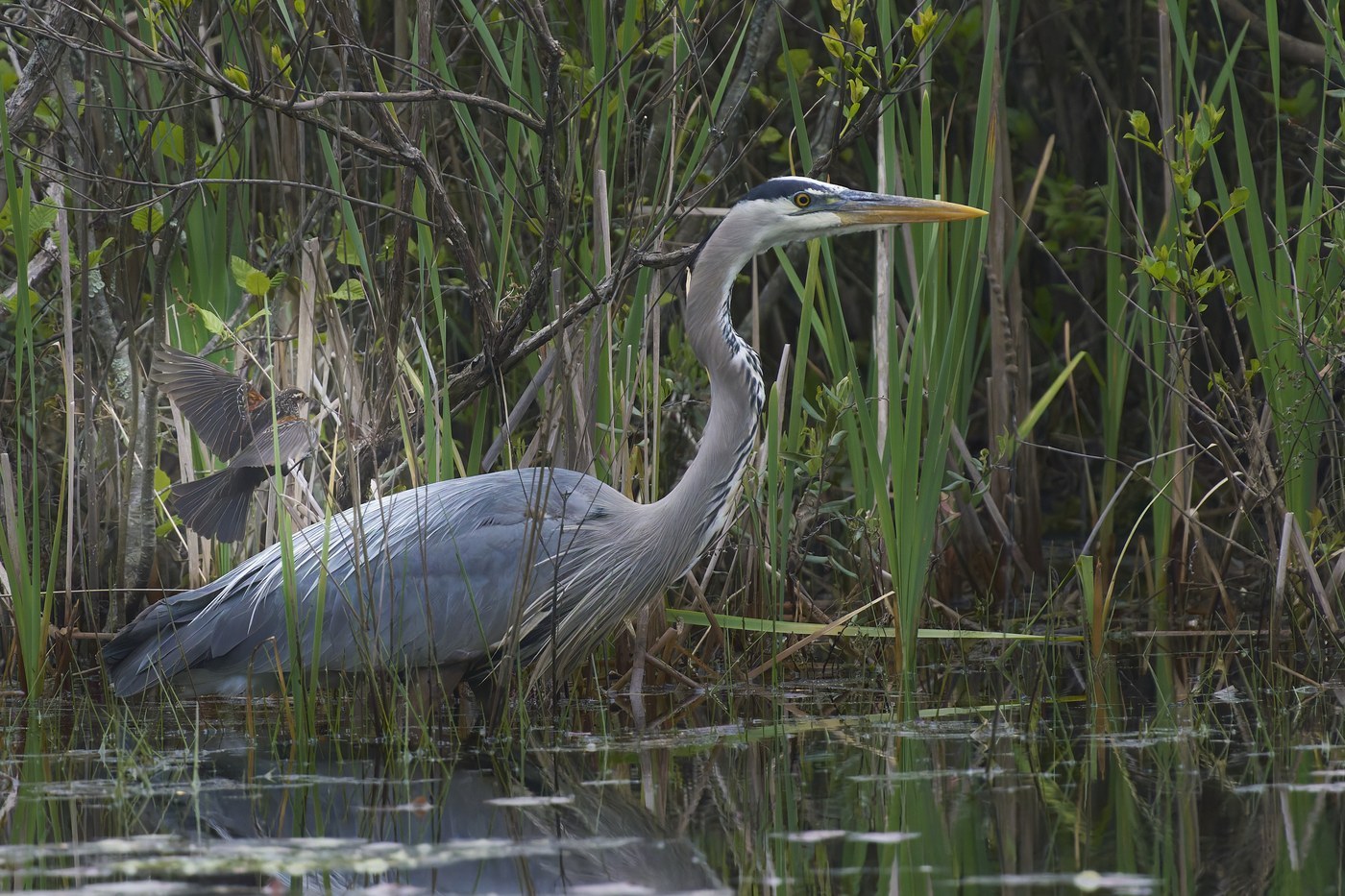
Key Field Marks
- Medium-sized icterid, about 22 cm, common and conspicuous across wetlands and open fields.
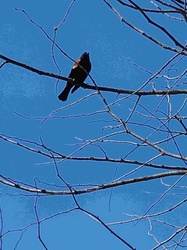
- Male: glossy all-black body with bright red shoulder patches (epaulets) bordered by a yellow or buffy edge; the red is often mostly hidden, showing only a thin yellow line, until the male displays or flies.
- Female: heavily streaked dark brown and buff overall, with a sparrow-like appearance, a pointed bill, and a pale eyebrow stripe — quite different from the male.
- Males perch conspicuously on cattails, reeds, and wires while singing and displaying their epaulets.
Separating It From Similar Species
- Female Red-winged Blackbird vs. sparrows: the female's larger size, longer and sharper bill, and streaked-but-plain overall pattern (without strong head stripes typical of many sparrows) help distinguish it.
- Tricolored Blackbird (western U.S.): male has a darker red epaulet bordered by white, not yellow; females are darker and less contrastingly streaked than female Red-winged Blackbirds, and Tricolored Blackbirds are far more colonial nesters.
- Rusty and Brewer's Blackbirds: males lack any red shoulder patch and show different eye color and overall sheen.
Habitat, Range & Season
- Breeds in freshwater and brackish marshes, wet meadows, and roadside ditches with cattails or dense vegetation across nearly all of North America.
- Outside the breeding season, forms large flocks — sometimes mixed with other blackbird species — foraging in agricultural fields and at communal roosts.
- Many northern populations migrate south in winter, while southern populations are largely resident.
Voice
- The male's song is a loud, gurgling "conk-la-ree!" often given from an exposed perch; both sexes give a sharp "check" call, and males also give a harsh "tee-err" alarm.
Frequently asked questions
Why does a male Red-winged Blackbird's red patch sometimes look hidden?
Males can conceal most of the red epaulet, showing only a thin yellow line, and reveal the full red-and-yellow patch during territorial displays or in flight.
How can I identify a female Red-winged Blackbird?
Females are heavily streaked brown and buff with a sparrow-like look, but their larger size, longer sharp bill, and pale eyebrow help separate them from true sparrows.
What is the difference between Red-winged and Tricolored Blackbirds?
Male Tricolored Blackbirds have a darker red epaulet bordered by white rather than yellow, and they nest in much denser colonies than Red-winged Blackbirds.
Where and when are Red-winged Blackbirds most common?
They are abundant in marshes, wet meadows, and fields across nearly all of North America, with large flocks especially conspicuous in fall and winter.
Red-winged Blackbird identified by the community
Recent Red-winged Blackbird sightings identified with Bird Identifier.