
Red-naped Sapsucker Identification Guide
A western mountain woodpecker distinguished from the similar Yellow-bellied Sapsucker by a red patch on the nape and a red chin in both sexes.
Read the full Red-naped Sapsucker encyclopedia entry →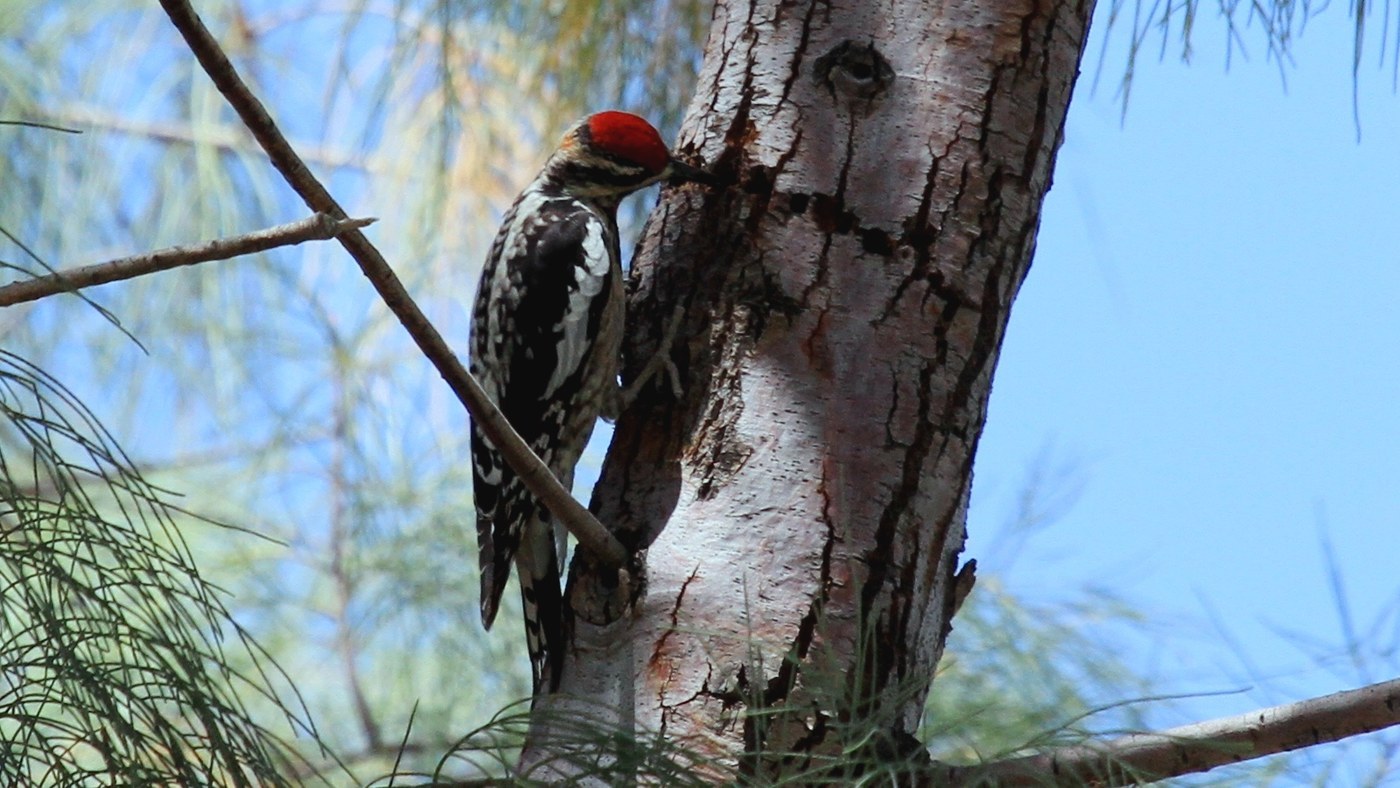
Key Field Marks
- Medium-sized woodpecker with a black-and-white barred back, black breast bib, and pale yellowish wash on the belly
- Red crown patch plus a separate red patch on the nape (back of the head) — the nape patch is the key diagnostic feature giving the species its name
- Both males and females show red on the chin and throat (in the closely related Yellow-bellied Sapsucker, females typically have a white throat)
- Bold white stripe down the folded wing, visible at rest and in flight
- Often shows a thin red line separating the black breast bib from the red throat, distinct from full-throated red
Similar Species
- Yellow-bellied Sapsucker: breeds farther east; lacks the red nape patch (nape is black/white), and females usually have a white chin/throat instead of red. Hybridizes with Red-naped Sapsucker in a narrow contact zone.
- Red-breasted Sapsucker: found along the Pacific coast; has the entire head and breast washed red rather than showing separate, distinct red crown/nape/throat patches bordered by black and white. Also hybridizes with Red-naped where ranges meet in the interior Northwest.
- Careful attention to how much red covers the head, and whether it is broken up by black/white or solid, separates all three sapsucker species.
Habitat, Range & Season
- Breeds in aspen groves and mixed conifer forests of the interior mountain West, including the Rocky Mountains and Great Basin ranges
- Strongly associated with aspen stands, where it excavates nest cavities in trees often already softened by heart rot fungus
- Migratory: withdraws from most of its breeding range in winter, moving to lower elevations and south into Mexico and the southwestern U.S.
Voice
- Gives a nasal, cat-like mewing call
- Drumming is irregular and stuttering rather than a steady roll, a pattern shared with other sapsuckers
- Drills neat horizontal rows of small sap wells in aspen and willow bark, which it maintains and revisits — a good sign of sapsucker presence even when the bird itself is not visible
Frequently asked questions
How do I tell Red-naped Sapsucker from Yellow-bellied Sapsucker?
Red-naped Sapsucker shows a red patch on the nape (absent in Yellow-bellied) and both sexes have a red chin, whereas female Yellow-bellied Sapsuckers typically have a white throat.
What trees does Red-naped Sapsucker prefer?
It is strongly associated with aspen groves, often mixed with conifers, in the interior mountain West.
How can I find a Red-naped Sapsucker without seeing it?
Look for neat horizontal rows of small drilled sap wells on aspen or willow bark — a telltale sign of sapsucker feeding activity.
Does Red-naped Sapsucker hybridize with other sapsuckers?
Yes, it hybridizes with both Yellow-bellied Sapsucker and Red-breasted Sapsucker in narrow zones where their ranges meet.