
Red-legged Honeycreeper Identification Guide
A small, vividly violet-blue tropical songbird with a thin decurved bill and bright coral-red legs that give it its name.
Read the full Red-legged Honeycreeper encyclopedia entry →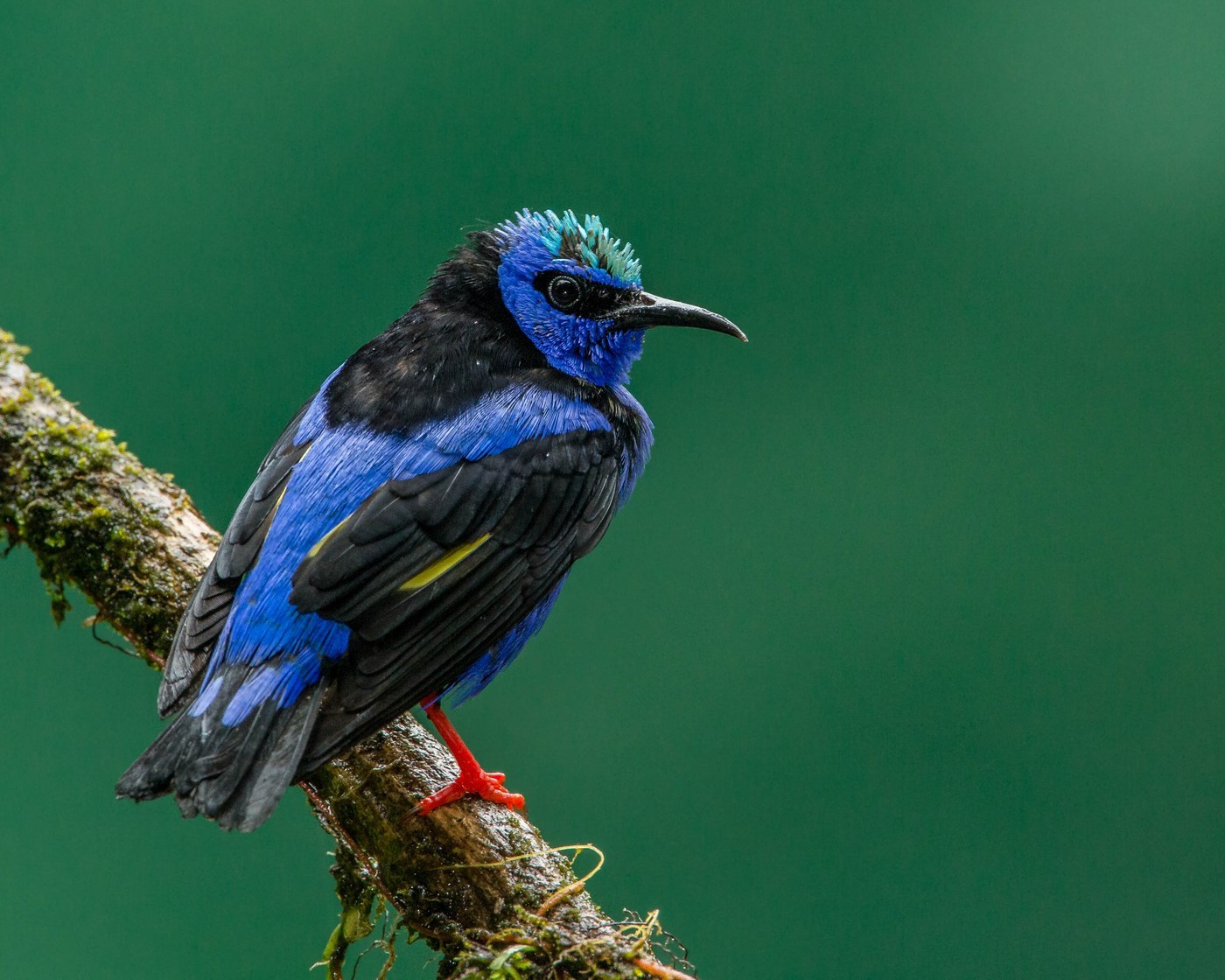
Key Field Marks
- Breeding male: deep violet-blue body plumage, a paler turquoise crown, and contrasting black wings, back, and tail
- Bright coral-red to pink legs stand out against the dark plumage and are visible even in flight
- Thin, slightly downcurved black bill adapted for nectar feeding and picking small fruit and insects
- Eclipse male (post-breeding) molts into a green plumage similar to the female but retains black wings
- Female and immatures: green overall, paler and yellower below, with duller reddish legs than adult males
Similar Species
- Purple Honeycreeper: found more in Amazonian lowlands, has yellow (not red) legs and a two-toned bill with a yellow lower mandible, and a more purple-black overall tone.
- Green Honeycreeper: females of both species look similarly green, but Green Honeycreeper has a shorter, straighter, mostly yellowish bill and lacks the reddish leg color.
- Shining Honeycreeper: also blue with red legs, but is much darker, almost black-blue overall, with a shorter, stubbier bill and a smaller pale crown patch; ranges overlap in parts of Central America.
- Leg color and bill shape together are the most reliable way to separate the confusing green female/immature honeycreepers.
Habitat, Range & Season
- Found in forest edge, second growth, plantations (especially shade coffee and cacao), and gardens from Mexico south through Central America into much of South America
- Non-migratory resident throughout most of its range, often seen in small active flocks moving through the canopy and edge vegetation
- Frequently visits flowering trees and fruit feeders, probing blossoms for nectar with its curved bill
Voice
- Gives thin, high-pitched "tsip" or "tsee" contact notes while foraging
- Song is a simple, high, insect-like series of thin notes, not loud or musical compared to many tropical songbirds
Frequently asked questions
What is the best field mark for Red-legged Honeycreeper?
Bright coral-red legs combined with violet-blue plumage and a thin, slightly decurved black bill in adult males.
How do I tell a female Red-legged Honeycreeper from other green honeycreepers?
Look at the legs and bill: Red-legged Honeycreeper has reddish legs and a thin decurved bill, while similar species like Purple and Green Honeycreeper have yellow legs and different bill shapes.
Does the male Red-legged Honeycreeper always look blue?
No, after breeding males molt into a green 'eclipse' plumage resembling females but keep their black wings, making them briefly harder to identify.
Where does Red-legged Honeycreeper live?
Forest edges, second growth, shade coffee plantations, and gardens from Mexico through Central America into much of South America.