
Red Knot Identification Guide
A stocky, medium-large sandpiper that turns brick-red on the face and breast in breeding plumage but looks plain pale gray the rest of the year.
Read the full Red Knot encyclopedia entry →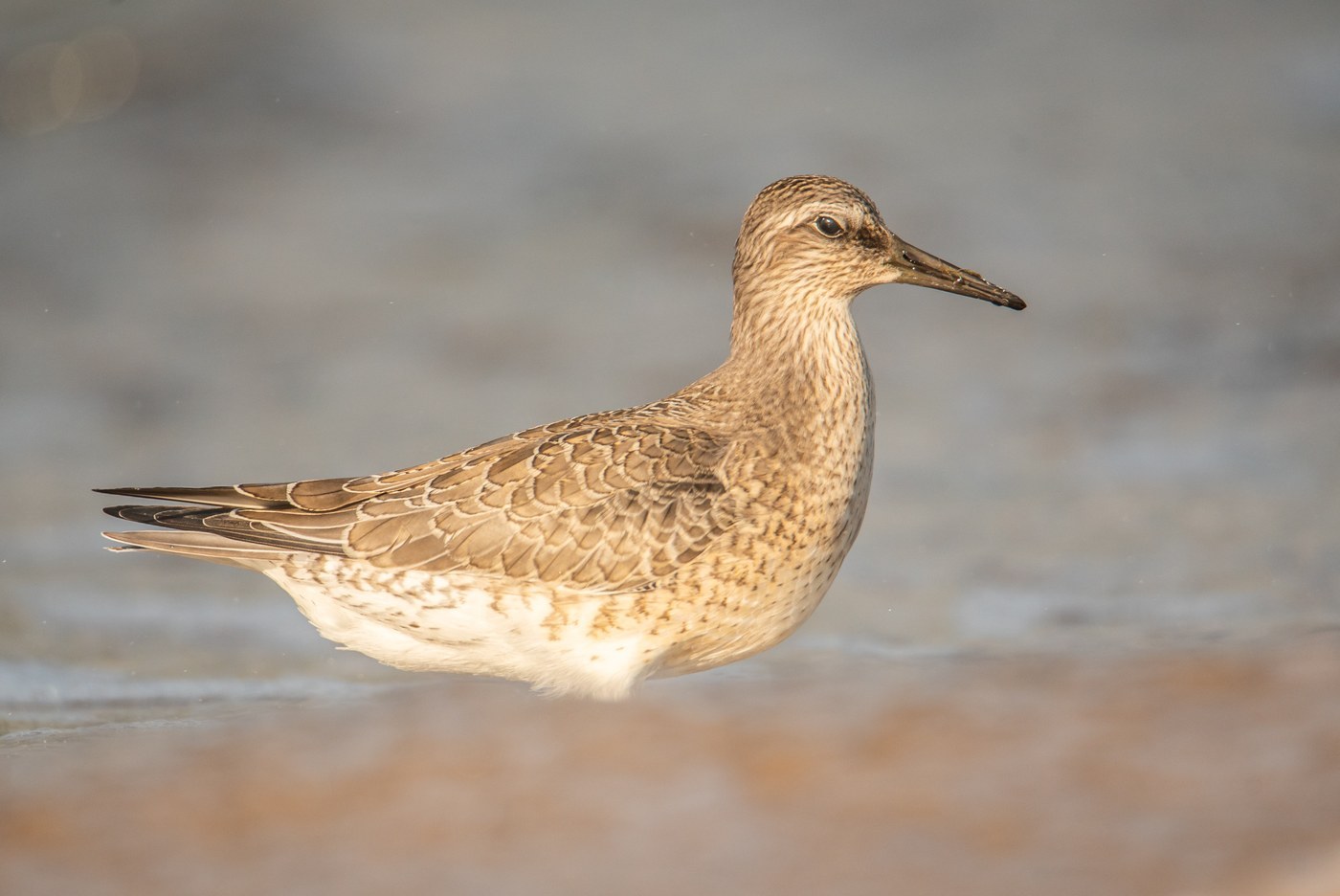
Key Field Marks
- Medium-large, thickset sandpiper with a short neck, relatively short dark legs, and a medium-length, straight, blunt-tipped bill
- Breeding plumage: rich brick-red to salmon coloring covers the face, throat, and underparts, with a mottled gray, black, and rufous back
- Non-breeding plumage: plain, featureless pale gray above and whitish below, with a scaly pattern visible up close — often described as looking "boring" compared to other shorebirds
- In flight shows a pale, finely barred rump and a narrow white wingstripe
- Larger and more compact than most "peep" sandpipers, with a distinctly upright, portly stance
Similar Species
- Dunlin: smaller, with a longer, distinctly downcurved bill tip, and a black belly patch in breeding plumage rather than an all-red underside.
- Dowitchers (Short-billed/Long-billed): much longer, straighter bills used for probing, and a more elongated body shape.
- Curlew Sandpiper: also shows rufous breeding plumage but is slimmer with a longer, more curved bill and white (not gray) rump.
- Non-breeding Red Knots are best told from other gray shorebirds by their chunky shape, medium bill length, and relatively short legs.
Habitat, Range & Season
- Breeds on high Arctic tundra in northern Canada, Alaska, Greenland, and Siberia
- One of the longest-distance migrant shorebirds, undertaking marathon flights between Arctic breeding grounds and wintering areas as far south as Tierra del Fuego, plus coasts of Europe, Africa, and Australia
- The Delaware Bay stopover in May, where migrating knots feast on horseshoe crab eggs to refuel, is one of the most famous shorebird spectacles in North America
- Found in large flocks on coastal mudflats, beaches, and estuaries during migration and winter
Voice
- Relatively quiet; gives a soft, low "knut" or "nut" contact note, from which its common name may derive
Frequently asked questions
Why is Red Knot called 'red'?
In breeding plumage its face, throat, and underparts turn a rich brick-red or salmon color, though outside the breeding season it looks plain gray.
How do I identify a non-breeding Red Knot?
Look for a chunky, short-legged sandpiper with a medium straight bill and plain pale gray upperparts and whitish underparts — its featureless look combined with its stocky shape is the key.
Where is the best place to see large numbers of Red Knots?
Delaware Bay in the eastern United States hosts a famous spring stopover where thousands gather to feed on horseshoe crab eggs during May migration.
How far do Red Knots migrate?
Some populations fly from high Arctic breeding grounds to wintering areas as far south as Tierra del Fuego, making them one of the longest-distance migrant shorebirds in the world.