
Red Kite Identification Guide
A graceful reddish-brown European raptor recognized instantly in flight by its long, deeply forked tail that twists constantly for steering.
Read the full Red Kite encyclopedia entry →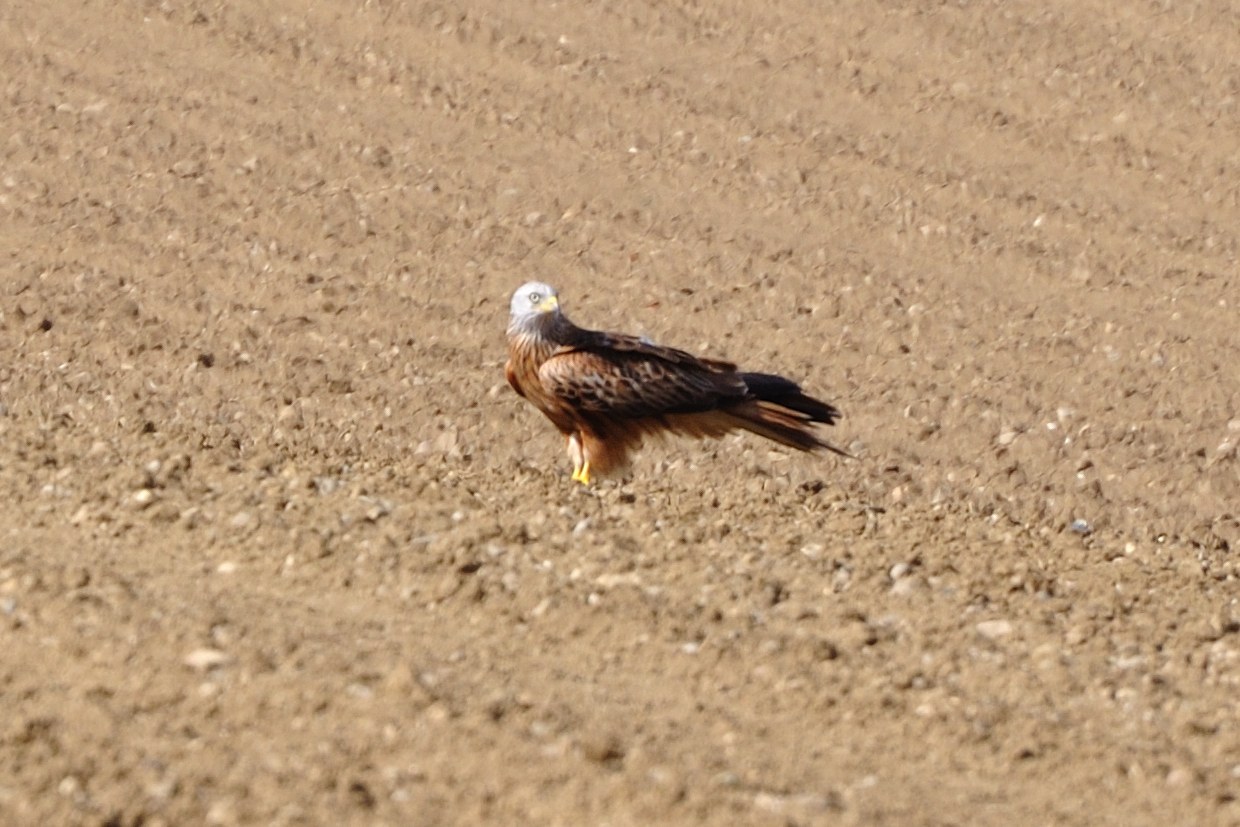
Key Field Marks
- Large, long-winged raptor with a warm rufous-red body and reddish tail, contrasting with a pale gray head
- Deeply forked tail is the single best mark — it is constantly twisted and tilted in flight to steer, unlike the more subtly notched or fanned tails of other raptors
- Long, angled wings show a pale panel near the wingtip (a "window") on the underside of the primaries, contrasting with black wingtips
- Flight is buoyant and graceful, with long glides and minimal flapping, wings held in a shallow "M" shape or angled back at the wrist
Similar Species
- Black Kite: overall darker and browner, tail is only shallowly notched rather than deeply forked, and lacks the bright rufous tones of Red Kite.
- Common Buzzard: broader, more rounded wings, a fanned rounded tail (not forked), and a stockier build with more flapping flight.
- Marsh Harrier: flies with wings held in a shallow V (dihedral) low over reedbeds, has a shorter, unforked tail, and lacks the kite's twisting tail action.
- The forked, twisting tail combined with rufous body color rules out virtually every other European raptor.
Habitat, Range & Season
- Found across much of Europe in a patchwork of farmland, open countryside, woodland edges, and increasingly towns and roadsides where it scavenges
- Native and resident in Wales and parts of continental Europe; successfully reintroduced to England and Scotland from the late 1980s onward, and now a familiar sight over the Chilterns and other release areas
- Northern and eastern European populations are migratory, moving south and west for winter, while British and some western European birds are largely resident
- Often seen soaring over roads, farmland, and rubbish sites looking for carrion and roadkill
Voice
- Gives a thin, high, mewing whistle, often rendered as "wee-oo" or a repeated shrill "peeuu," softer and reedier than a Common Buzzard's call
Frequently asked questions
What is the single best field mark for Red Kite?
Its long, deeply forked tail, which it constantly twists and tilts in flight to steer — no other common European raptor shows this combination with a rufous body.
How do I separate Red Kite from Black Kite?
Red Kite is more rufous overall with a deeply forked tail, while Black Kite is darker brown with only a shallow notch in the tail.
Where is a good place to see Red Kites in Britain?
The Chilterns in England hold a large reintroduced population, and Wales has a native resident population; both offer reliable views.
Do Red Kites migrate?
Northern and eastern European populations migrate south for winter, but British and many western European birds are largely resident year-round.