
Red Grouse Identification Guide
A chunky, all-dark reddish-brown grouse of British and Irish heather moorland, lacking the white wings of its ptarmigan relatives.
Read the full Red Grouse encyclopedia entry →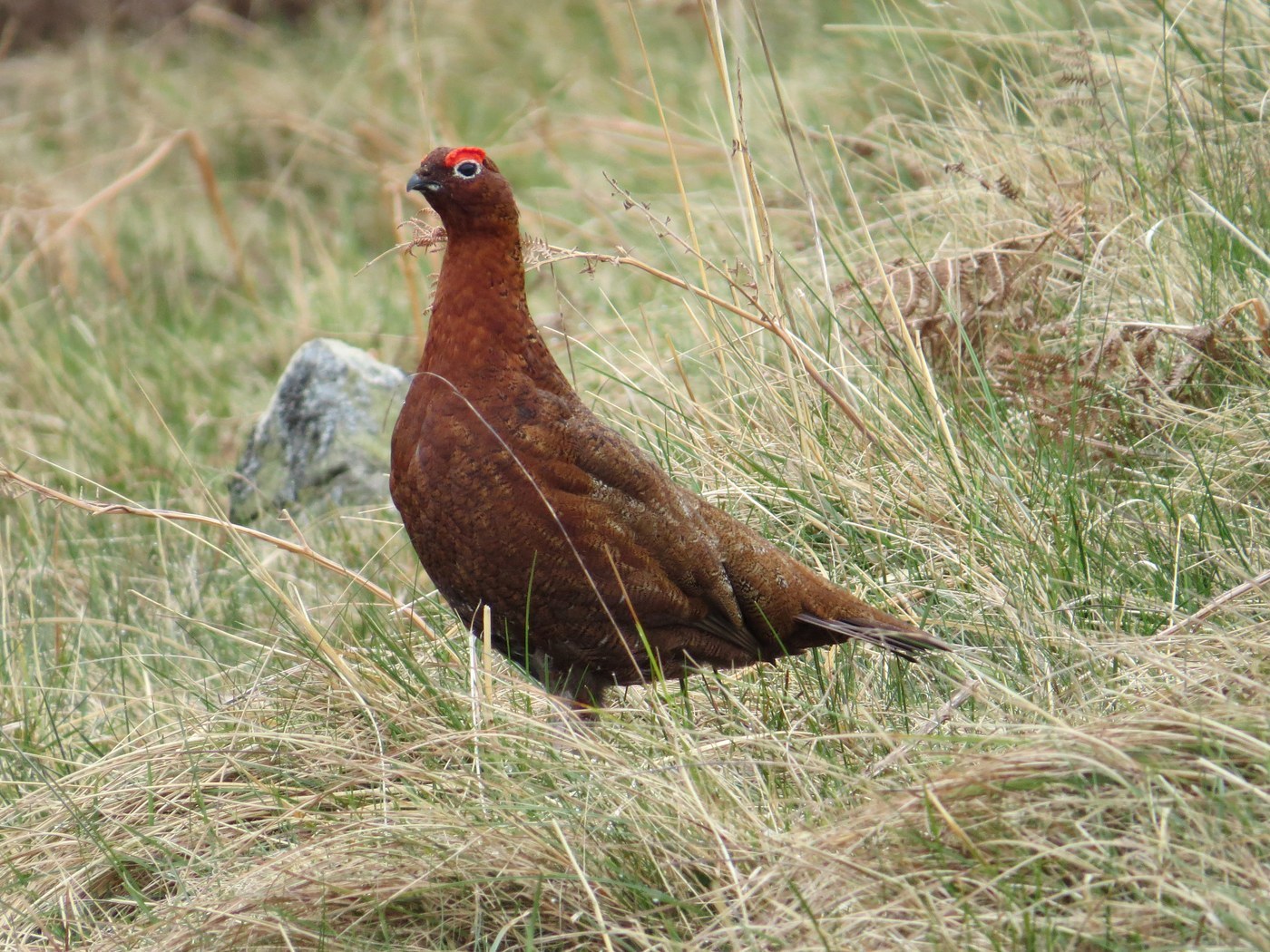
Key Field Marks
- Plump, chicken-like gamebird with a short tail, rounded wings, and fully feathered legs and feet
- Overall deep reddish-brown to chestnut plumage finely barred with black and buff, giving a warm rufous impression
- Males show a bright red fleshy comb (wattle) above each eye, most conspicuous in spring display
- No white anywhere in the plumage at any season — this separates it from its ptarmigan relatives
- Females are slightly paler and less rufous than males, with a smaller comb
Similar Species
- Willow Ptarmigan (the same species worldwide, Lagopus lagopus): other subspecies turn white in winter and show white wings year-round; British/Irish Red Grouse is a distinctive non-white subspecies (L. l. scoticus) found only in the British Isles.
- Rock Ptarmigan: found on high alpine ground, not moorland, and shows white wings in all seasons plus white body plumage in winter.
- Black Grouse: males are glossy blue-black with a lyre-shaped tail and white wingbar; females are grayer-brown and less rufous than Red Grouse, with a forked tail.
- The combination of moorland habitat, all-rufous plumage, and no white in the wings is diagnostic for Red Grouse.
Habitat, Range & Season
- Endemic to heather-dominated upland moorland of the British Isles, especially northern England, Scotland, Wales, and Ireland
- Many moors are actively managed with rotational heather burning to provide the young shoots the grouse feed on and cover for nesting
- Non-migratory and present year-round on its home moor; pairs hold territories through the breeding season (spring–summer) and form loose flocks in winter
Voice
- Males give an explosive, far-carrying "go-back, go-back, go-back" call, often from a rock or hummock
- Flushes with a fast, whirring burst of wingbeats followed by a low glide over the heather, accompanied by loud cackling
Frequently asked questions
What makes Red Grouse different from other grouse and ptarmigan?
It shows no white in the plumage at any season, unlike other Willow Ptarmigan populations and Rock Ptarmigan, and it is confined to heather moorland in the British Isles.
Is Red Grouse the same species as Willow Ptarmigan?
Yes, taxonomically it is a non-white subspecies of Willow Ptarmigan (Lagopus lagopus scoticus) unique to Britain and Ireland.
Where would I look for Red Grouse?
On managed heather moorland in upland Scotland, northern England, Wales, and Ireland, year-round.
What does a Red Grouse sound like?
Males give a loud, distinctive 'go-back-back-back' call, and flushed birds explode into a whirring, low flight over the heather with harsh cackling.