
Red-faced Warbler Identification Guide
A gray-backed mountain warbler of the Southwest instantly identified by its bright red face and throat and bold white nape patch.
Read the full Red-faced Warbler encyclopedia entry →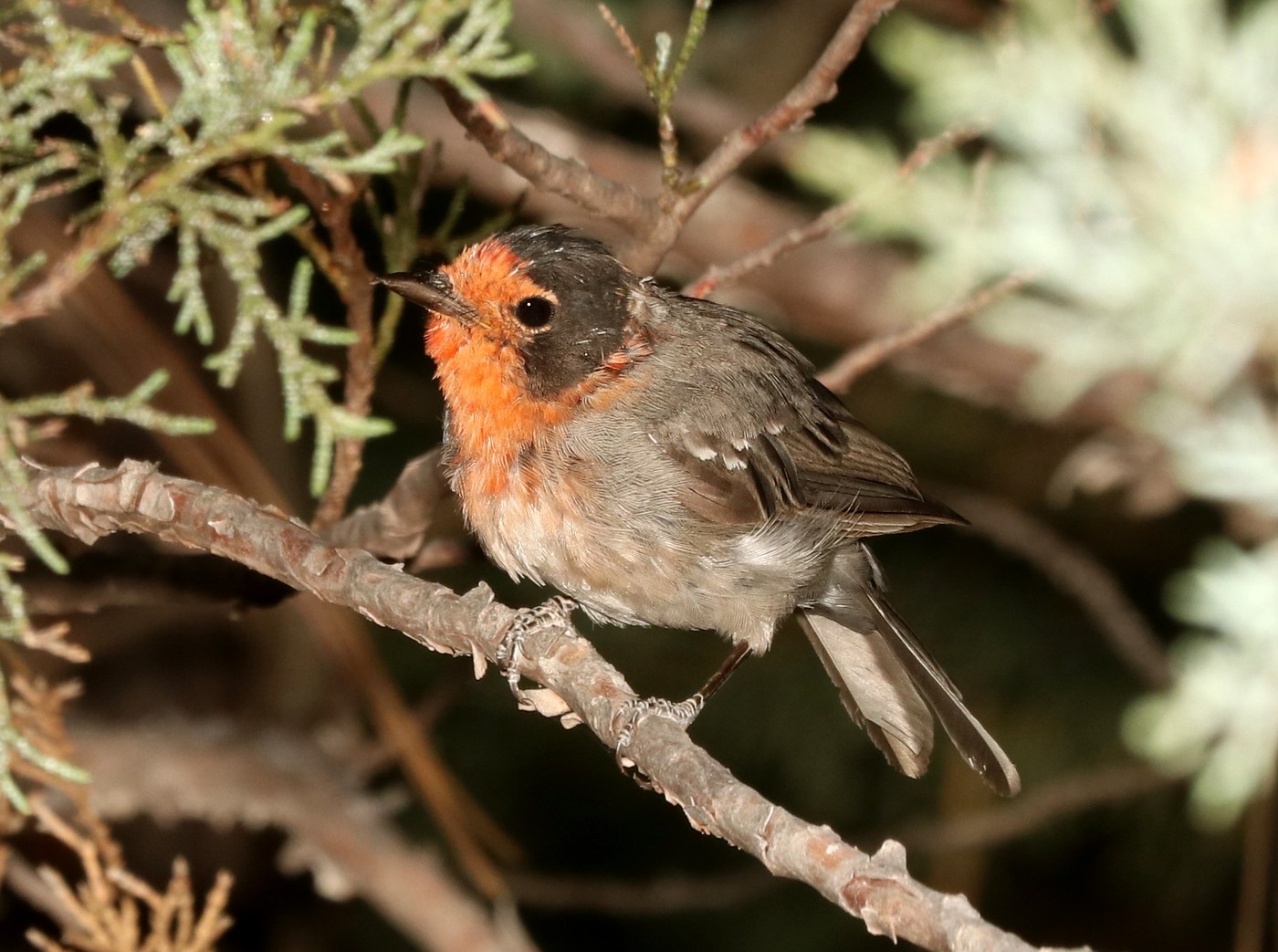
Key Field Marks
- Small, slim warbler with a fairly long tail that is frequently flicked and cocked
- Bright red face, chin, and throat surrounded by a black crown and black cheek patch (auriculars)
- Contrasting white patch on the back of the neck (nape) and a white rump
- Clean pale gray back and wings; whitish-gray underparts below the red throat
- Sexes look alike, unlike most warblers where males and females differ
Similar Species
- Painted Redstart: also boldly patterned but is mostly black with a red lower breast/belly and a large white wing patch — pattern is inverted compared to Red-faced Warbler's red face/gray body.
- Red Warbler (Mexico, casual north of the border): entirely red on the head, body, and underparts with gray wings, not just the face and throat.
- No other regularly occurring North American warbler combines a red face with a gray back and white nape patch, so a good look usually clinches the ID.
Habitat, Range & Season
- Breeds in high-elevation mixed conifer and pine-oak forests of southeastern Arizona and southwestern New Mexico "sky island" ranges, south through the Sierra Madre of Mexico
- Favors shady canyons with a mix of Douglas-fir, pine, and oak, often near water
- A short-distance migrant; winters in pine-oak highlands of Mexico and northern Central America
- Look for it in the U.S. from late April through September in canyons such as those in the Chiricahua, Santa Catalina, and Huachuca Mountains
Voice
- Song is a bright, sweet, warbling series, often described as similar to Yellow Warbler but slightly thinner and more variable
- Call note is a sharp, distinctive "chip" or "chee" given while foraging
- Often located first by voice high in the canopy before the red face is spotted
Frequently asked questions
What is the easiest way to identify a Red-faced Warbler?
Look for a small gray-backed warbler with a bright red face and throat outlined by black, plus a white patch on the nape — no other regular U.S. warbler shows this combination.
Where can I find a Red-faced Warbler in the United States?
It is a summer specialty of high-elevation pine-oak and mixed conifer canyons in the mountains of southeastern Arizona and southwestern New Mexico.
How is Red-faced Warbler different from Painted Redstart?
Painted Redstart is mostly black with a red belly and large white wing patch, while Red-faced Warbler is gray-backed with a red face and throat — the red is on opposite ends of the body.
What time of year is best to see Red-faced Warbler?
Late April through September, during the breeding season in its mountain canyon habitat; it winters south of the border in Mexico and Central America.