
Red-crowned Parakeet Identification Guide
The Red-crowned Parakeet, or kakariki, is a small bright-green New Zealand parakeet identified by its red crown patch and eye-stripe.
Read the full Red-crowned Parakeet encyclopedia entry →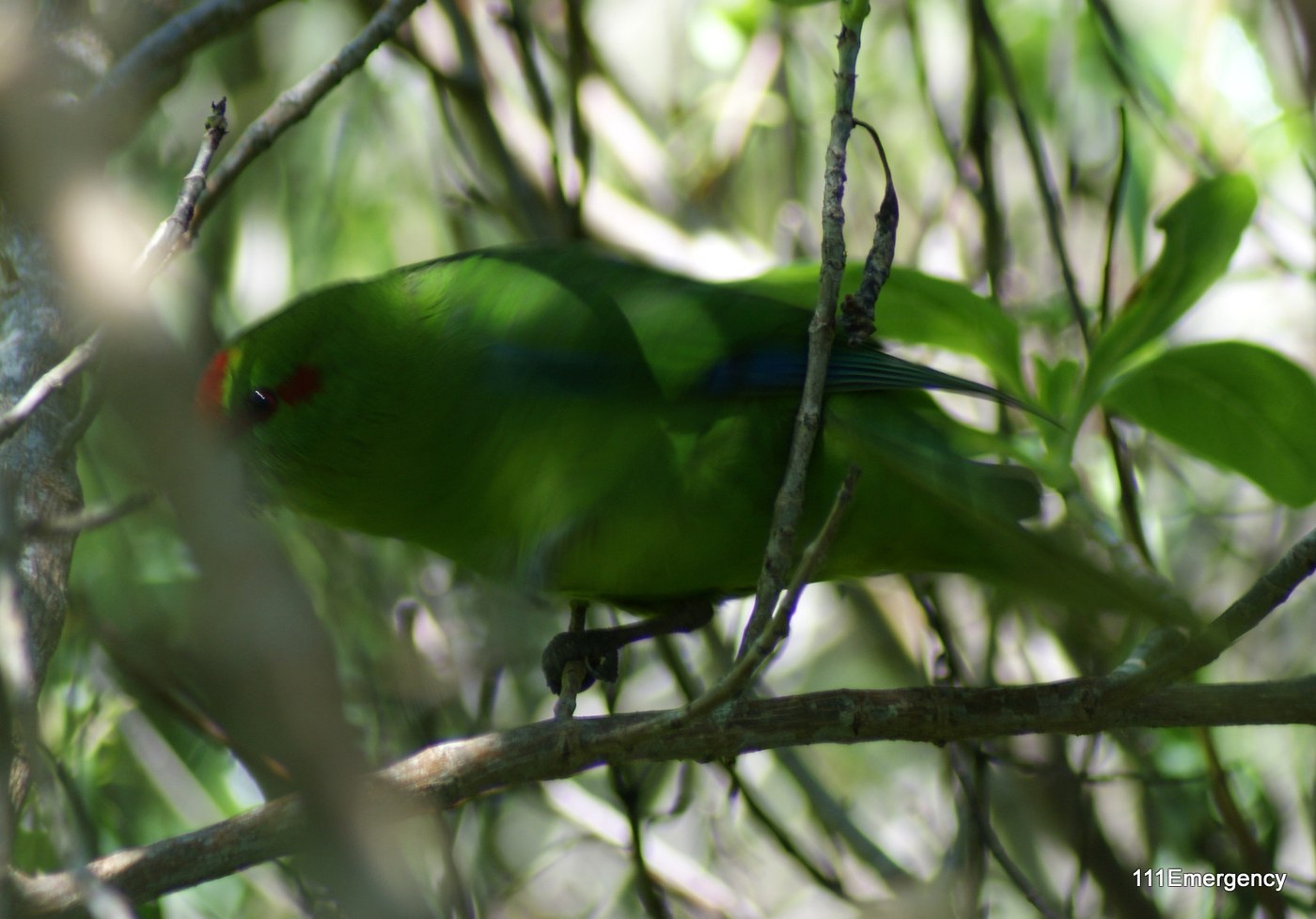
Key Field Marks
- Size & shape: Small parakeet (25–28 cm including a long, tapering tail), with a slim body and pointed wings typical of Cyanoramphus parakeets.
- Plumage: Overall bright grass-green body, slightly bluish tinge to the outer flight feathers, with a diagnostic red patch on the forecrown and a red stripe running back through/behind the eye. A small red patch is also present on the rump, though this can be hard to see in the field.
- Bill: Small, pale grayish, strongly hooked, typical parrot bill.
- Sexes: Similar, though males average slightly larger with a proportionately larger bill; not reliably separable in the field without direct comparison.
- Behavior: Forages both in the canopy and on the ground (unusual for a parakeet), often seen feeding on seeds, fruit, and invertebrates on the forest floor; flies fast and direct with quick wingbeats, often calling in flight.
Separating It From Similar Species
- Vs. Yellow-crowned Parakeet: Yellow-crowned Parakeet has a yellow (not red) crown patch and lacks the red eye-stripe extending behind the eye, and its red is limited to a small spot above the cere rather than a broad forecrown patch; Yellow-crowned also tends to stay higher in the canopy and forage less on the ground.
- Vs. Antipodes Parakeet / other island subspecies: Various red-crowned parakeet subspecies occur on New Zealand's outlying islands (Chatham, Antipodes, etc.) with subtle size and color differences, but all share the core red crown-and-eye-stripe pattern distinguishing them from Yellow-crowned Parakeet.
- General rule: Red on the crown plus a red eye-stripe reaching back from the eye is the quickest confirming combination for Red-crowned Parakeet versus its yellow-crowned relative.
Where & When To See It
Native to New Zealand and various offshore/outlying islands (including the Chathams, Auckland Islands, Antipodes, and others), historically widespread but now scarce or absent from much of the mainland due to introduced predators (rats, stoats, possums), with strongest populations on predator-free offshore islands and in fenced mainland sanctuaries. Non-migratory, resident year-round; best looked for in native forest, forest edge, and scrub on predator-free island reserves such as Tiritiri Matangi or Kapiti Island, where populations are healthy and birds are often confiding.
Voice & Song Cues
Gives a rapid, chattering "ki-ki-ki-ki" flight call, higher and more rapid-fire than many other parrots, often the first indication of a bird flying overhead through forest canopy; also produces softer chattering contact notes while foraging in groups.
Frequently asked questions
How do I distinguish a Red-crowned Parakeet from a Yellow-crowned Parakeet?
Check the crown and eye area: Red-crowned Parakeet has a broad red forecrown patch and a red stripe extending behind the eye, while Yellow-crowned Parakeet has a yellow crown patch and lacks the red eye-stripe.
Where is the best place to see Red-crowned Parakeets today?
Predator-free offshore island sanctuaries in New Zealand, such as Tiritiri Matangi and Kapiti Island, hold the healthiest populations; mainland populations have declined significantly due to introduced predators like rats and stoats.
Do Red-crowned Parakeets forage on the ground?
Yes, unusually for a parakeet, they regularly forage on the forest floor for seeds, fruit, and invertebrates, in addition to feeding in the canopy.
What does a Red-crowned Parakeet's call sound like?
A rapid, chattering 'ki-ki-ki-ki' given especially in flight, often heard before the bird is seen moving through forest canopy.