
Pygmy Nuthatch Identification Guide
A tiny, highly social nuthatch of western North American pine forests, known for its brown cap, chattering flocks, and habit of roosting communally in tree cavities.
Read the full Pygmy Nuthatch encyclopedia entry →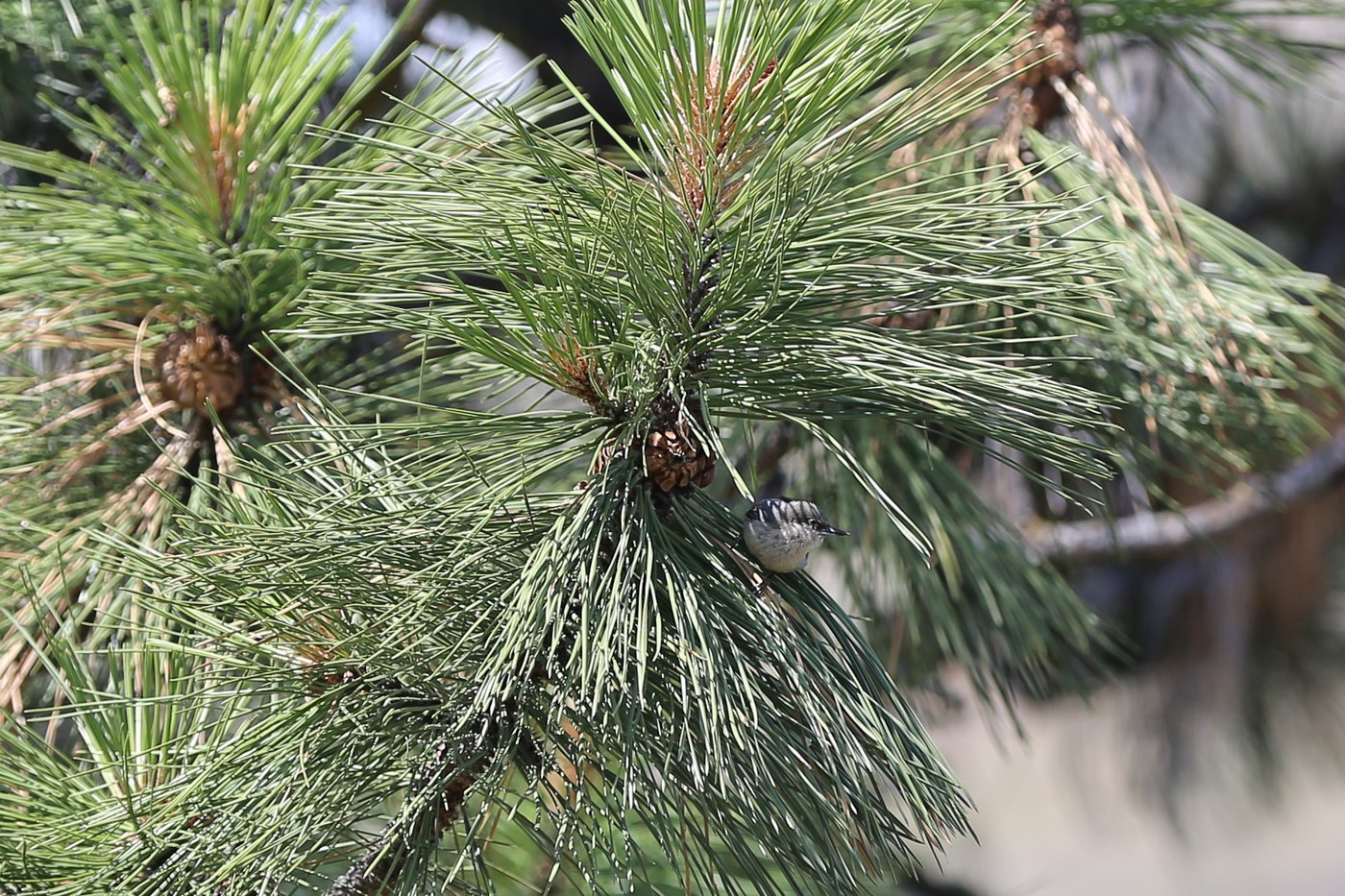
Key Field Marks
- Size & shape: Very small (about 10 cm / 4 in), among the smallest nuthatches in North America, with the typical short-tailed, large-headed, compact nuthatch shape.
- Plumage: Blue-gray upperparts, buffy-whitish underparts, and a distinctive grayish-brown cap extending down through the eye (lacking the crisp black eyeline/cap contrast of White-breasted Nuthatch), with a pale spot on the nape.
- Bill: Straight, thin, pointed bill typical of nuthatches, used for probing bark crevices and pine cones.
- Behavior: Extremely social and vocal, moving in constantly chattering flocks of a dozen or more; forages acrobatically, often hanging upside-down on cones and branches, and roosts communally in cavities, sometimes huddling in large numbers on cold nights.
Separating from Similar Species
- Red-breasted Nuthatch: Has a bold black eyeline and white eyebrow stripe with rusty-orange underparts, quite different from Pygmy Nuthatch's plain brownish cap and pale buffy underparts.
- White-breasted Nuthatch: Larger, with a crisp black cap and pure white face/underparts and no brown cap — easily separated by size and pattern.
- Brown-headed Nuthatch (allopatric, southeastern U.S.): Very similar in size, structure, and brown cap, but ranges do not overlap (Brown-headed is in southeastern pine forests, Pygmy in western montane pines), so range alone usually resolves any confusion.
Where & When to See It
- Habitat: Strongly associated with open, mature ponderosa pine and other yellow pine forests in western mountains; less often in other conifer types.
- Range: Resident from British Columbia south through the western U.S. mountains (Rockies, Sierra Nevada, Cascades) into the highlands of Mexico.
- Season: Present year-round; non-migratory, though flocks may shift elevation slightly in winter.
Voice & Behavior Cues
- Constant high-pitched, staccato "peep-peep" or "tee-dee-dee" chattering calls given by flock members to stay in contact — often heard well before the tiny birds are seen high in the pines.
- Look for cooperative breeding: helper birds (usually male relatives) often assist parents in feeding young at the nest, and communal cavity roosting in winter can involve dozens of birds packed together for warmth.
Frequently asked questions
What is the easiest way to identify a Pygmy Nuthatch?
Its very small size, plain grayish-brown cap (rather than a bold black-and-white pattern), buffy underparts, and constant high-pitched chattering while moving in flocks through pines are the best combined clues.
How is Pygmy Nuthatch different from Red-breasted Nuthatch?
Red-breasted Nuthatch has a bold black eyeline bordered by a white eyebrow and rusty-orange underparts, while Pygmy Nuthatch has a plain brown cap without a strong eyeline and paler, buffier underparts.
What habitat should I search for Pygmy Nuthatches?
Open, mature ponderosa pine or similar yellow pine forest in western mountains is by far the most reliable habitat; they are rarely found in other forest types.
Why do Pygmy Nuthatches roost together in winter?
They roost communally in tree cavities, sometimes with dozens of birds huddled together, as a strategy to conserve body heat during cold mountain nights.