
Purple-backed Fairywren Identification Guide
A small, long-tailed fairywren of arid inland Australia, with breeding males showing a violet-purple back and blue crown that separate it from its close eastern relative, the Variegated Fairywren.
Read the full Purple-backed Fairywren encyclopedia entry →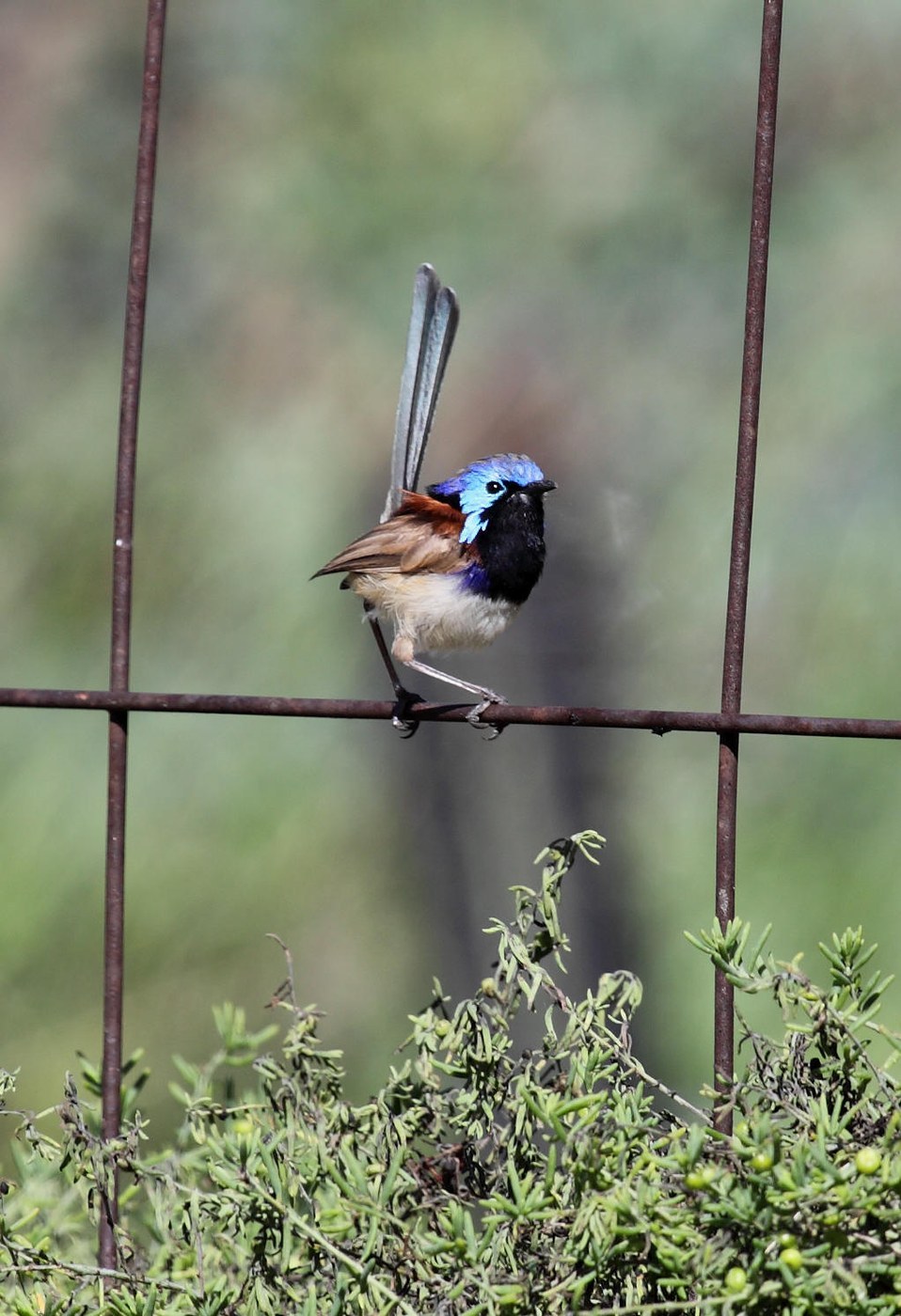
Key Field Marks
- Size & shape: A tiny, long-tailed wren, about 5–5.5 inches, with the cocked tail typical of fairywrens, held upright much of the time.
- Breeding male plumage: Bright cobalt-blue crown and ear coverts, a rich violet-purple back, black throat, upper breast, and lores, and a blackish tail with blue-gray outer feathering.
- Female/non-breeding plumage: Warm grayish-brown overall with a pale bluish tail, buffy-orange lores/eye-ring area, and a plain face lacking the male's bold colors.
- Bill: Fine, black, needle-like bill typical of fairywrens.
Separating It From Similar Species
- Variegated Fairywren: Formerly considered the same species; breeding males of Variegated show a chestnut shoulder patch and a slightly different blue tone, and the two are best separated by range rather than close plumage differences, as they are largely allopatric (non-overlapping).
- Splendid Fairywren: Male is almost entirely rich blue (including much of the underparts), lacking the contrasting purple back and black chest band pattern.
- Superb Fairywren: Male shows a black back (not purple) with blue ear coverts and crown; ranges overlap only marginally with Purple-backed.
Habitat, Range & Season
A resident, non-migratory species of arid and semi-arid inland Australia, favoring spinifex grassland, chenopod shrubland, mulga, and other dry scrub across the interior of Western Australia, the Northern Territory, South Australia, and inland Queensland/New South Wales. Present and detectable year-round, though most easily seen and heard while males are in full breeding color, generally in spring.
Behavior
Lives in small, cooperative family groups that forage low in dense shrub cover for insects, rarely straying far from protective cover, and often detected first by movement or contact calls before being seen well.
Voice
A high, thin, reeling trill of buzzy notes, typical of fairywren songs, along with sharp, ticking contact calls used to keep the family group in touch while foraging through dense scrub.
Frequently asked questions
How is the Purple-backed Fairywren different from the Variegated Fairywren?
The two were once considered the same species and are extremely similar; Purple-backed occupies the arid interior while Variegated (with a chestnut shoulder patch in males) occupies more easterly, less arid habitat, so range is the most reliable distinguishing clue.
What does a male Purple-backed Fairywren look like?
It has a bright blue crown and ear coverts, a violet-purple back, and a black throat and chest, with a dark tail — a striking combination against arid scrub.
What habitat does the Purple-backed Fairywren prefer?
Arid and semi-arid inland habitats such as spinifex grassland, chenopod shrubland, and mulga scrub across central and western Australia.
Why are female Purple-backed Fairywrens harder to identify?
Females lack the male's bright colors, appearing plain grayish-brown with a pale blue tail, making them similar to females of other fairywren species and best identified alongside a colorful male or by range.