
Princess Parrot Identification Guide
A slender, long-tailed parrot of Australia's remote desert interior, identified by its soft pastel plumage of olive-green, blue, and pink and its nomadic, unpredictable occurrence.
Read the full Princess Parrot encyclopedia entry →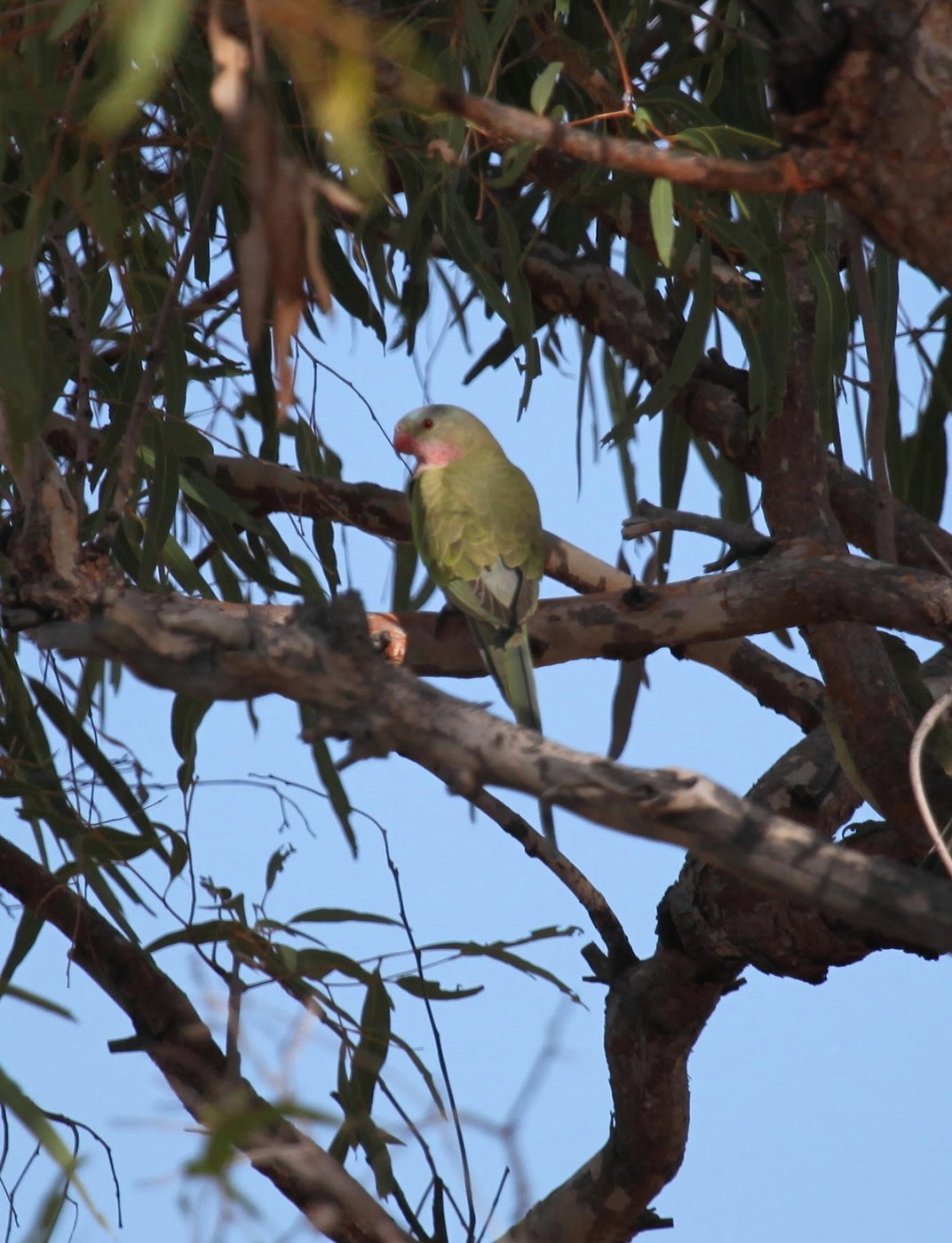
Key Field Marks
- Size & shape: A slim, elegant parrot around 16–17 inches long including its very long, tapering tail — one of the most graceful silhouettes among Australian parrots.
- Plumage: Soft olive-green body, a sky-blue crown and rump, and a rose-pink throat and upper breast — a distinctive pastel combination unlike any other Australian parrot.
- Wings: A small red/crimson patch on the shoulder (lesser wing coverts), more prominent in adult males.
- Bill: Coral-red to orange-red bill.
- Sex differences: Males show brighter, more saturated colors and a longer tail than females and immatures, which are duller and shorter-tailed.
Separating It From Similar Species
- Regent Parrot: Superficially similar long-tailed desert parrot but is largely golden-yellow and olive with blue wings and tail, lacking the pink throat.
- Superb Parrot: Bright green with red/yellow throat patches (males), found in different, more eastern woodland habitat, not overlapping in range.
- No other Australian parrot combines a blue crown, pink throat, and olive body, making adult Princess Parrots distinctive when seen well.
Habitat, Range & Season
An irruptive, nomadic species of the arid interior of Australia — mulga and desert woodland, spinifex country, and dry watercourses lined with eucalypts, across the Northern Territory, northern South Australia, and Western Australia. It follows rainfall and seed availability unpredictably, sometimes absent from an area for years then appearing in numbers after good rains. There is no fixed season for reliable viewing — sightings depend entirely on recent rainfall and breeding conditions.
Behavior
Forms small flocks that forage quietly on the ground and in low vegetation for seeds, often surprisingly approachable and quiet for a parrot. Flight is fast, direct, and undulating, with the long tail streaming behind.
Voice
A soft, rolling "currup-currup" or bell-like contact call given in flight, quieter and less harsh than many open-country parrots — flocks are often heard before they're seen as they pass overhead.
Frequently asked questions
What makes the Princess Parrot's plumage so distinctive?
It's the only Australian parrot combining an olive-green body, sky-blue crown and rump, and a rose-pink throat — a soft pastel color combination unmatched by any similar species.
Why is the Princess Parrot hard to find?
It is a nomadic species of the remote arid interior that follows rainfall and seeding of desert plants unpredictably, so it can be absent from a location for years before suddenly appearing.
How can you tell a male from a female Princess Parrot?
Males have brighter, more saturated pink and blue coloring and a longer tail, while females and immatures are duller with shorter tails.
Where do Princess Parrots live?
In the arid interior of Australia, including mulga woodland, spinifex country, and desert watercourses across the Northern Territory, northern South Australia, and Western Australia.