
Piping Plover Identification Guide
A tiny, sand-pale shorebird with a stubby orange-and-black bill, a single dark breast band, and orange legs, so well camouflaged on dry beach sand it can vanish at a glance.
Read the full Piping Plover encyclopedia entry →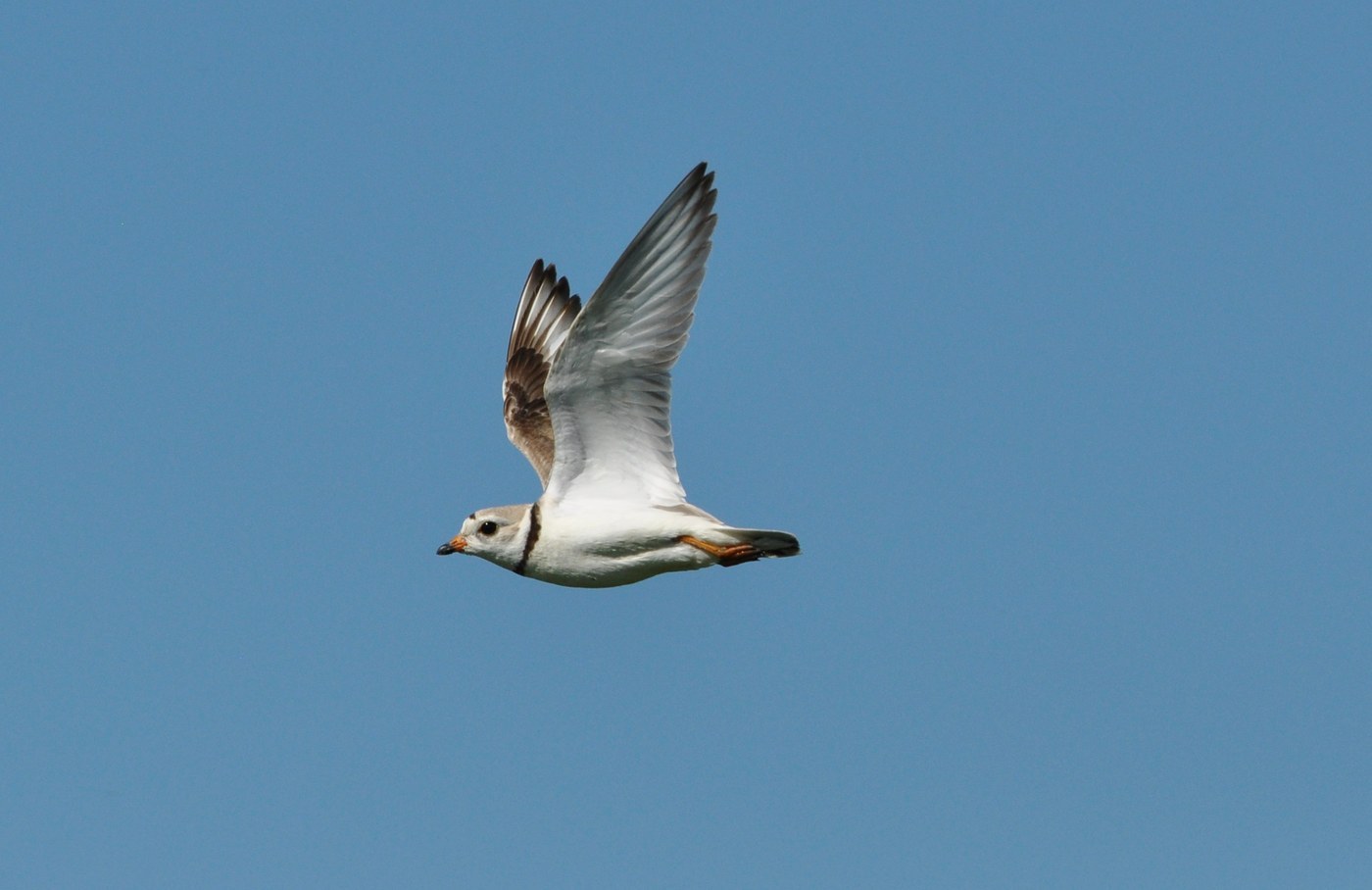
Key Field Marks
- Size & shape: Very small and stocky, about 17–18 cm (7 in), with a short neck, large rounded head, and a short, stubby bill — proportionately shorter and thicker-billed than most small plovers.
- Plumage: Pale, sandy grey-brown above and clean white below, closely matching dry beach sand — among the palest of North America's small plovers.
- Breeding adult: A single black breast band (sometimes incomplete in the center), a black bar across the forehead, an orange bill with a black tip, and orange legs.
- Non-breeding/winter: Bill turns mostly or all black, the breast band fades and often breaks into two side patches, and the head pattern becomes duller overall.
- Eyes: Large and dark, prominent against the pale face.
How to Tell It From Similar Species
- Snowy Plover: Even paler, with a thin all-black bill (never orange-based) and dark (not orange) legs; its breast markings form two separate dark patches rather than a connected band.
- Semipalmated Plover: Noticeably darker brown above (not sandy pale), with a complete black breast band, an orange-and-black bill, and orange legs, but overall much more contrasty and less pale than Piping Plover.
- Wilson's Plover: Larger, with a notably heavier, all-black bill and a broader breast band.
Habitat & Range
Piping Plovers breed on open sandy beaches and gravel bars along the Atlantic coast (from Atlantic Canada south to the mid-Atlantic states), around the Great Lakes shoreline (a small, highly endangered population), and on alkali lakes and river sandbars of the northern Great Plains. They winter along the Atlantic and Gulf coasts, including the Bahamas and Caribbean. Because they nest in the open on beaches used by people, populations are threatened across much of their range, and nesting areas are often fenced off and monitored.
Behavior
Forages with a characteristic run-stop-peck pattern typical of plovers, pausing to snatch invertebrates from the sand. When a nest or chicks are threatened, adults perform a distraction display, feigning a broken wing while calling loudly to lure predators away.
Voice
A soft, plaintive, whistled "peep-lo" or "pipe," from which the species gets its name — a gentle, melodic call quite different from the sharper notes of many other plovers.
Frequently asked questions
How do you tell a Piping Plover from a Snowy Plover?
Piping Plover has an orange-based bill with a black tip and orange legs, while Snowy Plover has an all-black bill and dark legs; Snowy Plover's breast markings also form two separate patches rather than one connected band.
Why is the Piping Plover considered endangered or threatened?
It nests in the open on sandy beaches heavily used by people and vehicles, and its Great Lakes population in particular is critically small; habitat disturbance, predation, and beach development have driven long-term declines.
Where do Piping Plovers nest?
On open sandy or gravelly beaches and bars along the Atlantic coast, around the Great Lakes, and on alkali lakes and river sandbars of the northern Great Plains.
What does a Piping Plover sound like?
A soft, whistled, plaintive "peep-lo" or "pipe" call, gentler and more melodic than many other plover calls.