
Pionus Parrot Identification Guide
A stocky, short-tailed Neotropical parrot genus recognized by mostly green plumage, a colorful head, a pale bill, and red undertail coverts flashed in flight.
Read the full Pionus Parrot encyclopedia entry →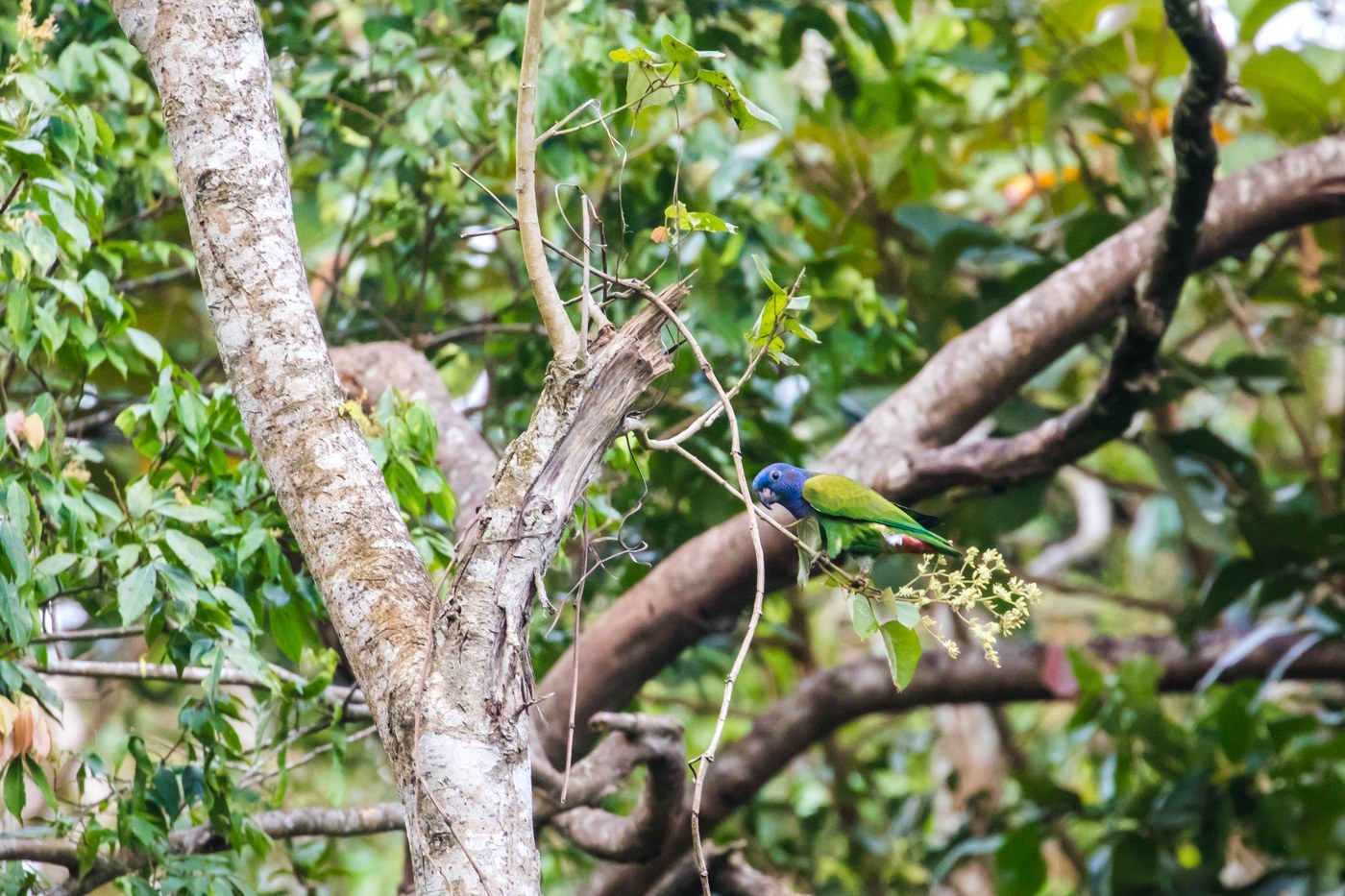
Key Field Marks
- Size & shape: Medium-sized, stocky parrots around 22–30 cm (9–12 in), with a proportionately short, square-cut tail — distinctly stubbier than the long, pointed tails of parakeets or the broad fan tails of Amazona parrots.
- Plumage: Predominantly green body plumage across the genus, with the head color varying by species — blue in Blue-headed Pionus, white-fronted in White-crowned Pionus, bronze-tinged in Bronze-winged Pionus, and so on.
- Diagnostic red vent: Nearly all Pionus species show reddish undertail coverts, visible as a flash of red beneath the tail base, especially in flight — one of the most reliable genus-level field marks.
- Bare parts: A pale, horn-colored to pinkish bill and a bare, whitish eye-ring are typical across the genus.
- In flight: Wingbeats produce an audible wheezing or whooshing sound, quite different from the quieter wingbeats of many other parrots, and flight is fast and direct.
Behavior
Pionus parrots are generally quieter and less raucous than Amazona parrots, though flocks call frequently in flight. A notable defensive behavior is a loud hiss or huff accompanied by a musky odor when a bird feels threatened or handled, a trait fairly unique to the genus. They feed on fruit, seeds, blossoms, and nectar in the forest canopy, typically in pairs or small flocks.
How to Tell Species Apart / From Other Parrots
- Amazona parrots: Larger overall with broader, rounder wings and a fuller, fan-shaped tail, and generally louder, harsher calls; Pionus looks comparatively compact and short-tailed by comparison.
- Blue-headed Pionus (most widespread species): Blue wash over the head and nape, green body, red undertail coverts, and a reddish base to the tail visible from below.
- White-crowned Pionus: Similar green body but with a white patch on the forecrown and blue on the face/throat.
- Bronze-winged Pionus: Darker overall with a bronze sheen on the wing coverts and a whitish throat patch.
Habitat & Range
Pionus parrots occur from Mexico and Central America through much of South America, depending on species, generally favoring tropical and subtropical forest, forest edge, gallery woodland, and semi-open country with scattered trees. Blue-headed Pionus, the most wide-ranging species, is found from Costa Rica through much of the Amazon Basin.
Voice
Calls are harsh, screeching, and chattering notes given mainly in flight or when flushed, generally less piercing than the calls of many Amazona parrots, punctuated by the genus's distinctive hissing threat display when disturbed at close range.
Frequently asked questions
What is the easiest way to recognize a Pionus parrot?
Look for a stocky, short, square-tailed green parrot with a pale bill and a flash of red undertail coverts visible beneath the tail, especially in flight.
How do Pionus parrots differ from Amazona parrots?
Pionus parrots are generally smaller and stockier with a shorter, squarer tail and quieter calls, while Amazona parrots are larger with broader wings, a fuller fan-shaped tail, and typically louder vocalizations.
What is the most common Pionus species seen in the wild?
The Blue-headed Parrot (Pionus menstruus) is the most widespread, ranging from Central America through much of the Amazon Basin, and is often used as the reference point for the genus.
Why do Pionus parrots hiss loudly when threatened?
It's a defensive display fairly unique to the genus — a loud huffing hiss, sometimes accompanied by a musky odor, used to startle predators or handlers at close range.