
Pine Warbler Identification Guide
A plain-faced, olive-and-yellow warbler with white wingbars that forages by creeping along pine trunks and branches, and sings a musical trill from the treetops.
Read the full Pine Warbler encyclopedia entry →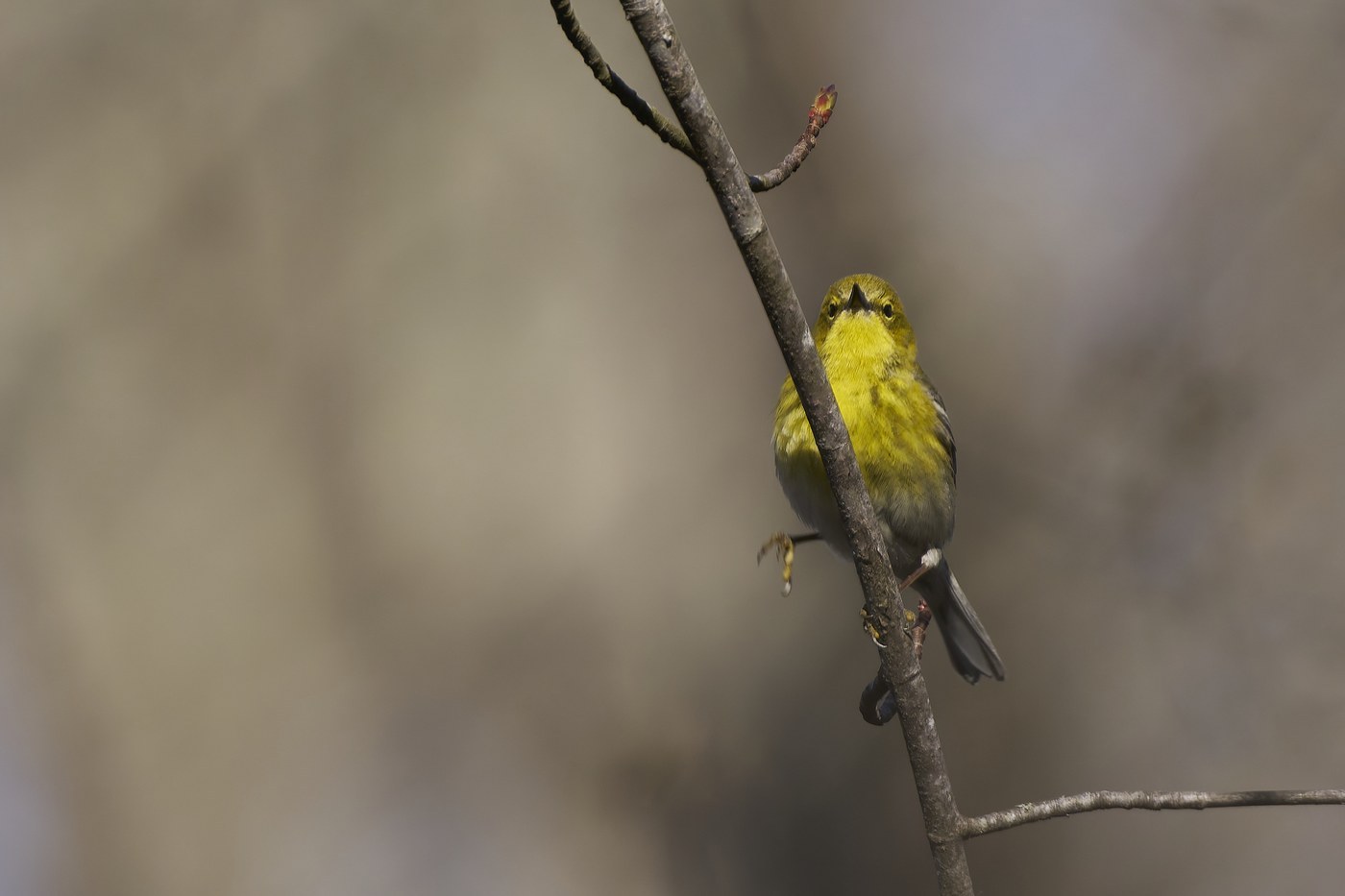
Key Field Marks
- Size & shape: A fairly chunky, stocky warbler around 14 cm (5.5 in) with a relatively long tail and a longer, heavier bill than most warblers.
- Plumage: Olive-green above and yellow on the throat and breast, fading to a whitish belly and undertail; faint, blurry streaking along the flanks, never crisp or bold.
- Face: Notably plain and unmarked compared to most warblers — no strong eyeline, eye-arcs are faint, and there's no bold face pattern to grab onto, which is itself a useful clue.
- Wings: Two clean white wingbars — Pine Warbler is one of the few warblers combining wingbars with an essentially unstreaked, plain back.
- Legs: Dark, unlike the yellow legs of several similar fall warblers.
Behavior
True to its name, Pine Warbler forages methodically on pine bark and branches, often creeping along limbs and trunks in a nuthatch- or creeper-like manner rather than flitting through foliage like most warblers. It is one of the few warblers that regularly visits feeders, eating suet and sunflower seed, especially in winter.
How to Tell It From Similar Species
- Blackpoll Warbler (fall): Shows yellowish legs (vs. Pine Warbler's dark legs) and typically more defined streaking on the back and sides.
- Bay-breasted Warbler (fall/immature): Can show a similar washed-out look but usually has a hint of buffy flanks and lacks the Pine Warbler's plain, unmarked face.
- Yellow-throated Vireo: Has bold yellow spectacles and a much heavier, hook-tipped bill, and moves more deliberately, but the overall yellow-and-white pattern can cause confusion at a glance.
- Prairie Warbler: Shows crisper black streaking on the sides and a habit of bobbing its tail, features Pine Warbler lacks.
Habitat & Range
As the name suggests, Pine Warbler is closely tied to pine and pine-oak woodlands. It is a year-round resident through much of the southeastern United States, while northern populations migrate in and breed as far as southern Canada during summer, generally staying tightly associated with pine stands wherever it occurs.
Voice
The song is a loose, musical trill on one pitch — softer, sweeter, and slower than the dry, mechanical trill of a Chipping Sparrow, and often given from high in a pine canopy.
Frequently asked questions
What is the easiest way to identify a Pine Warbler?
Look for an olive-and-yellow warbler with white wingbars but an otherwise plain, unmarked face and blurry (not crisp) side streaking, often creeping along a pine branch or trunk.
How do you tell a Pine Warbler's song from a Chipping Sparrow's?
Both give a one-pitch trill, but the Pine Warbler's is generally more musical, sweeter, and a bit slower and richer than the Chipping Sparrow's flatter, more mechanical trill.
Do Pine Warblers migrate?
Southern populations are largely year-round residents, while northern-breeding birds migrate south for winter, but the species rarely strays far from pine habitat at any season.
Will Pine Warblers come to bird feeders?
Yes — they're one of the few warbler species that regularly visits feeders, especially for suet and sunflower seed, particularly in colder months.