
Pied Butcherbird Identification Guide
A striking black-and-white Australian songbird with a heavy hooked bill, prized for having one of the most complex and melodious songs of any Australian bird.
Read the full Pied Butcherbird encyclopedia entry →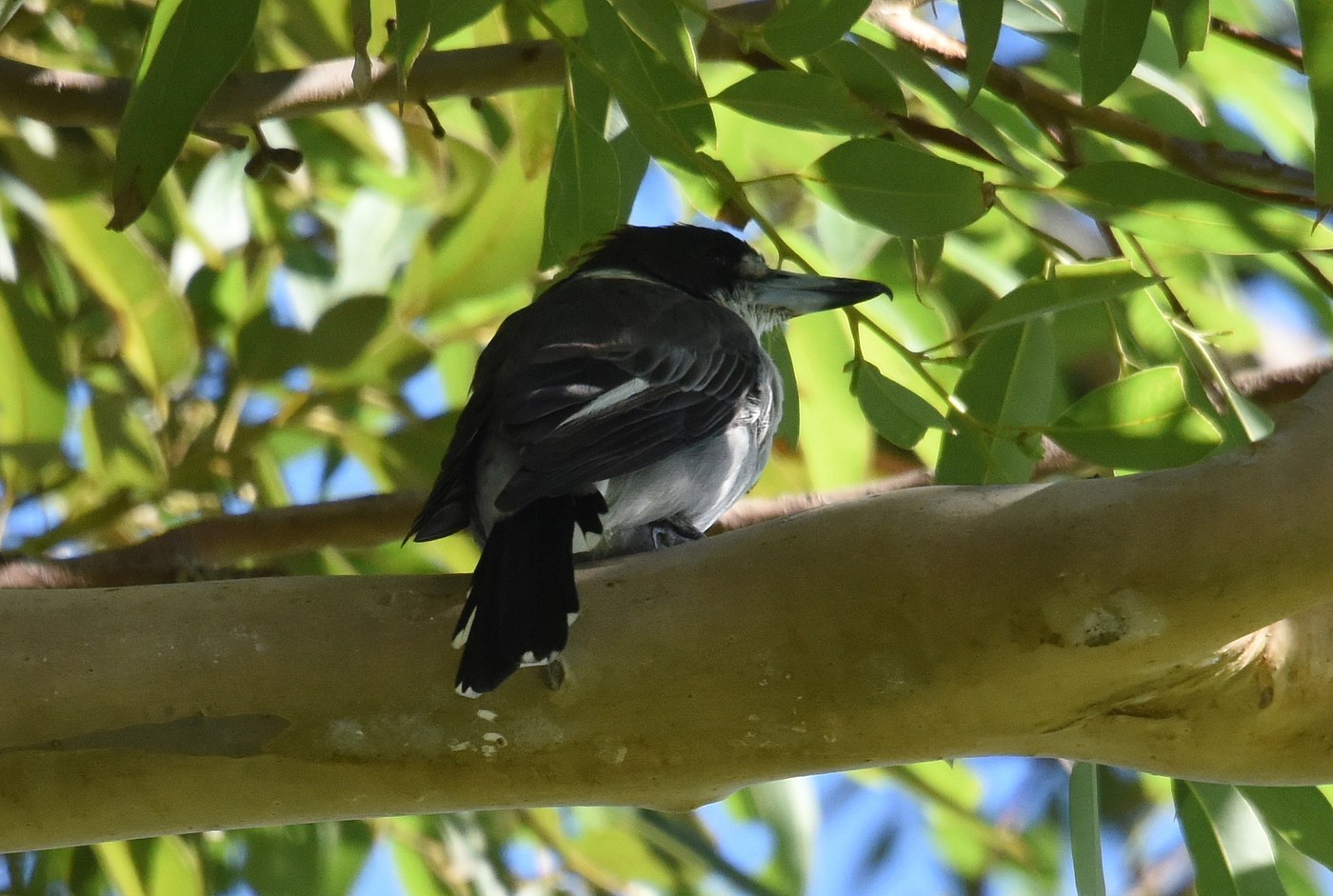
Key Field Marks
- Size and shape: A medium-sized songbird with a solidly built body and a heavy, slightly hooked, grayish bill suited to taking varied prey.
- Plumage: Black head, throat, and upper breast contrasting sharply with a clean white nape collar; wings and back show a bold black-and-white pattern, and the black tail is tipped white.
- Overall impression: A crisp, high-contrast black-and-white bird that perches upright and prominently.
Separating It From Similar Species
- Australian Magpie: Larger, with a different black-and-white pattern (including a white back in many races), red eye, and a heavier straight bill, versus the butcherbird's dark eye and hook-tipped bill.
- Magpie-lark: Much smaller, with a thinner bill and different black-and-white pattern, lacking the butcherbird's bulk and hooked bill.
- Grey Butcherbird: Similar shape and behavior but has a gray (not black-and-white) back, making the two easy to separate with a good look.
Where and When to See It
Widespread across much of mainland Australia in woodlands, savanna, farmland with scattered trees, and increasingly in parks and gardens, though largely absent from Tasmania and the wettest southern coastal forests. Resident year-round across its range.
Behavior
Perches conspicuously on exposed branches, wires, and fence posts, watching for insects, small reptiles, and other prey. Known for its habit of wedging or hanging food items in tree forks or on thorns for later feeding — a notable natural history trait that gives the family its common name. Highly territorial and often forms small family groups.
Voice
Renowned as one of Australia's most accomplished songbirds, with a rich, flute-like, highly varied song that can include duetting between paired birds and mimicry of other species; also gives sharp, harsh alarm calls.
Frequently asked questions
What is the easiest way to identify a Pied Butcherbird?
Look for the black head and throat, clean white nape collar, black-and-white wings and back, and a heavy, slightly hooked grayish bill.
How is a Pied Butcherbird different from an Australian Magpie?
The magpie is larger with a different pattern, a red eye, and a straighter bill, while the butcherbird has a dark eye and a hook-tipped bill.
Why is the Pied Butcherbird well known among birders?
It has one of the richest, most flute-like and complex songs of any Australian bird, often sung as duets between paired birds.
Where does the Pied Butcherbird live?
Across much of mainland Australia in woodlands, savanna, and increasingly parks and gardens, though it is largely absent from Tasmania.