
Pied Avocet Identification Guide
An elegant black-and-white wader with a delicate upturned bill and blue-gray legs, known for its distinctive side-to-side feeding sweep in shallow water.
Read the full Pied Avocet encyclopedia entry →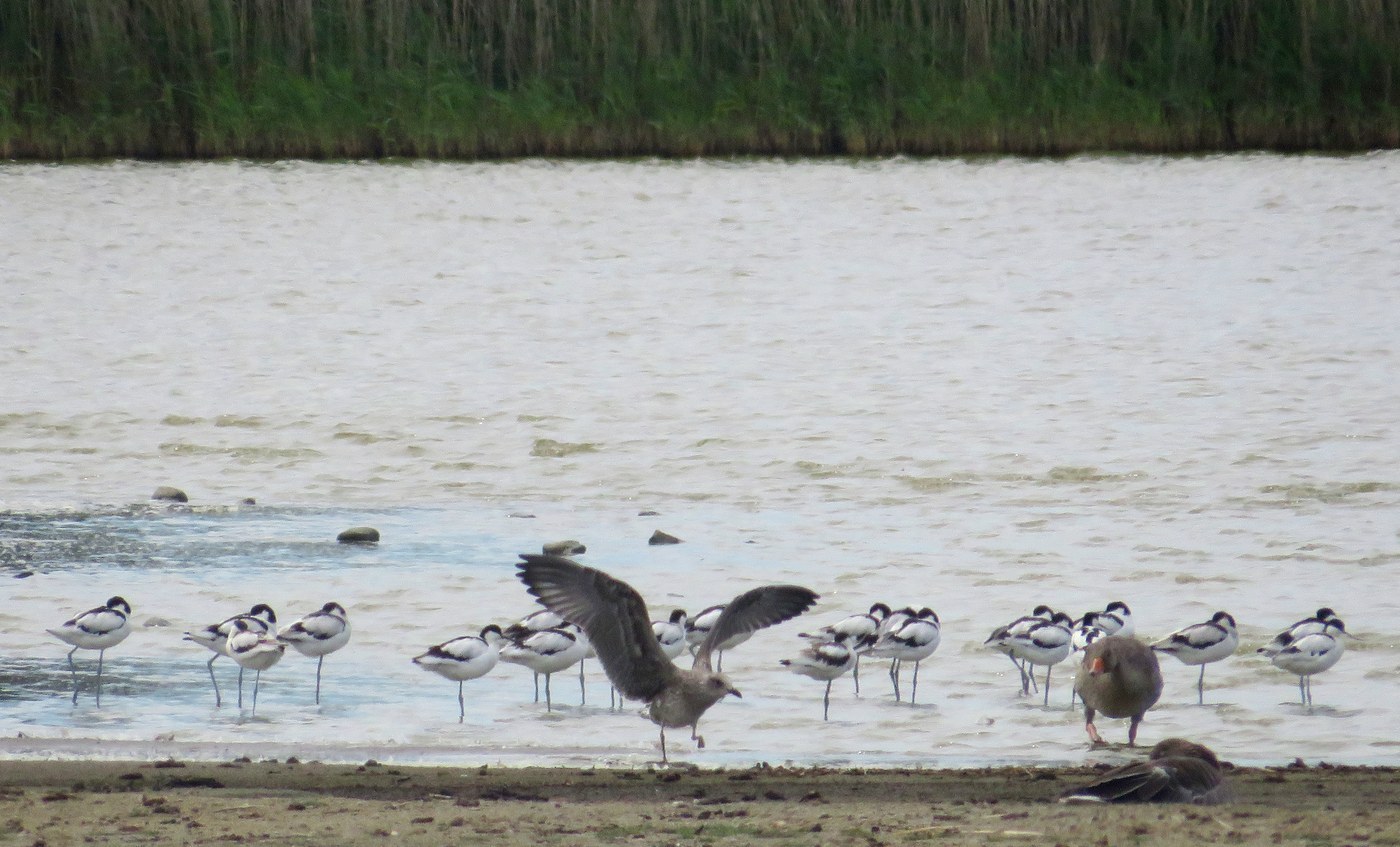
Key Field Marks
- Size and shape: A tall, slender wader with very long blue-gray legs and a long, thin, strongly upturned (recurved) black bill — the single most distinctive feature of the species.
- Plumage: Crisp black-and-white pattern, with a black cap and nape, black patches on the wings and back, and an otherwise white body.
- Bill shape is diagnostic among waders in its range; no confusion is likely once the upturned bill is seen clearly.
Separating It From Similar Species
- American Avocet: Very similar in shape but occurs in the Americas rather than the Old World; breeding birds show a rusty-buff wash on the head and neck (whitish in winter), which Pied Avocet lacks entirely.
- Black-necked Stilt / Black-winged Stilt: Similarly patterned in black and white with long legs, but the bill is straight and needle-like rather than upturned, and the legs are pink/red rather than blue-gray.
Where and When to See It
A Palearctic breeder found across much of Europe and temperate Asia, wintering south to Africa and South Asia. Favors coastal lagoons, estuaries, salt pans, and shallow inland wetlands with soft mud or fine sediment, often forming loose colonies during the breeding season.
Behavior
Feeds with a characteristic side-to-side sweeping motion of the bill through shallow water or soft mud to detect and catch small invertebrates, a technique that is highly distinctive and useful for identification even at a distance. Often forages in loose groups, wading in shallow water.
Voice
A clear, fluty "kluit" or "klooit" call, frequently given in flight and when alarmed near the nest.
Frequently asked questions
What is the most distinctive feature of the Pied Avocet?
Its long, thin, strongly upturned black bill, combined with a crisp black-and-white body and blue-gray legs.
How does a Pied Avocet feed?
It sweeps its upturned bill side-to-side through shallow water or soft mud to detect small invertebrates, a distinctive feeding action unlike most other waders.
How do you tell a Pied Avocet from an American Avocet?
The two occur on different continents; breeding American Avocets show a rusty-buff wash on the head and neck that Pied Avocet never shows.
What habitat does the Pied Avocet prefer?
Shallow coastal lagoons, estuaries, salt pans, and inland wetlands with soft mud, where it can sweep-feed in the shallows.