
Philippine Eagle Identification Guide
One of the largest and most powerful eagles on Earth, a critically endangered rainforest giant endemic to the Philippines with a shaggy crest and huge blue-gray bill.
Read the full Philippine Eagle encyclopedia entry →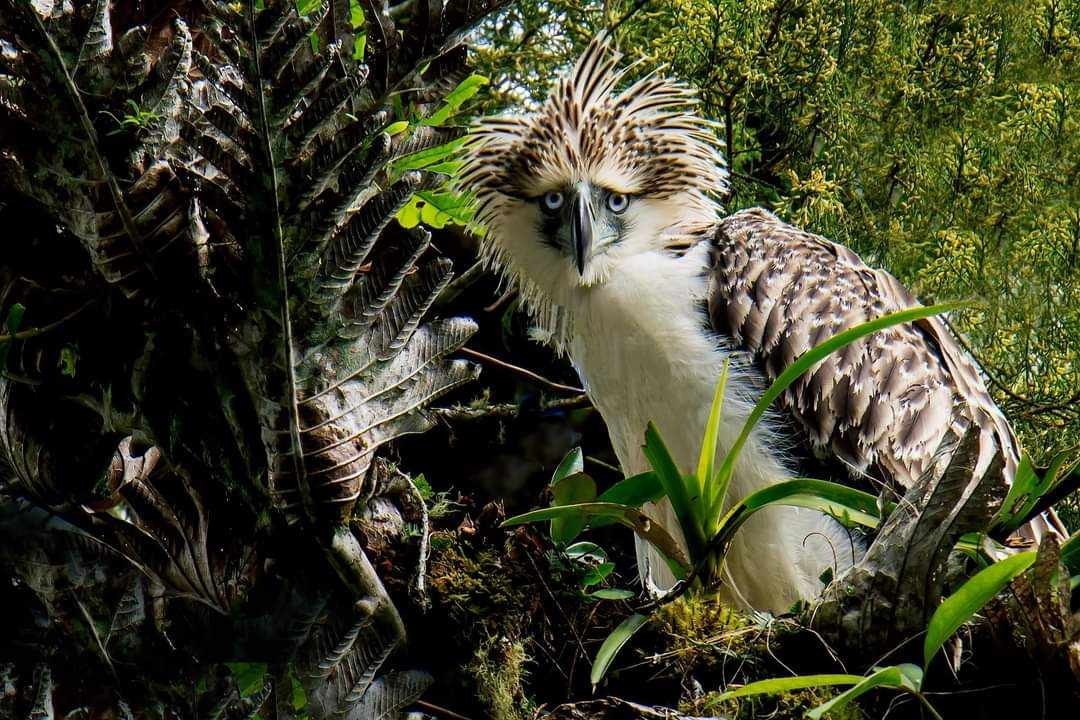
Key Field Marks
- Size and shape: Immense — among the largest eagles in the world by length and wing surface area, with broad rounded wings and a long tail suited to maneuvering through forest canopy.
- Head: Shaggy, spiky crest of long brown and cream feathers forms a distinctive "mane" around the nape, framing pale blue-gray eyes and a massive, deep blue-gray bill.
- Plumage: Dark brown crown and upperparts, cream to buff nape and crest feathers, and white to buffy underparts.
Separating It From Similar Species
- No other raptor within its range approaches its combination of massive size, shaggy crest, and huge bill — once seen well, it is essentially unmistakable.
- Smaller Philippine raptors such as the Philippine Hawk-Eagle lack the huge size, heavy bill, and prominent shaggy nape crest of the Philippine Eagle.
Where and When to See It
Endemic to the Philippines, found only in patches of primary and mature secondary tropical rainforest, chiefly on Mindanao, with smaller populations on Luzon, Samar, and Leyte. It is critically endangered due to extensive deforestation and requires vast, largely undisturbed forest territories, making it exceptionally difficult to see; a handful of protected reserves and rehabilitation centers offer the most realistic viewing opportunities.
Behavior
An apex predator of the forest canopy, taking prey such as flying lemurs (colugos), civets, macaques, large birds, and snakes. Pairs maintain enormous home ranges and are typically seen soaring high over forested ridges or perched motionless within the canopy.
Voice
Gives loud, far-carrying whistled calls, including duets between paired birds, often heard before the bird itself is spotted.
Frequently asked questions
Where can Philippine Eagles be found?
Only in the Philippines, primarily in primary and mature rainforest on Mindanao, with smaller remnant populations on Luzon, Samar, and Leyte.
What makes the Philippine Eagle easy to identify?
Its enormous size, shaggy cream-and-brown crest forming a mane around the nape, pale blue-gray eyes, and massive blue-gray bill are unmatched by any other raptor in its range.
Why is the Philippine Eagle so rare?
It is critically endangered due to widespread loss of the primary rainforest habitat it depends on, and each pair requires a very large territory to find enough prey.
What does the Philippine Eagle eat?
Mainly forest mammals such as flying lemurs (colugos) and civets, along with monkeys, large birds, and snakes.