
Phainopepla Identification Guide
A slim, crested desert songbird — glossy black in males, soft gray in females — with a red eye and a strong tie to mistletoe berries.
Read the full Phainopepla encyclopedia entry →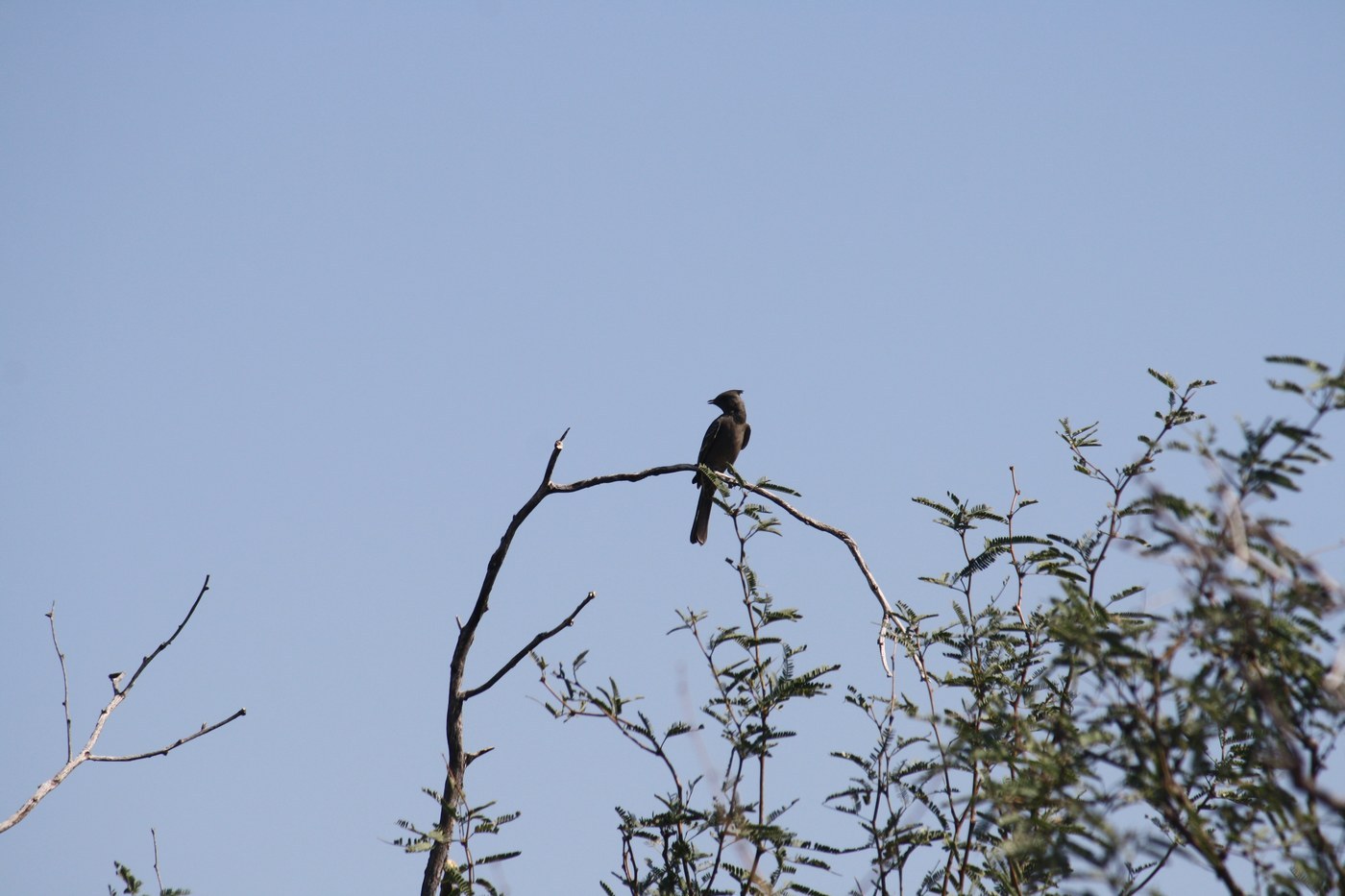
Key Field Marks
- Size and shape: A slender, long-tailed songbird about the size of a small thrush, with a thin, pointed crest that gives it a distinctive silhouette.
- Plumage (male): Glossy jet-black overall, with large white patches in the primaries that flash conspicuously in flight but are hidden at rest.
- Plumage (female/immature): Soft gray overall with paler wing patches, lacking the male's glossy black sheen.
- Eyes: Bright red in both sexes, a useful close-range field mark.
Separating It From Similar Species
- Male Phainopepla can suggest a small black bird like a cowbird at a distance, but the crest, red eye, and slim, long-tailed shape are distinctive.
- No other North American desert songbird combines a thin crest with a glossy black or plain gray body and red eye — the combination is essentially unmistakable once seen well.
Where and When to See It
A bird of hot desert washes and adjacent woodlands in the southwestern United States (Arizona, California, New Mexico, Texas) and northern Mexico. Shows an unusual seasonal movement pattern: birds breed early in desert habitats rich in mistletoe (often winter into spring), then many individuals move to cooler oak-sycamore woodlands or riparian canyons to breed again later in the year. Look for it perched conspicuously atop mesquite, palo verde, or other desert trees, especially where desert mistletoe is present.
Behavior
Often perches upright and prominently on the tops of shrubs or trees, sallying out flycatcher-style to snap up flying insects. Also feeds heavily on mistletoe berries, and its presence is closely linked to stands of parasitic mistletoe growing on desert trees, which it helps disperse by eating and passing the seeds.
Voice
A distinctive, querulous rising "wurp" or "quirt" call, often the first clue to the bird's presence before it is seen.
Frequently asked questions
What color is a male versus a female Phainopepla?
Males are glossy black with white wing patches visible only in flight; females and immatures are soft gray with paler wing patches.
Why is the Phainopepla often found near mistletoe?
It feeds heavily on desert mistletoe berries and plays a key role in dispersing the mistletoe's seeds, so dense mistletoe clumps in desert trees are a reliable place to look for it.
Does the Phainopepla behave like a flycatcher?
Yes, it often perches prominently and sallies out to catch flying insects in midair, in addition to eating berries.
Where does the Phainopepla live?
Hot desert washes and adjacent woodlands of the southwestern United States and northern Mexico, moving between desert and cooler woodland habitats across the year.