
Peregrine Falcon Identification Guide
The world's fastest bird, a crow-sized falcon with slate-blue upperparts, a bold black facial "helmet," and powerful pointed-wing flight.
Read the full Peregrine Falcon encyclopedia entry →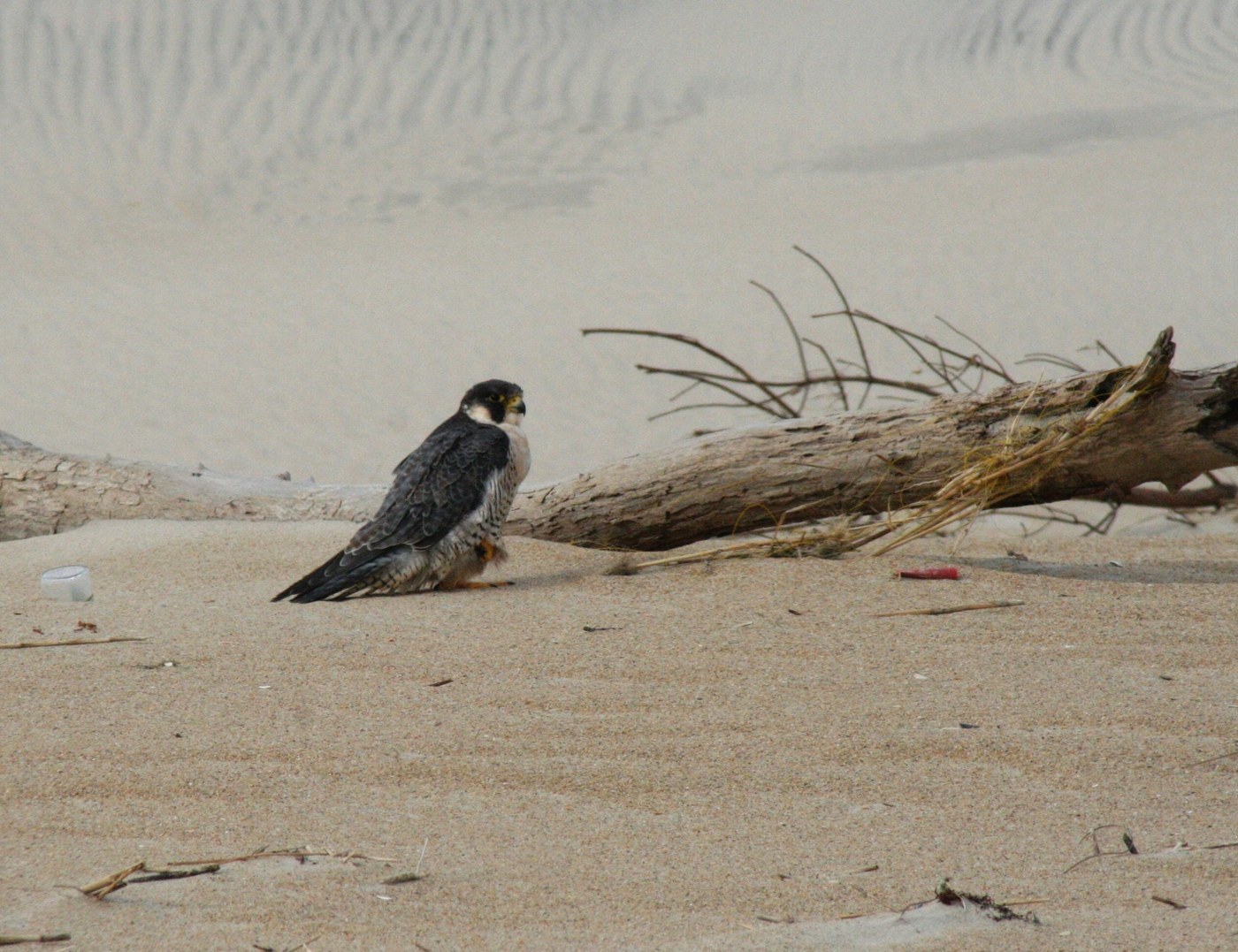
Key Field Marks
- Size and shape: Crow-sized (though females are noticeably larger than males), with long, pointed wings and a relatively short, tapered tail — a classic powerful falcon silhouette.
- Plumage (adult): Blue-gray upperparts, finely barred white underparts, and a bold black "helmet" covering the crown and a thick malar (mustache) stripe against a white or pale cheek and throat.
- Plumage (juvenile): Brown above rather than blue-gray, with heavy vertical brown streaking below (not fine barring), and a blue-gray (not yellow) cere and eye-ring.
- Bare parts: Yellow cere, eye-ring, and legs in adults; these areas are grayish-blue in juveniles.
Separating It From Similar Species
- Prairie Falcon: Paler and sandier overall, with a thinner mustache mark and diagnostic dark "armpits" (axillars) visible on the underwing in flight.
- Merlin: Much smaller and stockier, with a faint or absent mustache stripe and quicker, less powerful wingbeats.
- Gyrfalcon: Larger and bulkier with broader wings and a much weaker or absent mustache mark; mainly found in Arctic/subarctic regions.
- Cooper's Hawk: An accipiter with rounded, shorter wings and a long tail, flapping in a distinctive flap-flap-glide pattern quite unlike the falcon's stiff, powerful wingbeats.
Where and When to See It
One of the most widespread raptors on Earth, found on every continent except Antarctica. Nests traditionally on cliff ledges but has adapted widely to skyscrapers, bridges, and other tall structures in cities, where abundant pigeons and other birds provide easy prey. Look for it near open country, coastlines, wetlands, and urban centers year-round in many regions, with northern-breeding populations migrating long distances to winter further south.
Behavior
Hunts other birds on the wing, often stooping (diving) from great height at extremely high speeds to strike prey in midair. Also capable of sustained, powerful direct flight and soaring on thermals. Often seen perched conspicuously on cliffs, towers, or tall buildings.
Voice
A loud, harsh, repeated "kak-kak-kak-kak" alarm call given near the nest site, along with various wailing and chittering calls during courtship.
Frequently asked questions
What is the fastest way to identify a Peregrine Falcon in flight?
Look for the pointed-wing, short-tailed falcon silhouette combined with a bold black helmet-and-mustache face pattern and blue-gray upperparts on adults.
How do you tell an adult from a juvenile Peregrine Falcon?
Adults are blue-gray above with fine barring below and yellow bare parts; juveniles are brown above with heavy vertical streaking below and blue-gray (not yellow) cere and eye-ring.
How is a Peregrine Falcon different from a Prairie Falcon?
Prairie Falcons are paler and sandier with a thinner mustache and dark axillary ("armpit") patches under the wing, which Peregrines lack.
Why do Peregrine Falcons nest on buildings in cities?
Tall buildings and bridges mimic the cliff ledges they naturally nest on, and cities offer abundant pigeons and other birds as prey.