
Pelagic Cormorant Identification Guide
A slim, small-headed North Pacific cormorant with an iridescent black body, thin bill, and (in breeding plumage) white flank patches and a double crest.
Read the full Pelagic Cormorant encyclopedia entry →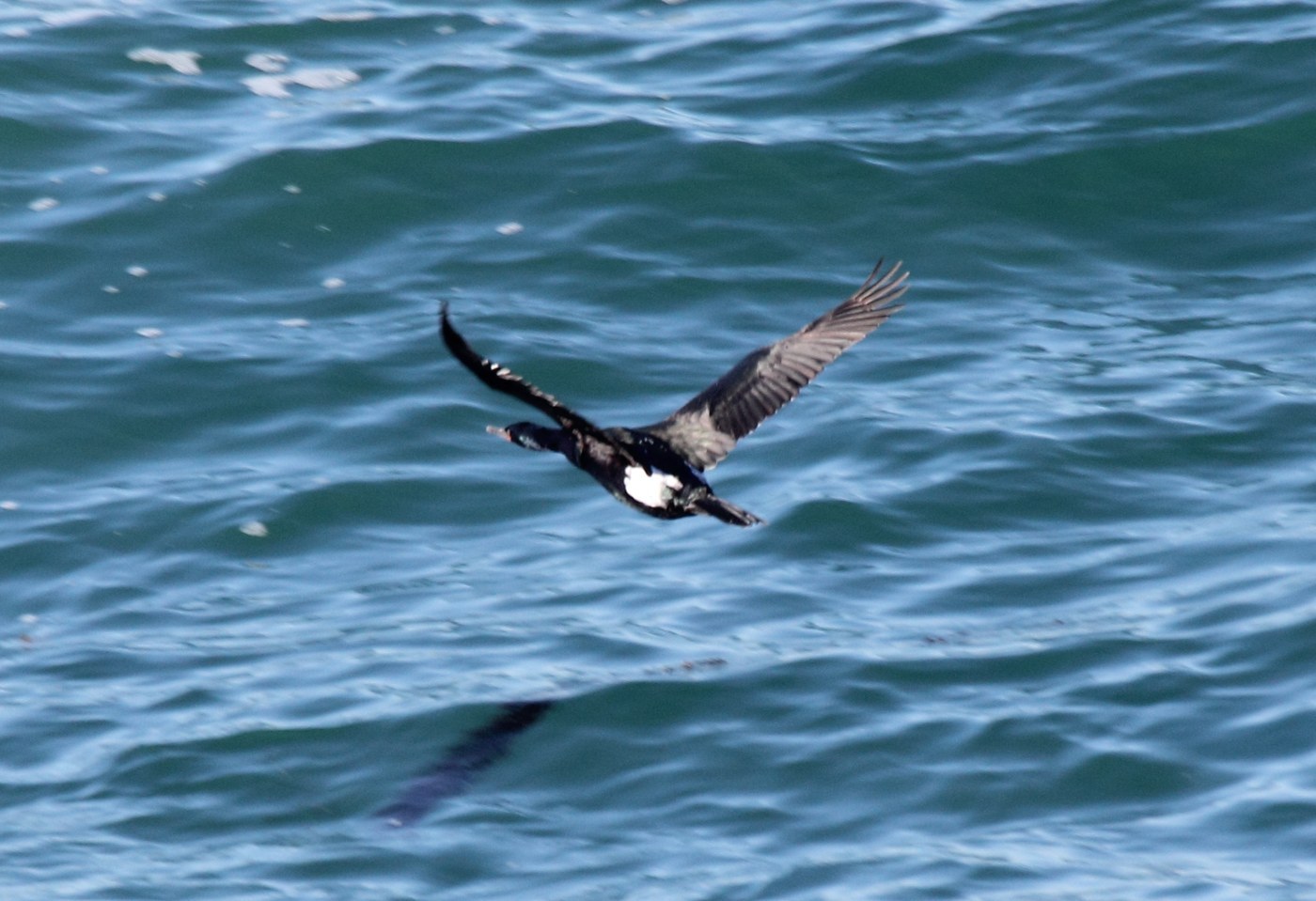
Key Field Marks
- Size and shape: The smallest and slenderest cormorant in its range, with a notably thin neck, small head, and a fine, weak-looking bill (much thinner than other North American cormorants).
- Plumage: Overall glossy black with iridescent green and purple sheen visible in good light. Breeding adults show two thin recurved crests (one on the forehead, one on the nape), small red patches of bare skin on the face and throat, and a bright white patch on each flank.
- Bill and face: Bill is dark and slender, lacking the hooked, heavy look of larger cormorants. Facial skin is dull in nonbreeding birds, becoming brighter red in spring.
- Juveniles: Dull sooty brown overall, lacking iridescence, crests, or flank patches.
Separating It From Similar Species
- Brandt's Cormorant: Larger and bulkier, with a thicker neck and a buffy throat patch bordered by blue in breeding plumage; lacks the Pelagic's white flank patches.
- Double-crested Cormorant: Noticeably larger and bulkier with a thick, hook-tipped bill and an orange-yellow throat pouch; often seen inland, unlike the strictly coastal Pelagic Cormorant.
- Red-faced Cormorant: Very similar but found mainly in Alaska/Bering Sea; shows a larger area of red facial skin and a slightly heavier bill.
Where and When to See It
Strictly a marine species of the North Pacific, found along rocky coastlines, sea cliffs, and offshore rocks from Alaska and the Aleutians south to Baja California, and along the Asian Pacific coast. It nests colonially on narrow cliff ledges, often alongside murres and gulls, and almost never wanders inland or onto sandy beaches.
Behavior
Flies low and directly over the water with fast wingbeats, usually solitary or in small, loose groups rather than tight formations. Dives from the surface to pursue small fish and invertebrates near the seafloor. Often seen perched on rock ledges holding its wings loosely rather than fully spread, though it does sun itself like other cormorants on occasion.
Voice
Generally silent away from breeding colonies. At the nest, both sexes give low, guttural croaks and grunts during greeting and territorial displays.
Frequently asked questions
What is the easiest way to tell a Pelagic Cormorant from other cormorants?
Look for its notably thin neck, small head, and slender bill — it looks far daintier than Brandt's or Double-crested Cormorant, which have thicker necks and heavier bills.
Does the Pelagic Cormorant ever occur away from salt water?
Almost never. It is one of the most strictly marine cormorants and is rarely if ever found on inland lakes or rivers, unlike the Double-crested Cormorant.
When do Pelagic Cormorants show their white flank patches?
Only in breeding plumage, roughly late winter through early summer; the patches, along with the double crest and red facial skin, are lost outside the breeding season.
Are male and female Pelagic Cormorants different in appearance?
No, the sexes look alike; both develop the same breeding crests, red facial skin, and flank patches.