
Palm Warbler Identification Guide
A ground-loving North American warbler recognized instantly by its constant tail-bobbing and yellow undertail coverts.
Read the full Palm Warbler encyclopedia entry →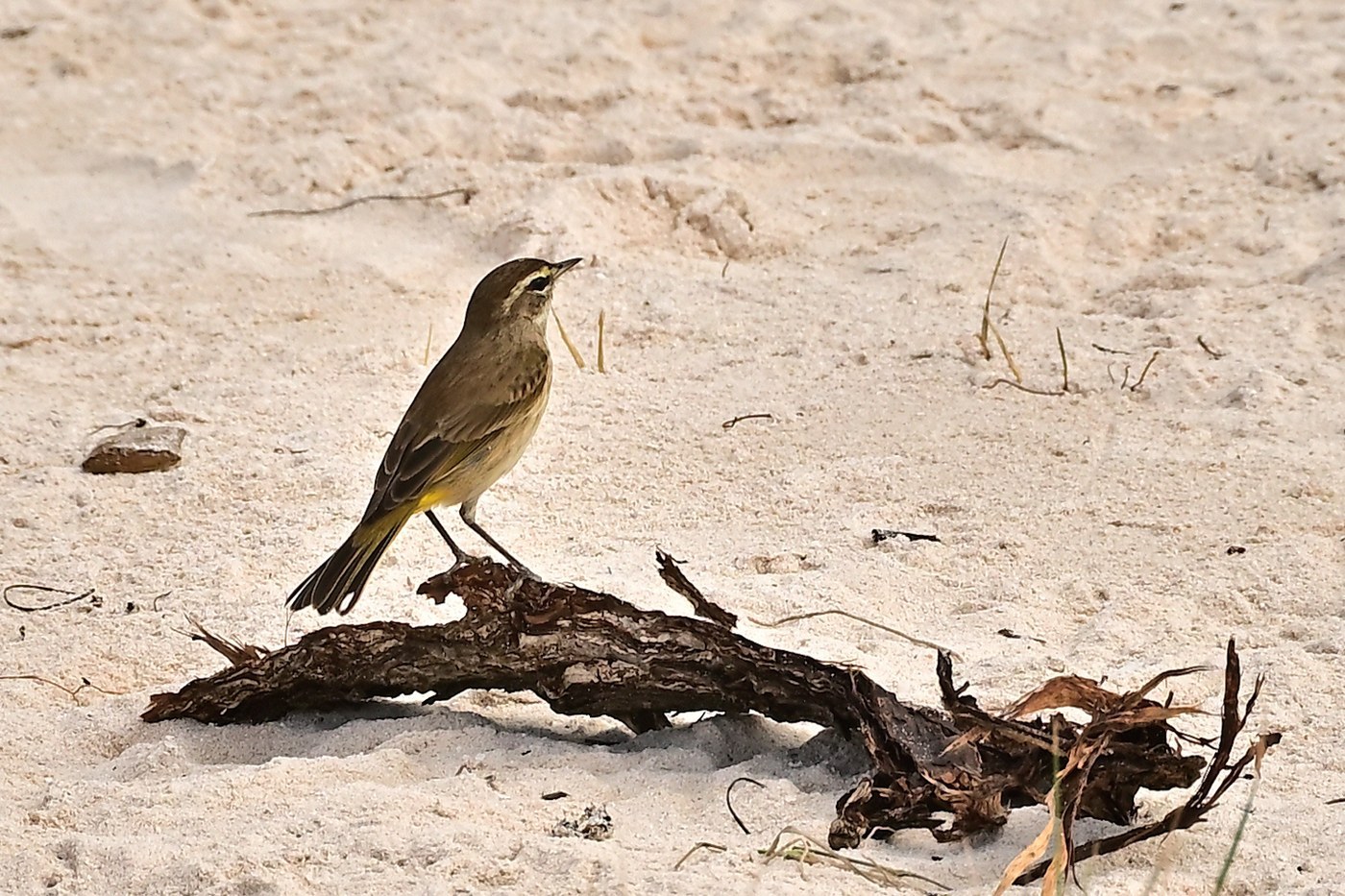
Key Field Marks
- Size & shape: A small warbler, about 14 cm long, with a fairly slim body and a slightly notched tail.
- Behavior (key mark): Constantly pumps or wags its tail up and down while walking or perched, a habit shared with few other warblers and often the quickest way to identify it.
- Plumage — breeding: Rufous-chestnut cap, yellowish eyebrow stripe, and yellow undertail coverts visible in all plumages.
- Plumage — nonbreeding/winter: Duller brown overall with faint streaking, but the yellow undertail coverts remain a reliable year-round mark.
- Two forms: The eastern "Yellow" Palm Warbler is brighter yellow below overall, while the western nominate form is duller and browner-breasted, with yellow mainly restricted to the undertail area.
- Foraging behavior: Unusually terrestrial for a warbler, often walking on the ground, lawns, or low scrub rather than gleaning high in trees.
Separating It from Similar Species
- Prairie Warbler: Also bobs its tail, but shows bold black side streaking and a distinct facial pattern with a yellow face crossed by dark lines; Palm Warbler's face is plainer.
- Pine Warbler: Does not bob its tail persistently and lacks the rufous cap; wing bars are more prominent on Pine Warbler.
- Yellow-rumped Warbler: Larger, with a bright yellow rump patch, which Palm Warbler lacks (though Palm shows yellow undertail coverts, not a rump patch).
Where & When to See It
- Range: Breeds across the boreal forest of Canada and the northern United States, especially near bogs and muskeg. Winters primarily in the southeastern United States, Mexico, Central America, and the Caribbean.
- Habitat: Breeds in open, stunted spruce-tamarack bogs; during migration and winter, found in a wide variety of open habitats — fields, scrub, lawns, hedgerows, and forest edges, more terrestrial than most warblers.
- Season: A relatively early spring migrant and late fall migrant in much of North America; winters further north than many other warbler species, occasionally lingering into early winter.
Voice
A simple, dry, buzzy trill on one pitch, less musical than many warbler songs; call note is a sharp "chip."
Frequently asked questions
What is the easiest way to identify a Palm Warbler?
Watch for constant tail-bobbing combined with yellow undertail coverts — few other warblers combine both traits.
What is the difference between Eastern and Western Palm Warblers?
The eastern 'Yellow' form is brighter yellow below overall, while the western form is duller and browner on the breast, with yellow mostly limited to the undertail coverts.
Where do Palm Warblers spend the winter?
Mainly the southeastern United States, Mexico, Central America, and the Caribbean, often in open scrubby or grassy habitats.
Do Palm Warblers forage on the ground?
Yes, they are unusually terrestrial for a warbler, frequently walking on lawns, fields, and low vegetation rather than foraging high in the canopy.