
Palm-nut Vulture Identification Guide
An unusual small African vulture with mostly white plumage, black flight feathers, and bare orange-red facial skin, closely tied to oil palm groves.
Read the full Palm-nut Vulture encyclopedia entry →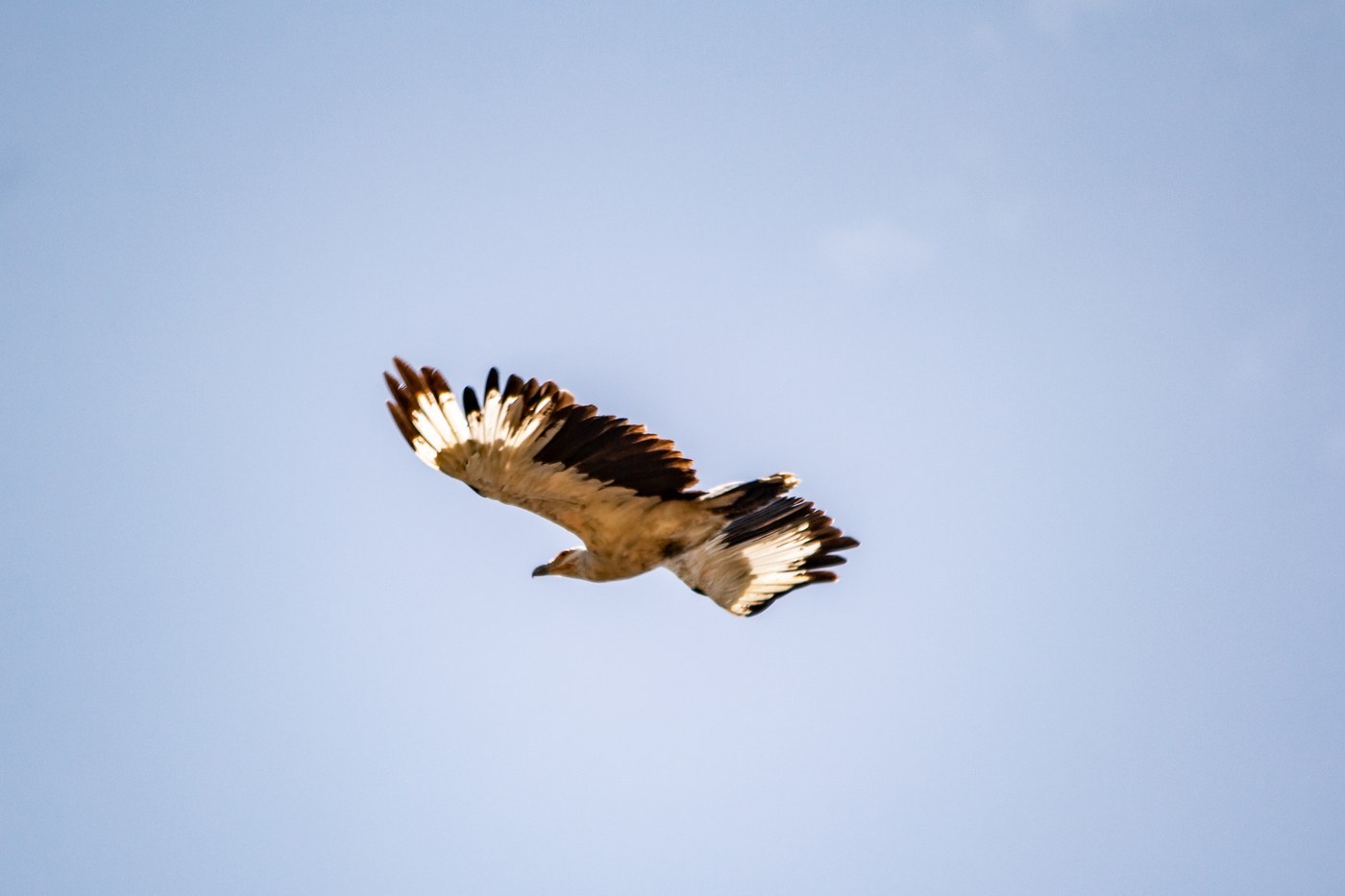
Key Field Marks
- Size & shape: A relatively small, compact vulture around 60 cm long, with broad wings and a fairly short, slightly hooked bill compared to typical vultures.
- Adult plumage: Mostly clean white body and head, with contrasting black flight feathers and a black band across the tail, visible both perched and in flight.
- Bare parts: Distinctive bare orange-red facial skin around the eye, along with a pale, horn-colored hooked bill.
- Immature plumage: Drab brown overall, superficially resembling a small eagle or a young Egyptian Vulture; takes several years to molt into the crisp adult pattern.
- Behavior: Unlike most vultures, it rarely soars in large kettles searching for carrion; instead it perches conspicuously in palm crowns and flies with steady, direct flaps interspersed with glides low over the canopy.
Separating It from Similar Species
- Egyptian Vulture: Has a slimmer, more pointed wedge-shaped tail, a longer thin bill, and a yellow (not orange-red) face; ranges overlap only marginally and habitats differ.
- African Fish Eagle: Larger, with a chestnut body and white head/breast rather than an all-white body with a black tail band.
- Immatures vs. young eagles: Brown immature Palm-nut Vultures can be confused with young eagles, but the relatively small hooked bill and habitat (near palms) are useful clues.
Where & When to See It
- Range: Widespread across sub-Saharan Africa, from Senegal and Gambia east to parts of the Great Lakes region and south to South Africa's eastern coast.
- Habitat: Strongly associated with oil palms and raffia palms, as well as coastal areas, mangroves, rivers, and lakes lined with palm trees.
- Season: Resident year-round with local movements tied to palm fruiting and water levels.
Voice
Gives loud, raucous cackling and squealing calls, especially around nest sites and when interacting with other vultures.
Frequently asked questions
Why is it called a Palm-nut Vulture?
It feeds heavily on the fleshy husks of oil palm and raffia palm fruit, an unusual diet for a vulture, and is almost always found near palm groves.
How can I tell an adult from an immature Palm-nut Vulture?
Adults are crisp white with black flight feathers and a black tail band, while immatures are plain brown and take a few years to reach adult plumage.
Does the Palm-nut Vulture soar like other vultures?
Less so — it more often perches in palm crowns and flies with direct wingbeats low over the canopy rather than circling high in thermals.
What color is the bare skin on a Palm-nut Vulture's face?
Orange-red in adults, a useful mark separating it from the yellow-faced Egyptian Vulture.