
Palm Cockatoo Identification Guide
A huge sooty-black cockatoo of New Guinea and Cape York with a shaggy crest, massive bill, and bare red facial skin that flushes color when excited.
Read the full Palm Cockatoo encyclopedia entry →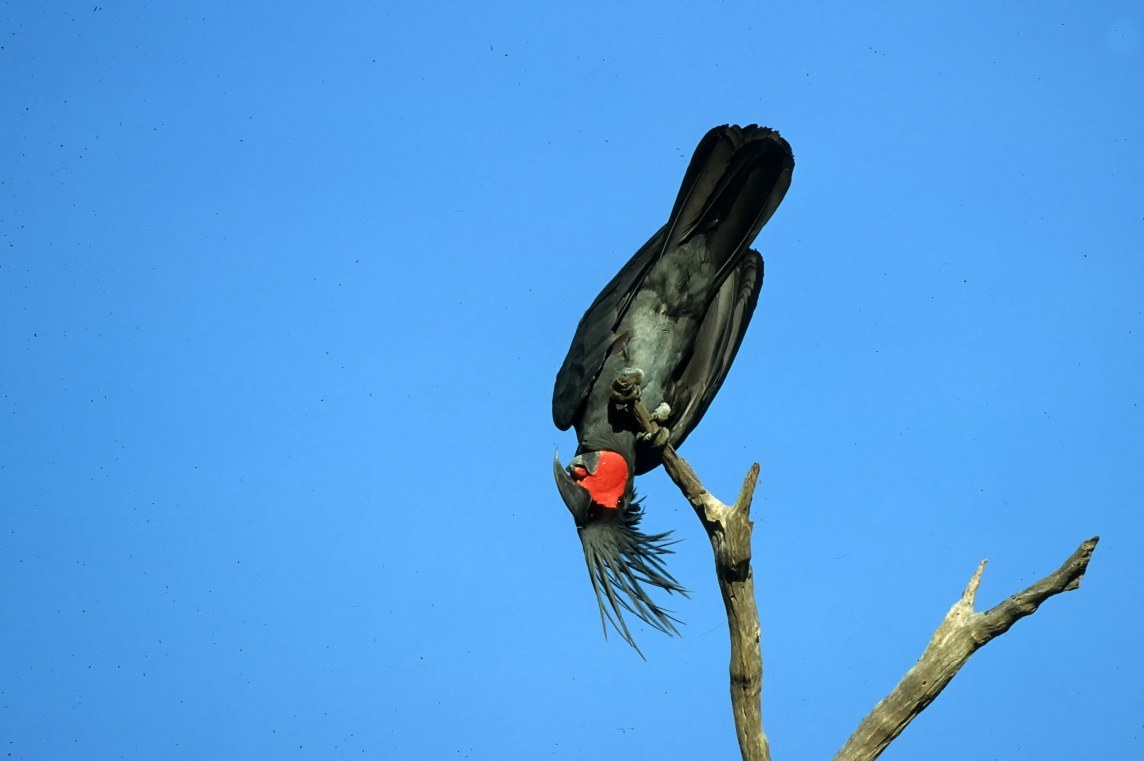
Key Field Marks
- Size & shape: One of the largest cockatoos, around 55–60 cm long, with a long, ragged, upright crest and a heavy, deep-based bill unlike any other parrot.
- Plumage: Overall sooty-black to dark gray-black, with little pattern variation across the body.
- Bare facial skin: Large patches of bare skin on the face are pinkish-red to scarlet and can visibly flush brighter or paler depending on the bird's mood — a very distinctive trait.
- Bill: Enormous black bill, proportionally larger than in other cockatoos, used to crack extremely hard palm nuts and seed pods.
- Behavior: Often seen singly or in pairs flying with slow, deep wingbeats above the forest canopy. Famous for a unique drumming display — males fashion a stick or seed pod into a drumstick and rhythmically tap it against a hollow tree limb as part of courtship, one of the few documented tool-use displays among birds.
Separating It from Similar Species
- Black cockatoos (Calyptorhynchus species, e.g., Red-tailed Black Cockatoo): Smaller-billed, with feathered (not bare) faces and often colored tail panels; Palm Cockatoo lacks any tail panel color and has the diagnostic bare red face.
- Yellow-tailed Black Cockatoo: Has yellow cheek and tail patches, absent in Palm Cockatoo.
- No other parrot in its range combines an all-black body with bare red facial skin and such an oversized bill, making it essentially unmistakable once seen well.
Where & When to See It
- Range: New Guinea and satellite islands, plus a small population on Cape York Peninsula in far northern Queensland, Australia.
- Habitat: Tall rainforest, monsoon forest, and eucalypt woodland with rainforest edges, particularly areas with large hollow-bearing trees for nesting.
- Season: Resident year-round; drumming displays and nesting activity peak during the local breeding season (in Australia, roughly the dry season).
Voice
A loud, far-carrying repertoire of whistles and calls, including notes that can sound almost human, such as a rising "hello"-like whistle, along with harsher screeches.
Frequently asked questions
Why does the Palm Cockatoo's face change color?
The bare red facial skin can flush paler or more intensely red depending on the bird's excitement or stress level, similar to blushing.
Is the Palm Cockatoo really a tool user?
Yes, males fashion sticks or seed pods into drumsticks and beat them against hollow branches as part of a courtship display, a rare example of tool use in birds.
Where in Australia can Palm Cockatoos be found?
Only on Cape York Peninsula in far northern Queensland, at the southern edge of their range, which is centered on New Guinea.
What does a Palm Cockatoo eat?
Primarily hard seeds and nuts from rainforest trees, including pandanus and various palms, cracked open with its massive bill.