
Pacific Wren Identification Guide
A tiny, dark rufous-brown wren of dense Pacific coastal forests, known for its extraordinarily long, rapid, cascading song.
Read the full Pacific Wren encyclopedia entry →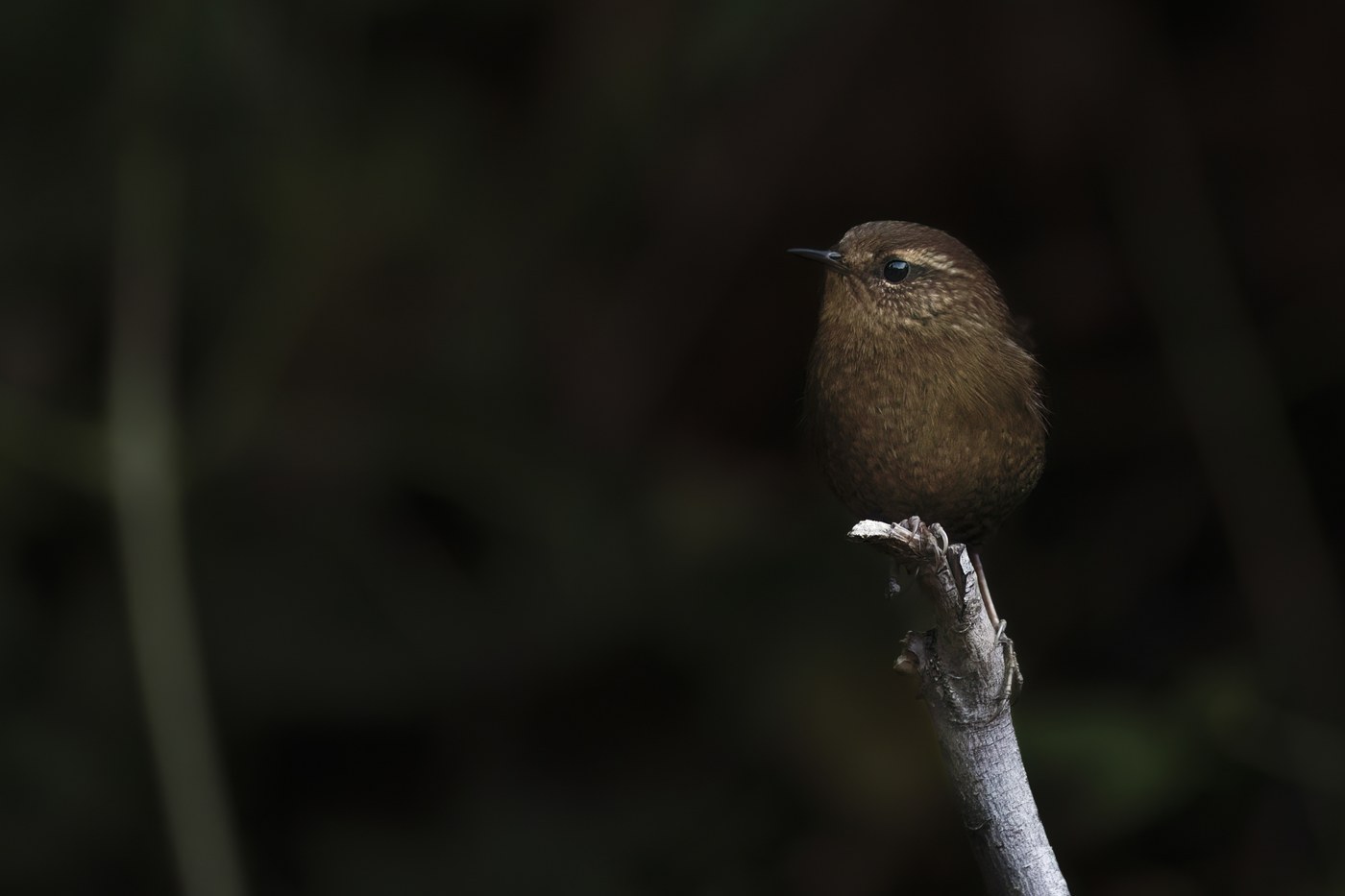
Key Field Marks
- Very small, round, dumpy-bodied wren (about 9-10 cm) with a short tail typically held cocked upward.
- Rich, dark rufous-brown plumage overall, noticeably darker and warmer-toned than its close relative the Winter Wren.
- Fine dark barring on the wings, flanks, and belly; an indistinct, short pale eyebrow stripe.
- Thin, slightly downcurved dark bill; dark legs.
- Sexes look alike.
Similar Species
- Winter Wren: the eastern counterpart of Pacific Wren (the two were split from a single "Winter Wren" species in 2010); Winter Wren is paler and grayer-brown overall, with ranges meeting in a narrow contact zone in the Canadian Rockies where voice is the most reliable way to distinguish them.
- House Wren: grayer-brown overall, with a longer tail often held more strongly cocked, less barring, a different, more strident song, and a preference for more open habitats such as parks, gardens, and brushy edges rather than deep forest.
Habitat, Range & Season
- Found in dense, dark, moist coniferous forest with a well-developed understory of downed logs, root tangles, and ferns, from sea level up into subalpine forest.
- Resident to short-distance migrant along the Pacific coast from Alaska south to central California and inland into the mountain west, with the contact zone against Winter Wren in the Canadian Rockies.
- Northern populations may move short distances south or to lower elevations for winter.
Voice
- Song is extraordinarily long, fast, and complex — a rapid cascade of high, tinkling trills and buzzy notes that can last ten seconds or more, among the most elaborate songs of any North American bird.
- Call is a hard, sharp "kip-kip" or "chimp," often given from deep cover.
Behavior Notes
- Skulks low in dense vegetation, foraging on or near the ground among roots, logs, and leaf litter, often difficult to see well despite being easily heard.
- Holds its short tail cocked up over its back, a classic wren posture.
Frequently asked questions
How do you identify a Pacific Wren?
Look for a very small, round, dark rufous-brown bird with a short, upward-cocked tail, fine barring on the wings and flanks, and a habit of skulking low in dense forest understory.
How is Pacific Wren different from Winter Wren?
They were once considered the same species and look very similar, but Pacific Wren is darker and richer rufous-brown, while Winter Wren is paler and grayer; their ranges meet in a narrow zone in the Canadian Rockies, where song is the most reliable way to tell them apart.
What does a Pacific Wren sound like?
An unusually long and rapid cascade of high, tinkling, bubbling trills that can run ten seconds or more without pause — one of the most complex songs of any North American songbird.
Where does the Pacific Wren live?
In dense, moist coniferous forest with heavy understory (downed logs, root tangles) along the Pacific coast from Alaska to central California and into interior mountain ranges.