
Ocellated Antbird Identification Guide
A striking Neotropical antbird with bare blue facial skin and eye-like spots across a tawny body, an obligate army-ant follower rarely found far from a swarm.
Read the full Ocellated Antbird encyclopedia entry →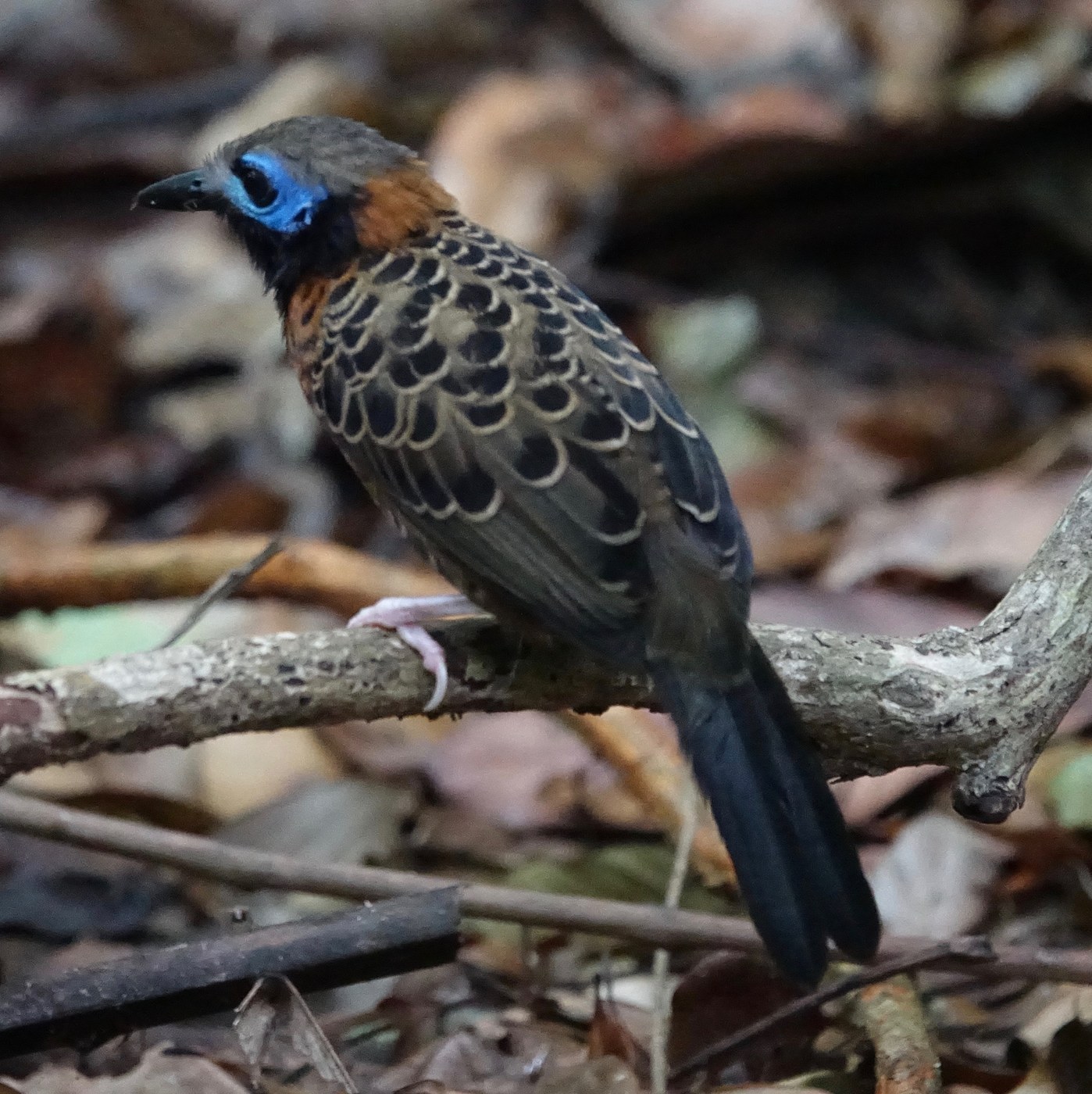
Key Field Marks
- Size & shape: A medium-sized antbird (about 18–19 cm / 7 in), somewhat long-legged and long-tailed for the family, with an upright, alert posture typical of birds that hunt over open ground.
- Face: Bare, cobalt-blue skin surrounding the eye, bordered by black — unfeathered and highly distinctive, unlike almost any other antbird.
- Body pattern: Chestnut to tawny-orange body plumage marked with bold black-bordered spots ("ocelli," or eye-like markings) across the breast, back, and wings, giving a scaled or spangled appearance.
- Crown: Chestnut crown, sometimes appearing slightly darker or capped compared to the body.
- Sexes: Similar overall pattern, with females often slightly duller or more buffy-toned than males.
Separating It From Similar Species
- Other antbirds at ant swarms (e.g., Bicolored Antbird, Spotted Antbird): Ocellated Antbird is larger than most swarm-following antbirds and is easily told apart by its unique bare blue facial skin and the extensive black-bordered spotting over the body, a combination no co-occurring species shares.
- Its behavior — reliably present at large army ant swarms and often dominant over other ant-following species — combined with its unmistakable face and spotted body makes confusion with other species unlikely once seen well.
Behavior Clues
- An obligate army ant follower: it depends almost entirely on swarms of army ants (especially Eciton burchellii) to flush arthropod prey, and is rarely encountered away from an active swarm.
- Often perches low over the ant column, sallying down to catch insects and small prey fleeing the ants, and can be aggressive toward other antbirds and antthrushes competing at the same swarm.
Where & When to Look
- Habitat: Understory of humid lowland and foothill tropical rainforest.
- Range: Central America from Honduras and Nicaragua south through Costa Rica and Panama, and into northwestern South America in Colombia and Ecuador.
- Season: Resident year-round; the best strategy for finding one is to locate an active army ant swarm, often signaled by the calls of other ant-following birds, obligate ant-following butterflies, and swarms of flushed insects.
Voice
- Gives loud, clear, plaintive whistled notes, often a series of piping calls that increase in urgency, audible well before the bird is seen at a swarm.
- Also produces sharp chattering or clucking notes when agitated or interacting with other birds at the ant swarm.
Frequently asked questions
What is the most distinctive feature of the Ocellated Antbird?
Its bare cobalt-blue facial skin combined with bold black-bordered spots ('ocelli') across its chestnut body — a combination unique among Neotropical antbirds.
Why is the Ocellated Antbird almost always found near army ants?
It is an obligate army-ant follower, depending on swarms of army ants to flush insects and other small prey from the leaf litter; it is rarely found away from an active swarm.
Where does the Ocellated Antbird live?
In the understory of humid lowland and foothill rainforest from Honduras and Nicaragua south through Costa Rica and Panama, into northwestern Colombia and Ecuador.
How do you find an Ocellated Antbird in the field?
The most effective approach is to locate an active army ant swarm — often indicated by other ant-following birds, calling antbirds, and clouds of flushed insects — since this species rarely strays from swarms.