
Northwestern Crow Identification Guide
A coastal, beach-loving crow of the Pacific Northwest, nearly identical to the American Crow but slightly smaller and hoarser-voiced, with extensive overlap and interbreeding making range and habitat the best clues.
Read the full Northwestern Crow encyclopedia entry →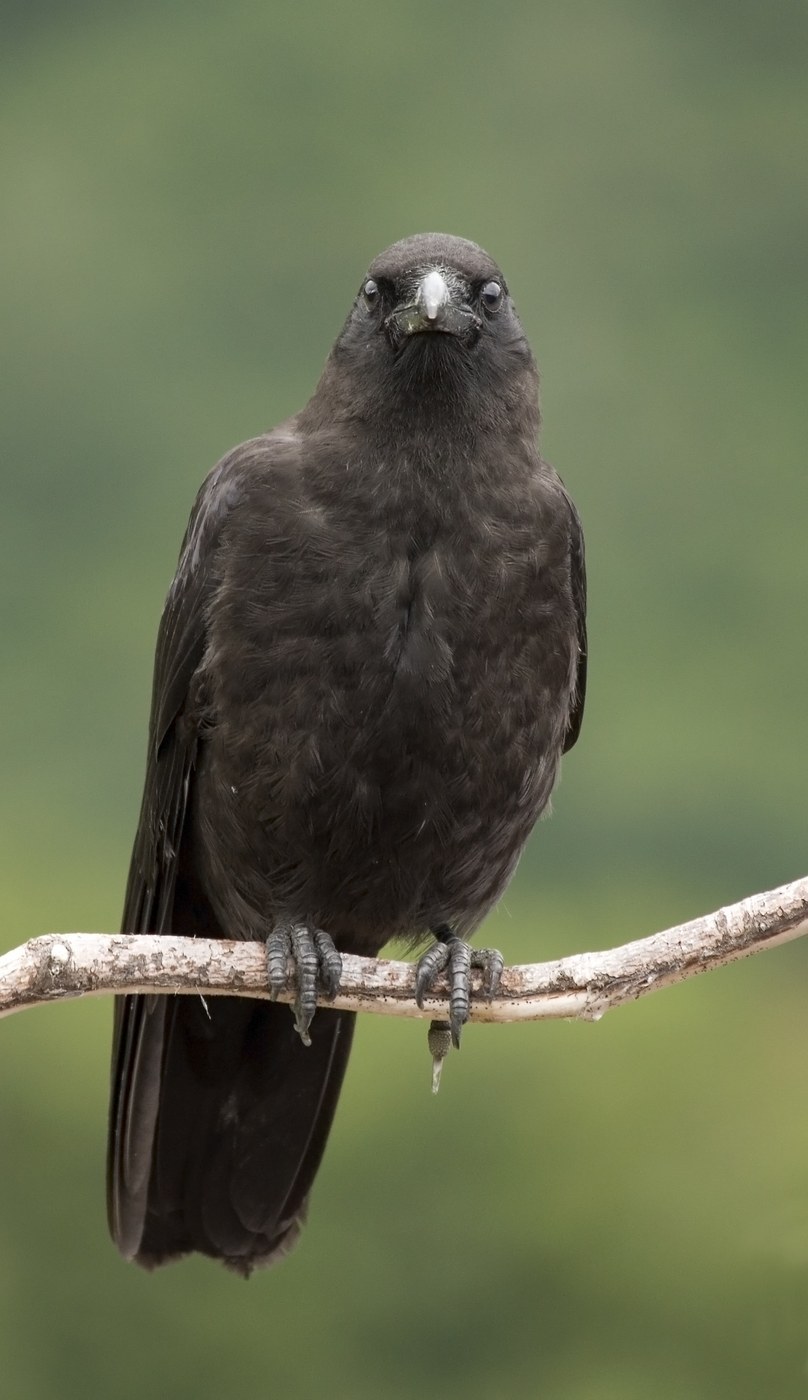
Key Field Marks
- Size & shape: A medium-sized, all-black crow, on average slightly smaller and more compact than an American Crow, though sizes overlap considerably and this is not reliable alone.
- Plumage: Entirely glossy black, indistinguishable by eye from American Crow.
- Bill & legs: Proportionally stout bill; overall structure very close to American Crow, with no dependable plumage differences.
- Voice: Tends to give a lower, hoarser, more guttural "caw" than a typical American Crow, though calls overlap and are not diagnostic on their own.
Separating It From Similar Species
- American Crow: Essentially the only realistic confusion species, and in practice the two are best separated by range and habitat rather than plumage or structure — Northwestern Crow is restricted to the immediate Pacific coastline, while American Crow is the widespread inland and continental species. Where their ranges meet along the coast of Washington and British Columbia, the two interbreed extensively, and many individuals cannot be confidently assigned to either form by sight.
- Common Raven: Much larger, with a wedge-shaped tail, shaggy throat hackles, and a deep croaking voice rather than a caw — easily separated by size and tail shape alone.
Behavior & Habitat Clues
- Strongly tied to the immediate coastline: beaches, tidal flats, rocky shorelines, and harbors, where it forages on shellfish, carrion, and human food scraps, often dropping shellfish from height onto rocks to crack them open.
- Highly social, frequently seen in noisy family groups or loose flocks working the tideline at low tide.
Where & When to Look
- Habitat: Narrow coastal strip habitat — beaches, harbors, tidal estuaries, and nearby urban areas directly along the shoreline.
- Range: Pacific coast from southeast Alaska south through coastal British Columbia to the northern Washington coastline, rarely straying far inland.
- Season: Present year-round throughout its range; largely non-migratory.
Voice
- Gives a hoarse, lower-pitched "caw" or "kaw" compared to the American Crow's call, sometimes described as more guttural or nasal, but the difference is subtle and inconsistent enough that voice alone should not be used for certain identification.
Frequently asked questions
How is Northwestern Crow different from American Crow?
The two are extremely similar; Northwestern Crow is on average slightly smaller with a somewhat hoarser call, but the most reliable distinction is range and habitat — Northwestern Crow sticks to the immediate Pacific coastline while American Crow is far more widespread inland.
Can Northwestern Crow and American Crow interbreed?
Yes, extensively where their ranges meet along the coast of Washington and British Columbia, producing intermediate birds that cannot always be confidently identified to one form or the other — a major reason taxonomic authorities have debated treating them as a single species.
Where is the best place to see a Northwestern Crow?
Along beaches, tidal flats, and harbors of the Pacific Northwest coastline from southeast Alaska through coastal British Columbia to northern Washington, especially at low tide.
Does Northwestern Crow migrate?
No, it is largely a year-round resident throughout its coastal range.